


As your architecture firm grows, project management rarely looks broken. Drawings go out the door, coordination meetings happen, and projects move from one phase to the next.
What becomes harder is assessing a project's financial state while the work is still underway.
You cannot tell whether a phase is burning hours faster than the fee allows or whether the remaining budget still holds.
You make decisions every week to keep delivery moving. You adjust the scope to preserve a client relationship, reassign staff to stabilize another project, or extend a deadline to protect the quality of the work.
These are delivery decisions, but they are also financial ones. Changing the scope affects the fee. Reassigning staff changes labor cost. Extending a timeline changes how long the project consumes your firm’s capacity.
By the time the financial picture comes together, the decision has already changed the project’s margin.
That delay pushes many architecture firms into reactive management. Problems surface only after hours are spent, budgets are overrun, or invoices are questioned.
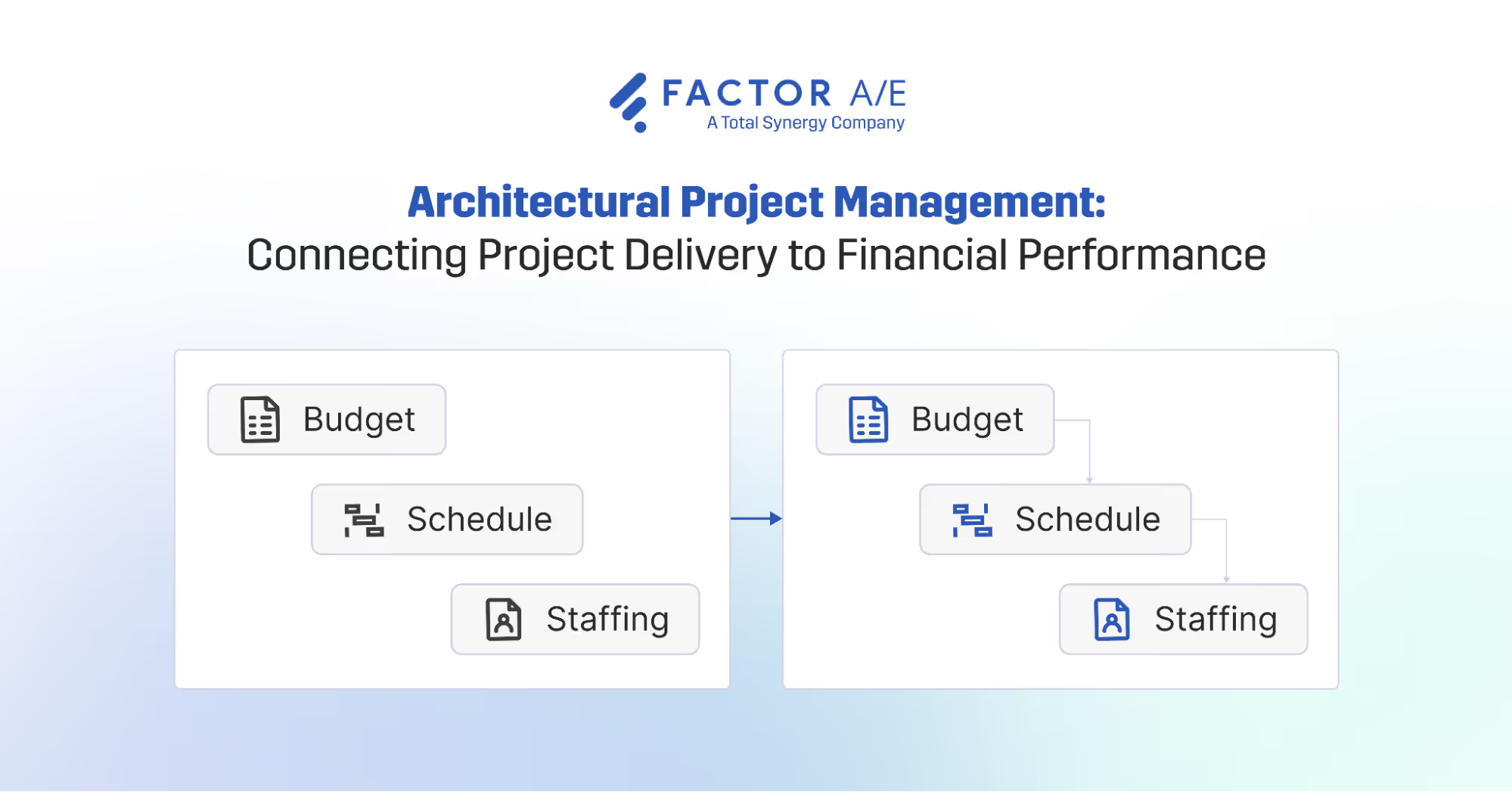
This guide explains where architectural project management loses visibility and why that visibility gap keeps firms managing projects reactively. It also shows how reconnecting budget, schedule, and staffing gives growing firms the operational visibility needed to stay in control.
What is Architectural Project Management?
Architectural project management is the set of decisions you make as a project manager that move a project from pre-design through construction while balancing scope, staffing, schedule, and fees.
It spans the full project lifecycle and connects the core activities that keep an architecture firm operating: defining scope, coordinating consultants, assigning staff, managing contracts, and billing for services.
What makes architectural project management distinct from general project management is the structure of the work itself. Architecture projects move through defined phases, rely on networks of external consultants, and often combine multiple billing structures within a single project.
Design may be billed as a fixed fee, early planning work at an hourly rate, and additional services separately.
Managing those moving parts means the project manager is not only coordinating work. They are constantly balancing scope, staffing, timeline, and fee as the project progresses.
What is an Architecture Project Manager Responsible For?
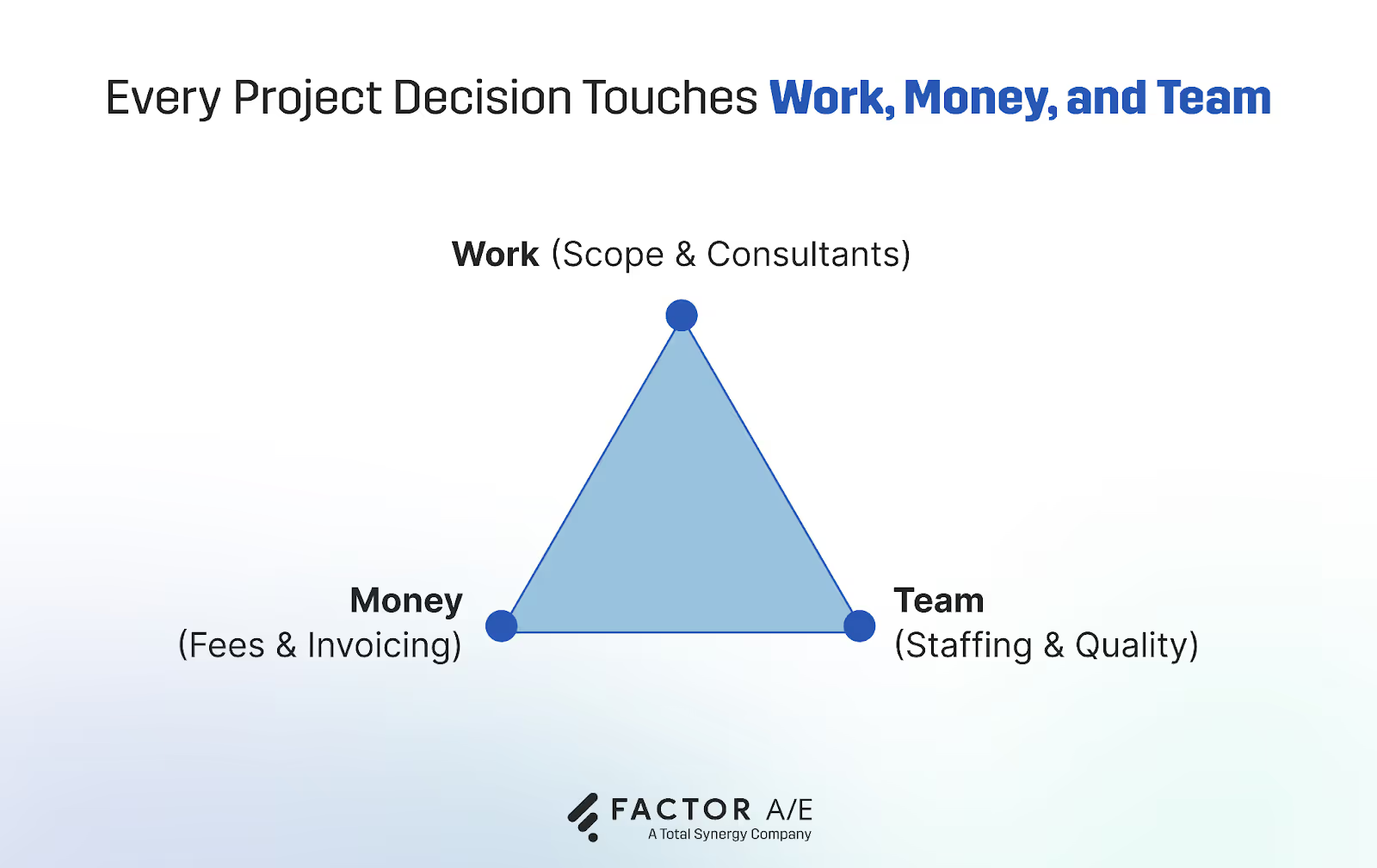
An architecture project manager is responsible for delivering the work, managing the project’s finances, and resourcing the team.
Those responsibilities constantly affect each other. Move a staff member, and the budget changes. Adjust the scope with the client and the timeline shifts. Send an invoice that doesn’t reflect the work's current state, and the client starts asking questions.
In practice, the PM is managing the intersection of all three, even when the firm’s systems treat them as separate tracks.
Project delivery: scope, schedules, and coordinating consultants
As the PM, you track deliverables across all active phases, manage scope against the contract, and coordinate consultants producing work alongside the firm’s team.
On a typical project, that might include a structural engineer, an MEP consultant, a landscape architect, and a lighting designer, each operating under their own contract terms, delivery timelines, and fee structures.
None of them reports to you, but you’re responsible for keeping the work synchronized.
When a consultant falls behind on a deliverable (and they will at some point), you decide what happens next. The schedule can shift, the next phase can compress, or the issue can be raised with the client, and the timeline reset.
Scope management runs underneath all of this. Clients ask for additions that feel small: an extra option study, another rendering, or an additional meeting with the contractor.
You get to decide whether the request falls within the contract or requires an additional services request. When that decision never happens, hours accumulate against phases that were never budgeted for them.
Project finances: budgets, fees, and invoicing
Architecture fees are rarely simple. A single project may combine a fixed fee for design phases, hourly not-to-exceed services during pre-design, and a percentage-based fee during construction administration.
Some phases also include consultant fees that pass through the firm’s books as reimbursable expenses. That money appears in the same project budget even though it is not revenue that the firm can spend on its own work.
Your work is to track budget burn against project progress across all of these structures.
That means knowing not only how many hours the team has logged, but how those hours compare to the fee earned at the current stage of completion.
If the team has burned through 60% of the budget but completed only 40% of the work, the project requires attention.
You also run the invoicing cycle, and the invoice must reflect the work's status, comply with the contract’s billing terms, separate the firm’s fees from consultant pass-through costs, and be presented in a format that doesn’t raise questions from the client.
When any of those pieces are off, payment slows, and the next billing cycle becomes cleanup work instead of forward progress.
Team capacity: staffing, resource allocation, and quality
The PM balances staff across multiple projects at different phases, each with varying skill requirements, hours, and attention.
Deciding who works on what is not just a scheduling exercise. It also affects cost.
Assigning a principal may produce higher quality work, but their rate may be three times that of an associate.
So your work is to constantly weigh capability against cost, and the right choice changes depending on the phase, the client relationship, and how much fee remains.
At growing firms, you’re often producing work while managing the project, not just overseeing it.
You might coordinate consultants in the morning, redline construction documents in the afternoon, and check a junior team member’s progress before the end of the day.
Quality oversight runs across the entire thing. You review deliverables, coordinate QA/QC checks before submittals, and carry responsibility when something leaves the office with an error.
Project Phases and the Skills That Drive Them
Every architecture project moves through a sequence of phases, but your job inside each one changes.
The skills that matter in pre-design, where almost nothing is defined, differ from those required in construction administration, where the work is defined, and the client is watching every dollar.
What stays constant is the constraint you manage in every phase: what the project needs and what the fee can support.
Pre-design and planning: where the project gets its shape
This is the ambiguity phase. The scope is still forming, the team is not fully assigned, and the client’s expectations are evolving.
You still need a baseline to budget and staff against.
The most important decisions here are financial. You determine how the project’s fees will be structured when billing types are mixed, for example, a fixed fee for design phases and hourly not-to-exceed services for pre-design or additional work.
You also establish consultant budget allocations early so the firm does not accidentally treat consultant pass-through dollars as its own revenue.
Skills this phase requires: financial structuring, client negotiation, and defining scope under uncertainty without overcommitting the firm.
Design through documentation: where the details multiply
This is the balancing phase. The team is producing work and logging hours, and you are constantly comparing budget burn against percent complete.
The weekly question becomes whether the budget is burning faster than the work is progressing.
Staffing decisions affect the budget immediately. Assigning a principal instead of an associate changes the cost structure of the work the moment the assignment changes.
You constantly weigh capability against cost as the phase progresses and the remaining fee tightens.
Skills this phase requires: resource management, budget monitoring, and communicating progress to clients without creating unnecessary alarm.
Construction and closeout: where delivery meets reality
This phase is about reconciling additional services, scope adjustments, and consultant invoices that arrive on their own timeline.
Your job is to close the project, reconcile the financials, and maintain the client relationship through what is often the most friction-heavy stage of the engagement.
Subconsultant coordination becomes more complex here. Invoices arrive late. Pay-when-paid terms mean the firm cannot bill the client for consultant work until the consultant has billed the firm.
You often end up reconciling multiple billing cycles while you are closing the project, and the team has already shifted attention to the next job.
Skills this phase requires: contract administration, financial reconciliation, and client relationship management when the margin for error is smallest.
Why Architecture PMs are Forced into Reactive Management
Architecture PMs often end up managing reactively because the systems most firms rely on separate project delivery, financial tracking, and staffing visibility.
The result is predictable. You make reasonable decisions with incomplete information, and the consequences surface later in the budget, the schedule, or the team’s workload.
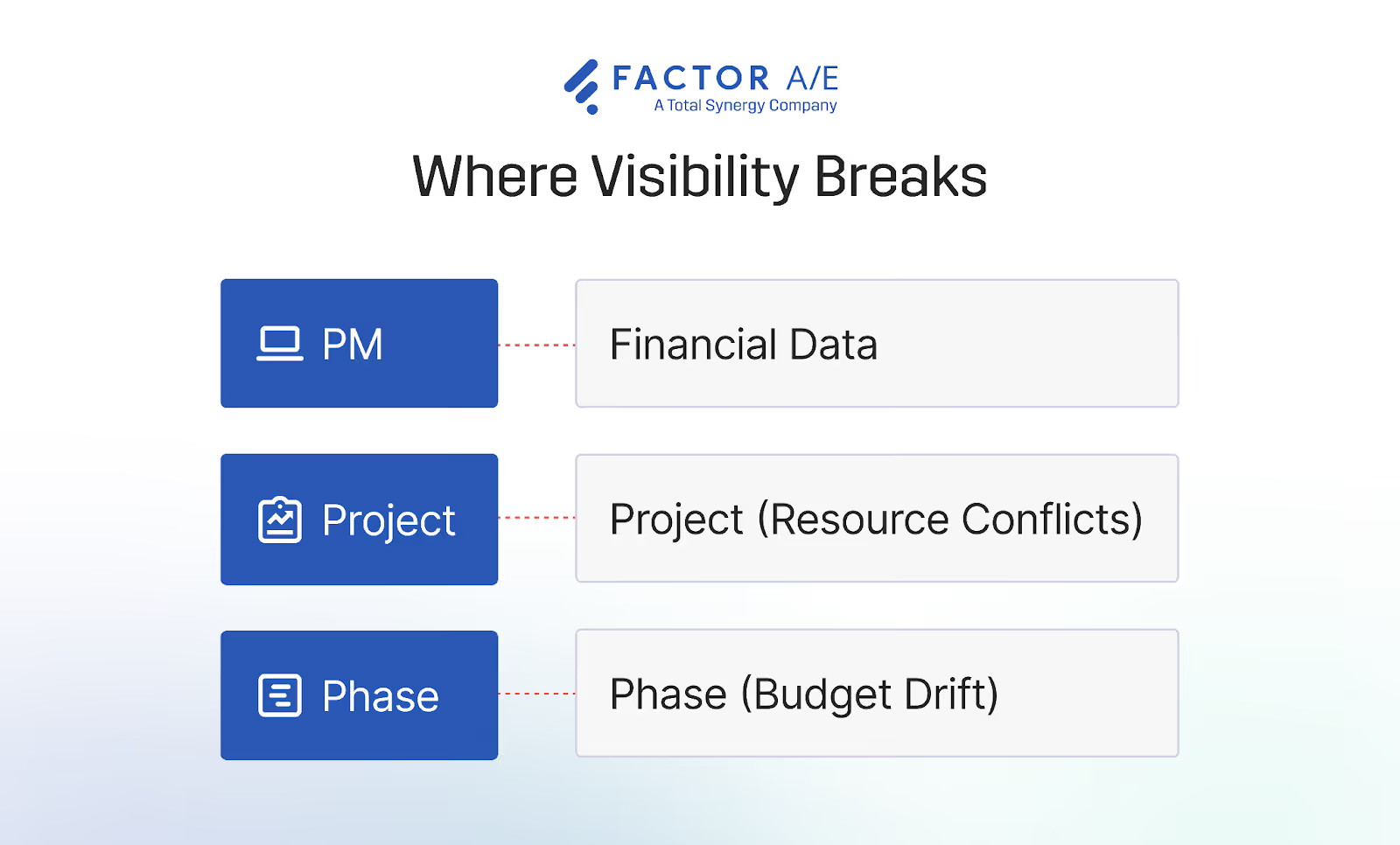
The breakdown usually appears in three places.
Between the PM and the money
In most architecture firms, PMs manage the work while accounting managers are responsible for the money.
Those functions run on different timelines and in different systems. You know how the work is moving forward. Accounting knows what has been billed and what has been spent. But no one holds both views together in real time.
In practice, this means you need to know whether a phase still has a budget left, but that answer sits in accounting’s system. You send an email or wait for the monthly report. By the time the number arrives, you have already made staffing and scope decisions based on instinct.
Scope creep slips through because hours are not reconciled against the budget as they are logged. They are reconciled later, after the work is done.
This creates what many firms describe as an “autopsy” approach to project finances. Firms see financial performance only at month-end, when they review reports on what already happened rather than tracking what is happening now.
A 2024 survey by Grassi Advisors found that 59% of A&E firm leaders review job costing and project profitability only monthly, meaning most firms see project financial health after the decisions shaping those finances have already been made.
Kaas Wilson Architects, a 120-person firm, experienced this while using BQE Core. Their reports often changed from one day to the next, time entry discouraged consistent logging, and integrations required hours of manual reconciliation each month. The result was project data that project managers no longer trusted.
Between projects
Most firms manage projects in isolation.
You know your projects and may have a rough sense of what other PMs are working on. But there is rarely a firm-wide view showing where every person is assigned or where capacity conflicts exist.
This creates invisible collisions in resource scheduling. You assign a senior designer to meet a deadline without realizing another PM scheduled the same person for a critical deliverable that week.
The result is burnout, missed deadlines, and reactive scrambling that nobody saw coming because nobody could see across projects.
Resource Consulting Engineers, a 12-person MEP firm, described this as “hidden project roadblocks.” Without a firm-wide view of workload and staffing, stalled projects and missing hours were difficult to detect until delivery was already affected.
At smaller firms, this rarely surfaces because you are involved in most projects. But as firms grow past roughly 50 people, open additional offices, or take on more concurrent work, the informal system breaks down.
Staffing decisions rely on instinct, conflicts stay invisible until deadlines slip, and no one can confidently say which projects are healthy and which are bleeding.
The firefighting that follows is not a discipline problem. It is an infrastructure problem.
When you cannot see what is happening across the firm, you manage by reacting to whatever becomes urgent next.
Between phases
Phase transitions are another place where visibility breaks.
Projects move from schematic design to design development because the schedule says they should, but the work does not always keep pace with the calendar.
The most common version is the “make it up later” assumption. You see a budget overage in schematic design and assume the team will recover the hours in design development.
Delaying the conversation with the client does not save the budget. It consumes the hours of the next phase before that phase begins.
An unfinished scope creates the same problem. A project moves into DD even if only 80% of the SD work is complete. The remaining work consumes hours that were budgeted for the next phase.
Consultant billing makes this worse. Firms sometimes close out a phase believing part of the consultant budget remains unused, only to receive an invoice later for work completed earlier. The invoice arrives in the next phase and pulls money from a budget that was already planned around having it.
How Architecture Firms Connect Budget, Schedule, and Staffing
When budget, schedule, and staffing live in separate systems, you cannot see the full state of a project in one place. You see progress in one view, hours in another, invoices somewhere else, and staffing plans in a spreadsheet or a meeting.
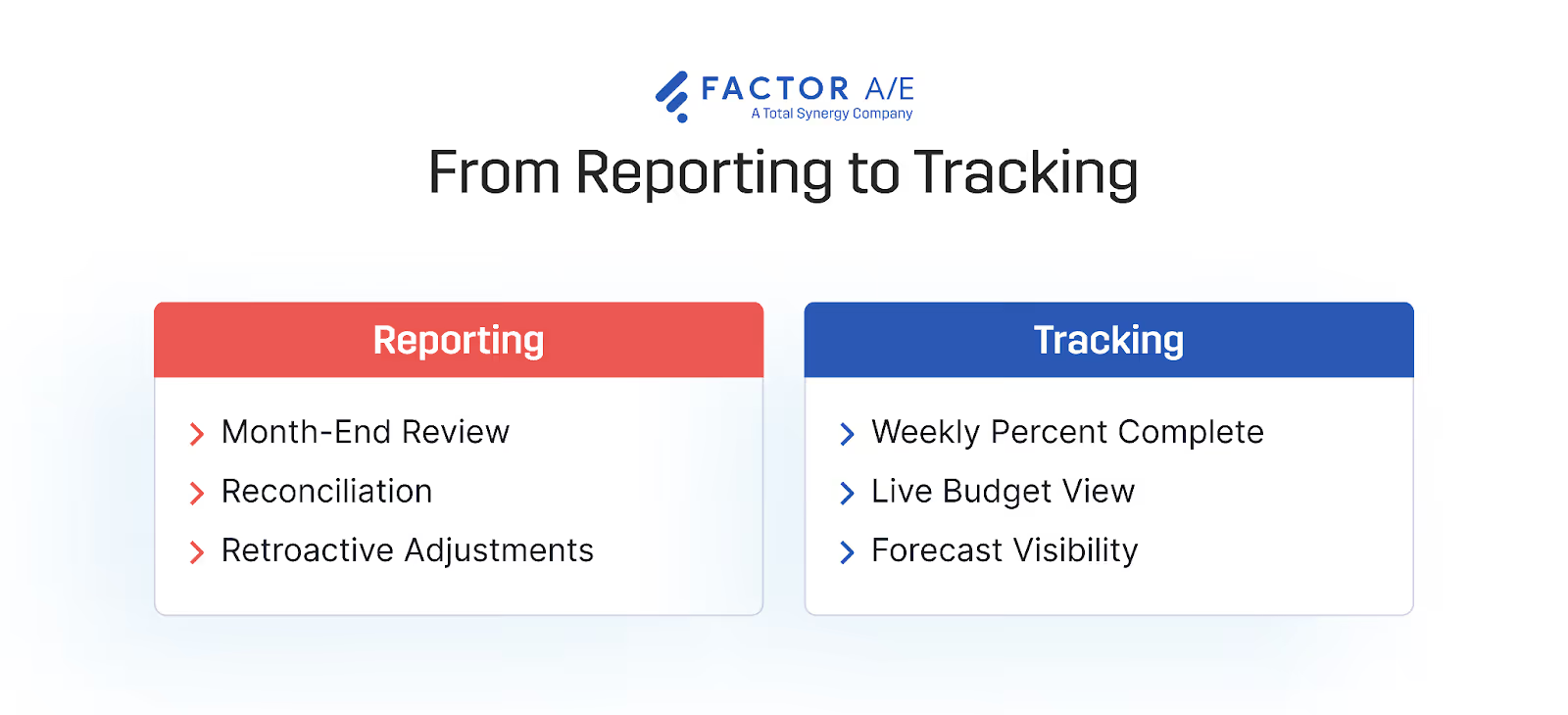
Fixing that requires connecting the information you use to run projects so that delivery, financials, and capacity update together.
Three shifts make that possible.
Shift 1: Tracking projects in real time instead of reporting after the fact
Month-end reporting shows you what has already happened. Real-time tracking shows you what is happening while you still have options.
Instead of discovering performance after the work is done, you update percent complete on a weekly rhythm and see budget, timeline, and progress together as the project moves.
When a phase starts trending over budget, you can still respond. You can reassign work, adjust staffing, or have the scope conversation with the client before the overrun becomes baked in.
Fusion Design saw this shift reduce their invoicing cycle from 15–20 days to roughly four hours by starting invoicing with current project data instead of reconciling errors at month-end.
Shift 2: Giving project managers direct access to financial data
When PMs have to ask accounting for budget status, financial visibility arrives late.
Removing that bottleneck changes the timing of decisions. You can see the budget burn in dollars as the work happens, not just hours logged. You can see earned value against the fee at the phase level, not after reconciliation.
That shift allows you to catch drift during design development rather than discovering it during closeout.
Across a portfolio, earned value also shows which project types and fee structures generate profit and which ones only create the feeling of being busy.
Shift 3: Connecting resource schedules to project budgets
When staffing is handled in a spreadsheet or during a meeting, the budget impact shows up after the hours are logged.
Connecting schedules to budgets makes staffing a financial decision in the moment. When you assign someone to a phase, you immediately see the cost against the remaining phase budget. If the rate doesn't fit, you'll see it before the work starts.
This also changes capacity planning. Team time is the firm’s only real inventory, and it expires daily. An unscheduled hour cannot be recovered later.
Adam Mayberry, managing principal at Mayberry Workshop, described gaining four to twelve months of project runway visibility once staffing and budget planning were connected, which allowed the firm to staff based on revenue forecasts instead of reacting to gaps.
How A&E-Specific Project Management Software Fits How Architecture Firms Work
Architecture firms run projects through contractual phases that carry their own budgets, deliverables, staffing plans, and consultant commitments.
A&E-specific project management software reflects that structure directly. They organize projects by phase, link staffing decisions to budgets, and display project performance while work is still in progress.
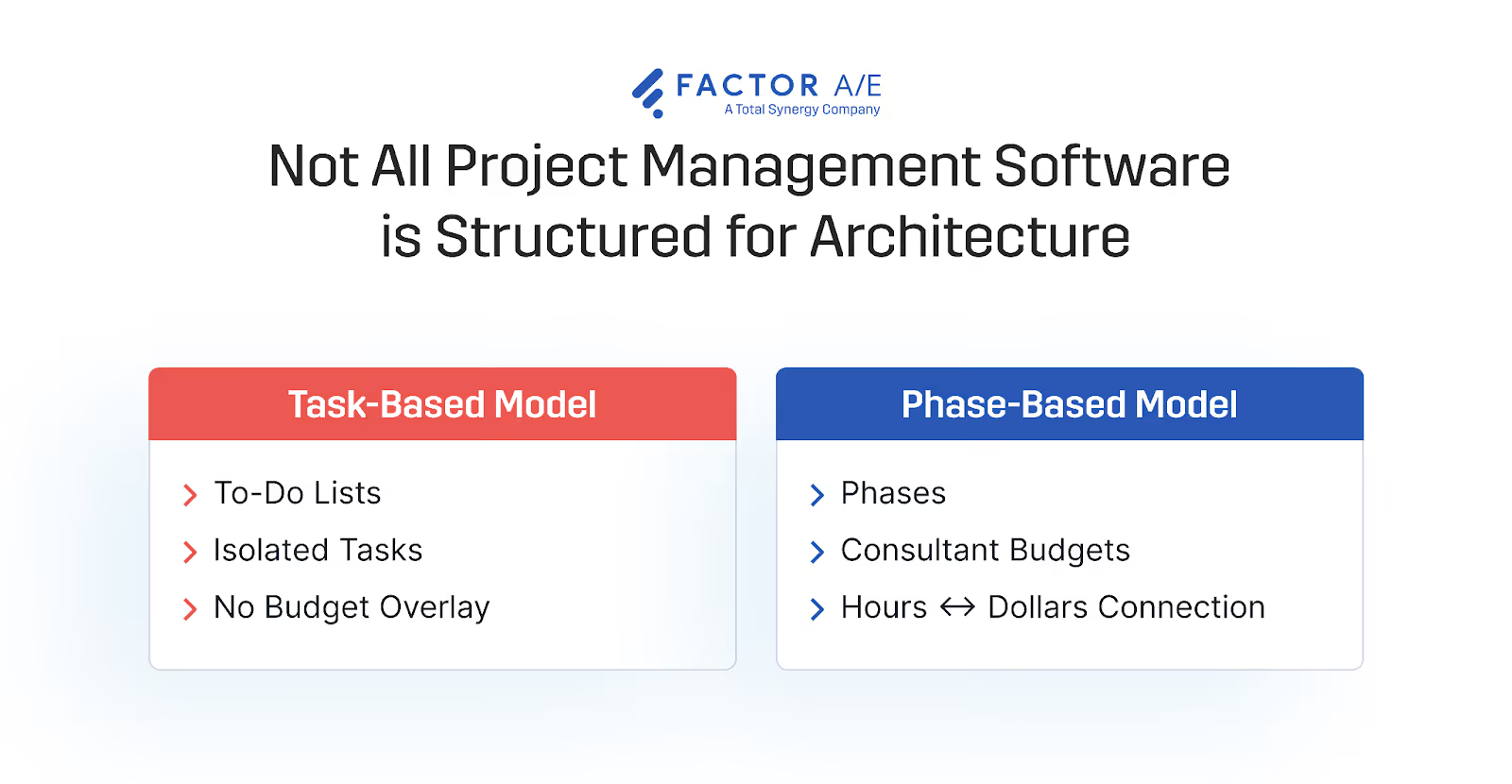
When those relationships live within a single system, project managers can see the financial and operational status of their projects simultaneously.
Software built around project phases
A&E-specific systems structure projects around contractual phases instead of generic task lists.
Each phase contains its own fee allocation, staffing plan, and deliverables. Consultant budgets remain separate from the firm’s fee, and the system tracks both simultaneously.
Project managers can see how hours worked relate to dollars earned within each phase. If a phase begins consuming a budget faster than work progresses, the system makes that relationship visible immediately.
This structure reflects how architecture projects actually run.
Seeing every project’s health before problems compound
Project managers need to see project health while work is still underway.
Factor AE’s Pulse dashboard provides a real-time view of active projects by combining percent complete, project budgets, and timeline progress in a single display.
Instead of assembling project status from spreadsheets or monthly reports, project managers can see which projects track on budget, which are trending over, and which require attention.
Scheduling staff without breaking the budget
Staffing decisions change project financials immediately.
A&E-specific systems connect resource scheduling directly to project budgets. When a project manager assigns someone to a phase, the system compares that assignment against the remaining phase budget.
Project managers can see the financial impact of staffing choices before the hours accumulate. Under-allocation becomes visible. Over-allocation becomes visible.
This connection turns staffing into a financial decision rather than a scheduling exercise.
Simple enough that everyone can use it
Project visibility only works when the entire team uses the system consistently.
A system used only by leadership produces incomplete project data. Missing time entries break the relationship between hours worked, project progress, and financial performance.
Simplicity, therefore, becomes a requirement for data integrity.
Reducing friction encourages adoption. Systems that pre-fill timesheets from scheduled work, support grid-based weekly entry, and allow mobile time logging make it easier for staff to record hours accurately.
Core Architecture achieved full firm-wide adoption after introducing a system that simplified time entry. When everyone records project information consistently, the numbers reflect reality. Project managers can then make decisions based on current project data instead of estimates.
Where to Start When Your Firm Outgrows Its Current PM Approach
Architecture project management doesn't break down because firms lack talented people. It breaks because most firms are structured to keep the PM separated from the financial reality of their projects. Delivery lives in one place. Financials live in another world.
Staffing decisions are made without considering their budget impact. By the time the picture comes together, the margin has already been shaped.
The shift is structural. From reporting after the fact to tracking in real time, and from managing budget, schedule, and staffing as separate streams to managing them as a single, connected view.
Factor AE was built around this problem. Not as a tool that bolts onto a broken project management process, but as a platform designed around how architecture firms actually deliver work: phases, subconsultants, mixed fee structures, and the relationship between hours and dollars. Sign up for a demo or a free trial and see what connected project management looks like.

Recommended articles
.png)
See Factor in action
In one quick call, we’ll show you a simpler way to run projects and get paid faster.
.png)
“I recommend Factor to other firms. The team is great, it’s easy to use, and it has streamlined my project management. It can do the same for yours.”
Adam Mayberry
Architect / Managing Principal


