



Managing a professional engineering or architecture services firm is much like being the architect of a complex structure. Each project and team member is a crucial pillar in the edifice of your business. Effective resource scheduling is the keystone that holds these pillars in balance, ensuring the stability and harmony of the entire structure.
Now think like this: you had a helping hand in this building, a tool that understands the intricacy of your projects. That’s where Factor AE steps in. It’s like having a maestro conducting the flow of information, integrating and visualizing the essential data points that keep your projects in harmony.
There are three main With Factor AE, decision-making becomes intuitive as follows:
1. Understanding the Importance of Allocation Data
First things first, let’s talk about allocation. This involves understanding your total cost and how utilized your team needs to be to meet a revenue potential that covers the cost and makes you profitable.

It also involves understanding the total capacity of your team members and how many hours they are. Here is a more detailed view of these aspects below:
a. Balancing Costs and Utilization for Profitability
For AE firms, managing the economics of team efforts involves balancing the cost of labor against the revenue generated by their work. To ensure profitability, it’s essential to define clear utilization targets that match or exceed the baseline needed to cover costs and generate a profit margin.
b. Maximizing Team Capacity without Overloading
Capacity management is critical in preventing employee burnout and ensuring quality output.
Knowing each team member's maximum capacity and optimal workload helps in achieving a balance where staff are neither underworked (leading to lost revenue opportunities) nor overworked (which can compromise project quality and employee satisfaction).
c. Efficient Scheduling within Capacity Constraints
Effective scheduling is all about placing the right person on the right job at the right time. It requires a deep understanding of individual capacity limits and existing workload.
2. Budget Management
a. Detailed Tracking of Budget Allocation Across Project Phases
Managing a project's budget involves careful planning and monitoring across various stages of the project lifecycle. If you are not careful, you will see budget overruns and inefficient use of financial resources.
b. Aligning Time Management with Budget Constraints
A critical aspect of staying within budget is managing the relationship between logged time, scheduled future time, and the budget for each project phase.
Factor AE's integrative tracking system offers a comprehensive view of time and budget, highlighting discrepancies and enabling corrective actions before they impact the project’s financial health.
3. Scope Management Strategies
a. Clarifying and Delivering on Scope Expectations
The scope of a project defines what needs to be accomplished. Accurate scope definition, broken down into manageable parts with assigned times, is essential for scheduling.
Factor AE facilitates detailed scope planning and tracking, ensuring that all project components are defined, estimated, and scheduled effectively.
b. Time Estimations and Real-time Scope Tracking
For projects to remain on schedule, it's crucial to link time estimations directly to scope elements. Factor AE provides tools that connect tasks with estimated times, updating schedules as tasks are completed and helping project managers stay aware of progress in real time.
c. Monitoring Progress and Adjusting Resources
As projects progress, tracking what has been completed versus what remains is essential for dynamic resource adjustment.
Factor AE’s capabilities allow for immediate visibility into project progress, enabling managers to reallocate resources swiftly and efficiently to address any delays or scope changes.
d. Ensuring Sufficient Scheduling for Remaining Tasks
Ensuring that scheduled hours are sufficient to cover the remaining scope is fundamental to keeping projects on track.
Factor AE’s analytical tools help managers overlay scheduled hours against the scope requirements, making it easier to ensure that all project aspects are adequately covered.
Leveraging Factor for Holistic Management
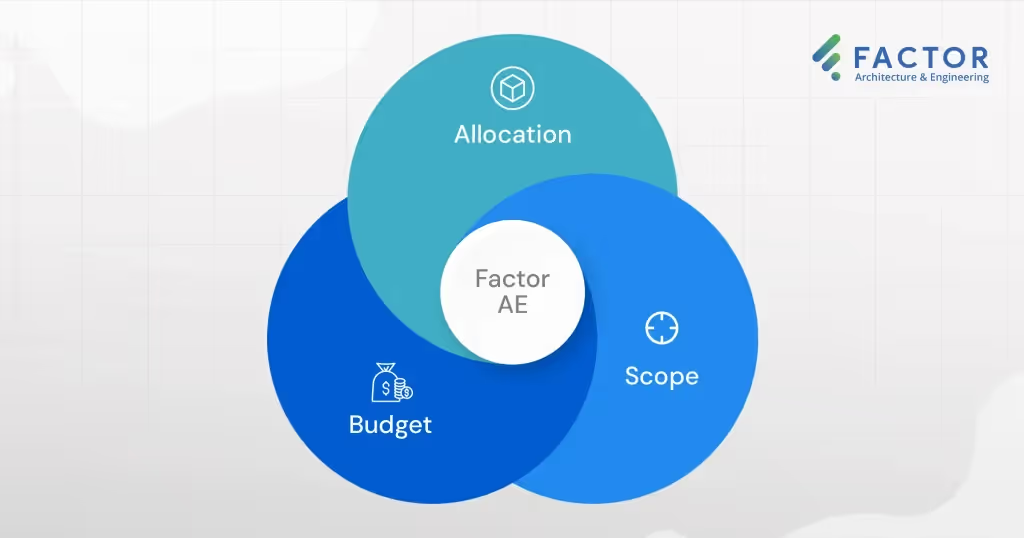
Factor provides a unified platform where all these aspects can be monitored and adjusted in real-time. It simplifies resource management by allowing you to:
- View and assign hours directly linked to project tasks, phases, and budgets.
- Monitor real-time data on team utilization, budget consumption, and scope delivery.
- Make informed adjustments to ensure projects stay on track in terms of time, budget, and scope.
By integrating tools like Factor, firms can move from reactive to proactive management, anticipating challenges and adjusting resources dynamically to meet project demands efficiently and effectively.
Conclusion
Effective resource management in professional services is about more than just tracking hours; it's about strategic planning and execution that aligns team capacity with project budgets and scope requirements.
By understanding the crucial aspects of allocation, budget, and scope, and utilizing comprehensive tools like Factor, firms can ensure they not only meet but exceed their operational and financial goals.

Recommended articles
.png)


See Factor in action
In one quick call, we’ll show you a simpler way to run projects and get paid faster.
.png)
“I recommend Factor to other firms. The team is great, it’s easy to use, and it has streamlined my project management. It can do the same for yours.”
Adam Mayberry
Architect / Managing Principal


