



Construction documents determine whether a project stays predictable or becomes constant firefighting.
They influence how confidently work is priced, how cleanly activities are sequenced, how reliably materials are procured, and how often teams are forced to stop and resolve avoidable issues.
The problem is, many teams treat construction documentation as a one-off deliverable, not a core driver of operational success, promoting avoidable downstream slowdowns like:
- Dozens of RFIs
- Slow decision-making
- Erratic, unsystematic workflows
- PMs who spend more time reacting than managing
In this article, we break down how construction documents should be structured, coordinated, and managed to help project managers reduce firefighting and maintain control throughout delivery.
Why Construction Documents Matter More Than Most Teams Realize
Construction documents (CDs) are the complete set of drawings, specifications, schedules, and supporting information used to price, permit, coordinate, and build a project.
A robust set of construction documents:
- Consolidates and finalizes design decisions across disciplines
- Translates design intent into a form that contractors, subcontractors, and regulators can rely on for pricing, resource scheduling, and execution
- Resolves technical details, constructability issues, and inter-disciplinary coordination
- Documents code compliance clearly enough to support approvals
Many firms underestimate the downstream importance of strong construction documentation.
They treat documentation as a technical formality or paperwork milestone that ends once a set is issued, when they should treat CD development as an operational workflow that drives coordination, risk reduction, and project predictability.
As a result, documentation often fails to stay up to date as the project evolves and the scope changes. This shifts risk downstream and forces project managers to manage inconsistencies during delivery, impacting A&E firm profitability.
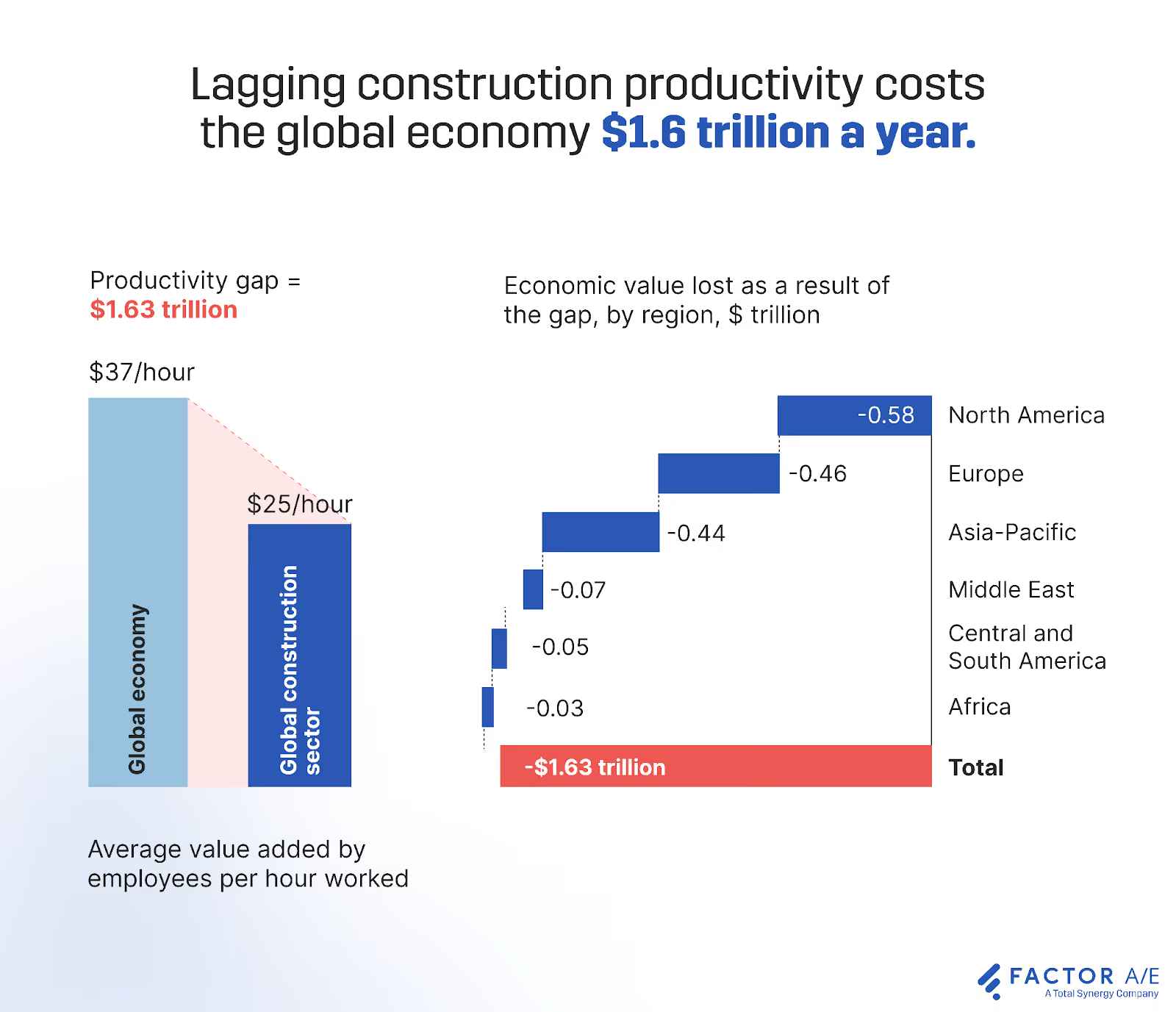
Research published in Architectural Engineering and Design Management has shown a clear link between document quality and construction rework. Researchers found that deficiencies in design documentation are a material contributor to rework, which in turn drives cost growth and schedule disruption during delivery.
In high-performing firms, CDs function as the project’s technical and contractual baseline, enabling:
- Faster permit approvals supported by complete documentation
- Accurate contractor pricing based on measurable quantities and clearly defined scopes
- Proactive procurement planning aligned with lead times and sequencing
- Fewer RFIs, clarifications, and change orders
- Field execution that minimizes reliance on assumptions or design reinterpretation, reducing clashes and constructability conflicts
- Improved schedule reliability, inspection timing, cost predictability, and owner confidence
Core Components of a Complete, Coordinated Construction Document Set
Construction documents include all technical documentation required for permitting, pricing, coordination, and construction, with each component reinforcing and validating the others.

A coordinated CD package is defined not just by the presence of these components, but by how tightly they interlock: drawings reinforce specifications, schedules validate quantities, details resolve interfaces, and conditions govern execution.
Drawings across disciplines
Drawings make up a significant chunk of a CD set, including:
- Architectural plans, elevations, sections, details, and interior documents
- Structural framing plans, foundation systems, reinforcing details, and connection diagrams
- Mechanical, electrical, and plumbing plans, riser diagrams, schematics, and equipment layouts
- Civil and site plans showing grading, utilities, drainage, access, and easements
- Landscape drawings, where applicable
It is critical that all drawings align dimensionally, spatially, and technically to eliminate cross-discipline conflicts.
Specifications
Specifications are written documents that govern materials, systems, assemblies, and performance standards.
They establish requirements for installation, testing, and quality, and must be fully coordinated with drawings across:
- Terminology
- Product designations
- Material types
- Performance criteria
Schedules
Schedules provide measurable, quantifiable data for estimating, procurement, and installation.
Standard construction document sets include schedules for doors, windows, finishes, equipment, and fixtures, as well as component lists.
Schedules must be internally consistent and match corresponding tags and callouts within the drawing set.
Contracts, general conditions, and special conditions
These documents define contractual obligations, roles, responsibilities, and risk allocation.
They clearly outline requirements for compliance, quality standards, submittals, and change management, and serve as the governing framework for all construction documents.
Cost-related documentation
Cost-related documentation includes:
- Schedules of Values (SOVs)
- Preliminary estimates
- Cost breakdowns
Alignment with drawings and specs is crucial for supporting accurate pricing, ensuring cost expectations are grounded in quantifiable information, and preventing scope gaps.
Coordination details and diagrams
This subset of construction documents includes typical details, assemblies, transitions, clearances, tolerances, and coordination sheets.
It captures the interfaces between disciplines (e.g., structure–MEP, architectural–mechanical, civil–site), reduces reliance on assumptions, and helps trades understand spatial and technical requirements.
The Most Common Pain Points in Construction Documentation (and How to Fix Them)
Solve these common challenges, and you’ll go a long way toward building a repeatable CD management protocol that reduces downstream firefighting (your PMs will thank you later).

Incomplete or conflicting documents
Drawings, specs, and schedules often contradict each other or leave critical information undefined.
At best, this leads to wasted time hunting down correct info: Project teams spend 13% of their working hours searching for project information. At worst, it can lead to scope disputes, avoidable RFIs, and even redesign during construction.
Solve this by conducting strict document coordination reviews and implementing a document completeness checklist to be completed before issuing any CD set.
Lack of standardization across projects and disciplines
In many firms, each architect, consultant, or subcontractor organizes sheets, names files, and defines scopes differently.
What comes as a result shouldn’t come as a surprise:
- PMs waste time deciphering formats
- Trades misinterpret intent
- Estimating becomes inconsistent
- Quality varies across projects
The fix here is simple. Enforce firmwide standards for sheet organization, naming conventions, detail levels, and document templates.
Version control failures
Working from outdated document versions is an avoidable but common challenge.
Teams work from old versions of PDFs, emails, or markups, leading to incorrect installations, procurement of wrong materials, and costly rework.
Stop this from happening in the first place with centralized document management and guidelines around revision tracking and naming conventions.
For example, in a large metro-line project, implementation of a Common Data Environment led to more consistent information flow and reduced manual document-handling errors.
Discipline misalignment
Architectural, structural, MEP, and civil drawings often progress at different speeds, leaving unresolved clashes until late in the process.
This kind of miscommunication creates real, practical problems on-site, like:
Ductwork interfering with beams
- Conduits routed through framing
- Grade conflicts
Solutions here include structured coordination checkpoints, multidisciplinary reviews, and early clash resolution.
Rushed or underdeveloped document sets
Compressed schedules force teams to issue drawings before coordination is complete or details are fully resolved.
This leads to more RFIs, unplanned redesign efforts, and margin erosion.
Realistic timeline planning is the most important solution here, but introducing quality approvals before CDs are issued is a good backstop too.
Fragmented storage and poor decision tracking
Key decisions, clarifications, and changes are often scattered across emails, spreadsheets, PDFs, and messaging apps.
This leads to inconsistent communication between trades and makes it difficult to defend decisions when clients dispute them.
To solve this, you’ll need to introduce unified solutions for document storage, decision tracking, and transparent revision histories that can be surfaced as needed.
Lack of integration between drawings, specs, schedules, and cost documentation
Teams regularly work in siloes, with disconnected A&E software systems and processes that are only loosely checked against each other (if at all).
The consequences are predictable:
- Pricing errors
- Duplicated scope
- Inaccurate procurement planning
- Poor project cost management
Where possible, build software integrations between systems to improve data sharing. Then introduce coordinated workflows in which all components reference the same master material.
A Standardized Workflow for Producing and Managing Construction Documents
Introduce this firmwide workflow to improve the consistency and accuracy of construction documentation across all projects.
Define clear ownership across all disciplines
Assign responsibility for each component of the CD package, including architectural, structural, MEP, civil, and specialty sheets.
Establish who owns, creates, and updates assets such as:
- Specifications
- Schedules
- Details
- Code notes
- Coordination drawings
Consider that construction documents often need to be revised throughout the project, especially early on, so clarify roles for updates, responses to RFIs, and resolution of cross-discipline conflicts.
Establish structured coordination checkpoints
Set recurring milestones where architectural, structural, MEP, and civil teams review their work collectively. During these reviews, check for:
- Design clashes
- Dimensional alignment
- Consistency between drawings and specs
Use these checkpoints to identify issues early, reduce rework, and ensure alignment before issuing any set.
Standardize naming conventions and revision workflows
Improve comprehensibility across all CD packages by enforcing consistent sheet numbering, file naming, and revision identification across all disciplines.
ISO 19650 is a good standardized option for BIM file naming conventions.

Define how revisions are issued (e.g., clouding, deltas, revision descriptions, and transmittals), and establish procedures for managing document versions. This helps ensure that every team member and trade partner understands which version is current and how superseded drawings are retired.
Implement rigorous QA and completeness checks before issuance
Checklists are an effective way to introduce QA checks and ensure consistency.
Use discipline-specific checklists covering:
- Dimensions
- Tags
- Callouts
- Notes
- Details
- Specs alignment
- Code compliance
- Scope clarity
Conduct final cross-discipline reviews to verify consistency and eliminate conflicting information, and require sign-offs from discipline leads to confirm completeness prior to issuing permit, bid, or construction sets.
Develop clear workflows for managing RFIs, submittals, and changes
RFIs are a standard part of construction, but how they are handled is rarely standardized.
Create consistency by defining how RFIs are logged, tracked, reviewed, and responded to, with accountability for response times.
Create submittal workflows that outline review responsibilities, required documentation, and approval paths, and establish a controlled process for changes, including:
- Documentation required
- How to handle pricing impacts
- Guidance revision issuance
- Expectations around stakeholder communication
Track decisions and approvals in a centralized system
Document key decisions, design clarifications, owner directives, and coordination resolutions in one place.
Record who approved each change, when it was made, and how it affects the CD package, supporting risk management and helping avoid disputes.
Ensure that all components interlock before issuing any CD set
Drawings, specifications, schedules, and cost documentation must reinforce each other, not contradict one another.
QA processes, checklists, and leadership sign-offs all support this. Once aligned, issue the set through a controlled distribution process to ensure all teams receive the correct version.
How Centralized Visibility Improves Documentation Quality
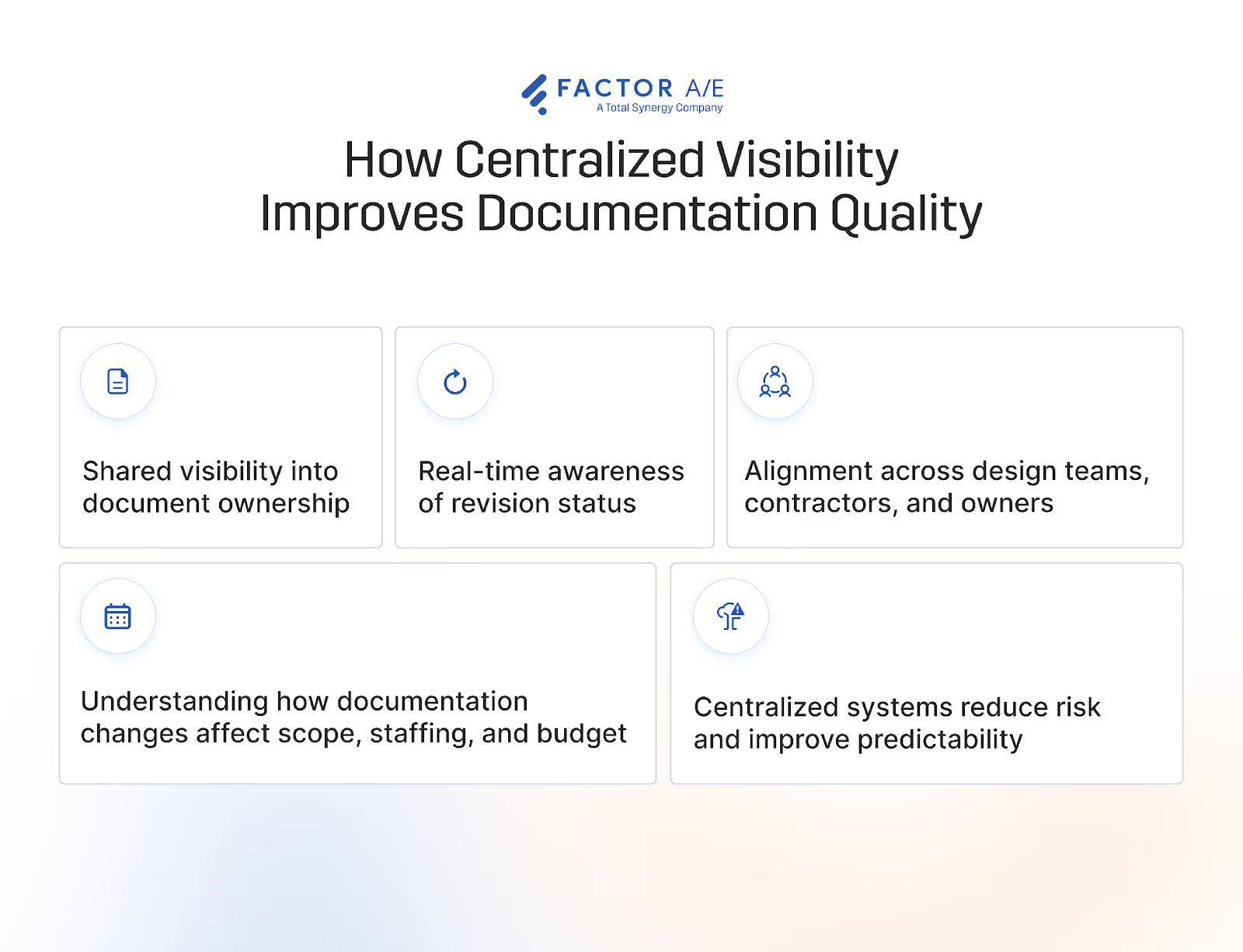
Here’s how centralized visibility directly improves documentation quality.
Shared visibility into document ownership
When visibility is shared, all contributors can see exactly who owns each drawing, spec section, schedule, and detail.
This eliminates ambiguity, reduces duplicated effort, and provides PMs with immediate clarity on coordination responsibilities.
Real-time awareness of revision status
When teams can see which sheets changed, why they changed, and what downstream tasks those changes trigger, it reduces the risk of trades working from outdated drawings and prevents procurement errors caused by silent revisions.
A&E project management platforms like Factor support this by centralizing updates so everyone works from a single authoritative source.
Understanding how documentation changes affect scope, staffing, and budget
Revisions often expand the scope of one discipline, compress timelines for another, or increase the coordination workload.
Centralized visibility in solutions like Factor helps PMs forecast and schedule resource needs, flag scope creep early, and anticipate cost implications by connecting documentation changes to:
- Staffing plans
- Time budgets
- Fee allocations
Alignment across design teams, contractors, and owners
When all stakeholders operate from the same information, it reduces discrepancies in what each party sees, reduces friction, improves coordination, and accelerates decision-making.
Centralized systems reduce risk and improve predictability
Better visibility means fewer surprises, cleaner coordination, and less rework during construction.
Factor’s The Pulse functions as the operational backbone that ties document ownership, coordination tasks, deadlines, and revisions together. It helps teams produce consistent, buildable document sets that support predictable delivery.
Explore Factor today. Request a demo.

Recommended articles
.avif)


See Factor in action
In one quick call, we’ll show you a simpler way to run projects and get paid faster.
.png)
“I recommend Factor to other firms. The team is great, it’s easy to use, and it has streamlined my project management. It can do the same for yours.”
Adam Mayberry
Architect / Managing Principal


