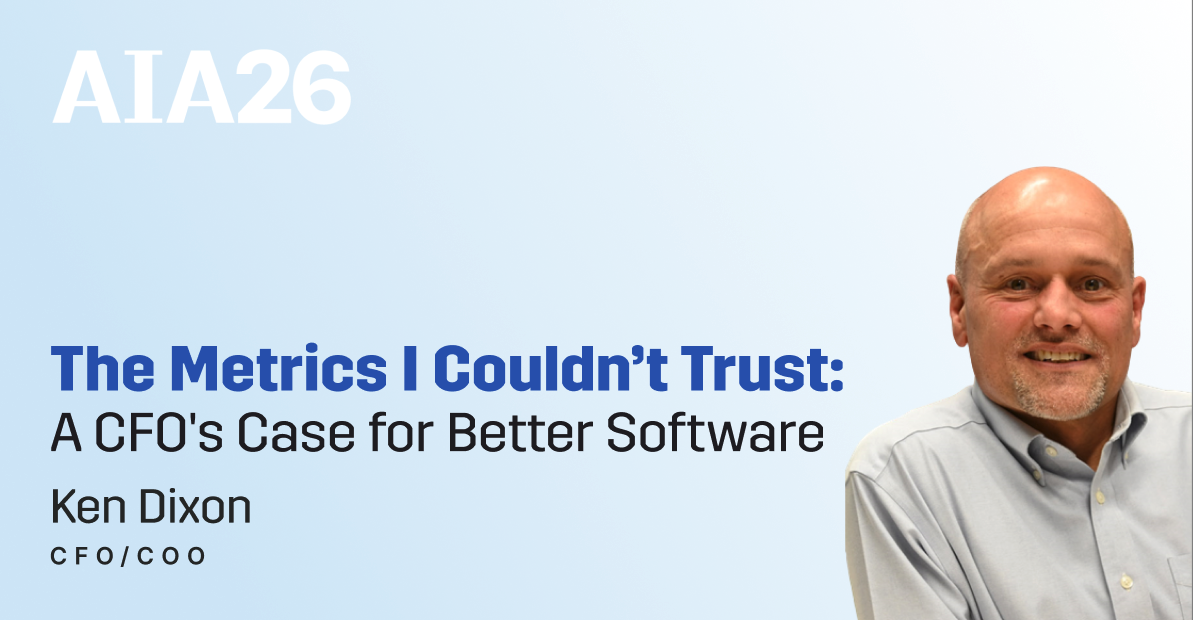
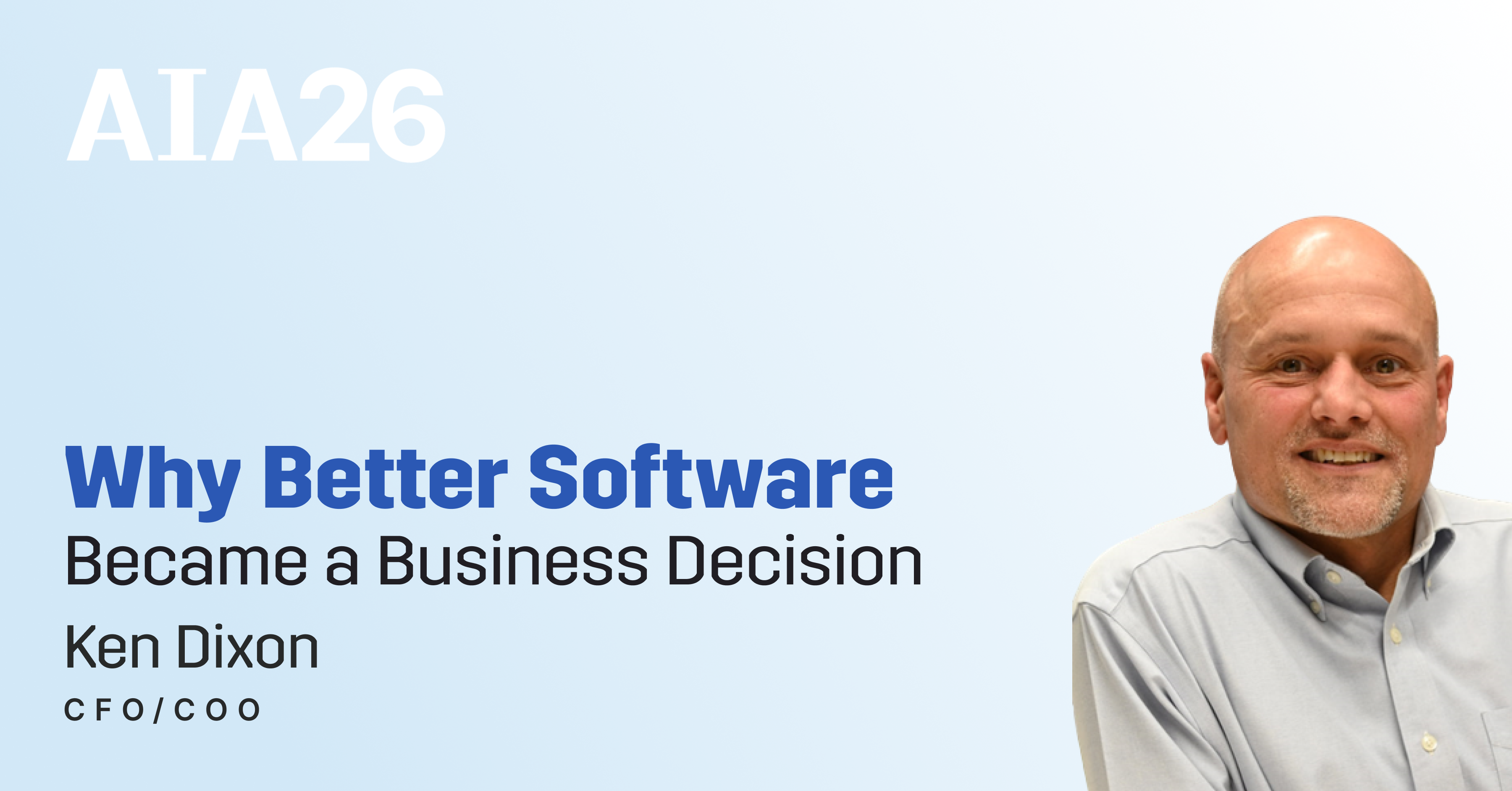

Presented live at AIA26 in San Diego, this session features Ken Dixon, previous CFO & COO at Fusion Design Consultants. As a longtime finance leader and Factor customer, Ken shares how choosing the right project management software became a strategic business decision, and why firms should evaluate software based on the value it delivers across the entire organization.
Software Is More Than Just a Tool
Many firms think of project management software as something that supports accounting, project managers, or timesheets.
Ken encourages firms to think much bigger.
Drawing on his experience leading a growing architecture firm, he explains that project management software is the operational foundation of the business. Like the systems inside a building, it supports everything around it. When the software isn't performing well, the entire firm feels the impact.
Choosing the right platform isn't simply an IT decision. It's a strategic investment that influences financial performance, project delivery, employee experience, and long-term growth.
Start with a Thorough Evaluation Process
Before selecting new software, Ken recommends taking a structured and objective approach.
Rather than comparing feature lists, his team identified exactly what every type of user needed from the system, including project managers, architects, designers, finance teams, and leadership.
They also documented every report, dashboard, metric, and piece of information they wanted the software to provide.
By understanding both the inputs and outputs the business required, they were able to evaluate software based on how well it supported the firm's day-to-day operations instead of simply checking boxes on a comparison sheet.
The Hidden Cost of the Wrong Software
Before implementing Factor, the firm relied on Deltek Ajera.
As Ken explains, the software wasn't the right fit for the business. Data migration issues created inaccuracies in financial reporting, employees struggled to learn the system, and project teams lacked confidence in the information they were seeing.
To keep the system running, the firm hired outside consultants, outsourced bookkeeping, and relied on additional support just to manage day-to-day operations. Those services cost between $7,000 and $12,000 every month, creating significant ongoing expenses beyond the software itself.
More importantly, valuable time was being spent troubleshooting problems instead of delivering projects and growing the business.
Employee Adoption Matters
One of Ken's biggest takeaways is that even the most powerful software won't deliver value if people don't use it.
Creative professionals often viewed the existing system as a finance tool rather than something that helped them manage projects more effectively. That hesitation created inconsistent data, additional administrative work, and frustration across the organization.
Successful software should be intuitive enough that every user understands its value and feels confident using it as part of their daily workflow.
Think Beyond the Purchase Price
When evaluating software, Ken encourages firms to look beyond subscription costs alone.
The true cost of a system also includes:
- Training and onboarding
- Outside consultants
- Administrative overhead
- Time spent correcting errors
- Lost productivity
- Employee frustration
- Limited visibility into project performance
When all of these factors are considered together, choosing the right software becomes a business strategy rather than simply a purchasing decision.
Why Factor Was the Right Decision
After carefully evaluating the firm's needs, Ken and his team concluded that they needed more than a replacement for their existing software. They needed a platform that was intuitive, reliable, and designed specifically for the way A&E firms operate.
For Ken, Factor stood out because it combined project management, financial visibility, resource planning, and reporting in one connected system. The platform gave the team greater confidence in their data, reduced the need for manual workarounds, and made it easier for employees across the firm to adopt and use the software effectively.
Just as important, Ken emphasizes that the decision wasn't based on features alone. It was about finding a long-term partner that understood the challenges A&E firms face and could support the firm's growth for years to come.
Looking back, Ken believes the move to Factor wasn't simply a software upgrade. It was a strategic business decision that gave the firm better visibility, more reliable information, and a stronger foundation for future success.