
Principal Architect: The Role, the Pay, and the Business You're Really Running
A principal architect does more than oversee design. Learn what the role involves, how to become one, what principal architects earn, and how successful firms stay profitable.



From the outside, becoming a principal architect can look like the highest rung on the design ladder at an A&E firm.
However, from the inside, it's the point where an architect becomes responsible for the practice that makes the work possible.
The title still carries design authority, but the responsibility changes. Instead of focusing only on delivering successful projects, principals must also consider the firm's long-term health: winning the right work, developing people, strengthening client relationships, making difficult business decisions, and creating the conditions for great architecture to occur consistently.
That transition catches many architects off guard because the profession spends years teaching design, documentation, and project delivery, but far less time preparing them to lead a practice.
Understanding that shift explains not only what principal architects do, but also why they rely on different information, make different decisions, and measure success differently from the architects leading individual projects.
Who is a Principal Architect?
A principal architect is a senior leader at an architecture or engineering firm who combines design authority with responsibility for the practice itself. Depending on the firm, the role may also include equity ownership, although not every principal is an owner.
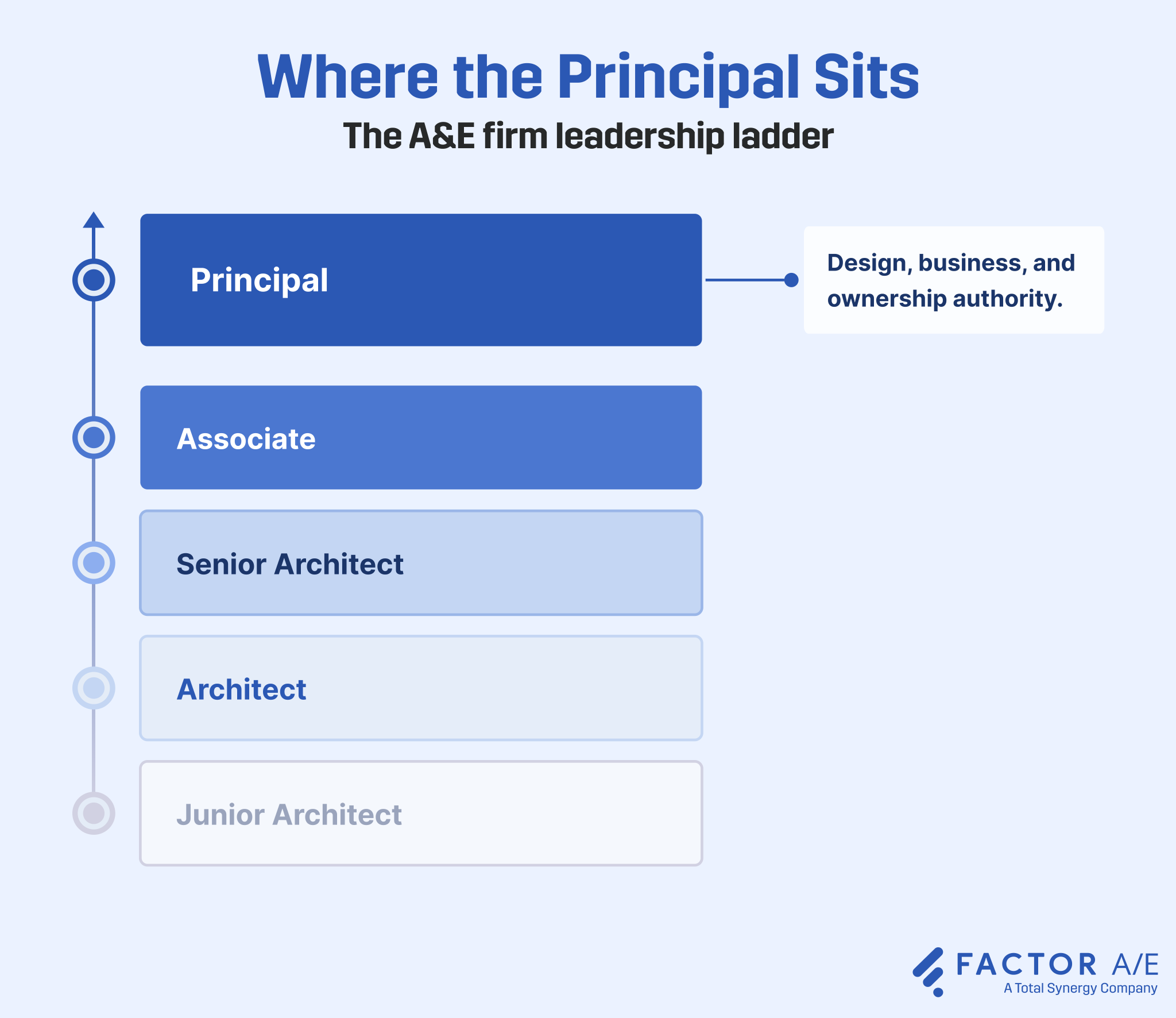
The title isn't applied consistently across the profession. Some firms reserve it for equity owners or partners, while others use it for senior leaders without an ownership stake.
That ambiguity is reflected in discussions among architects, where debates over who qualifies as a principal often hinge on differences in firm structure rather than on a single industry-wide definition.
What remains consistent is what the title represents. A principal architect has moved beyond being the most senior designer on a project to becoming one of the people responsible for guiding the practice itself.
How that responsibility looks from one firm to another may differ, but the expectation is the same: principals help shape where the firm is going, not just the work it produces.
Principal Architect vs Project Architect
A project architect is responsible for delivering a single project, so their attention stays on the project at hand. They coordinate consultants, resolve technical issues, guide the design through each phase, and ensure the drawings are buildable.
A principal architect works across the firm's portfolio rather than within a single project. Instead of focusing on a single team's delivery, they make decisions that affect multiple projects simultaneously, balancing client commitments, staffing, workload, and financial performance across the firm.
The project architect keeps a project moving. The principal ensures the firm can continue to deliver projects successfully.
A senior architect sits between the two by providing technical leadership and design oversight across multiple projects. They stop short of the firm-wide responsibility of a principal.
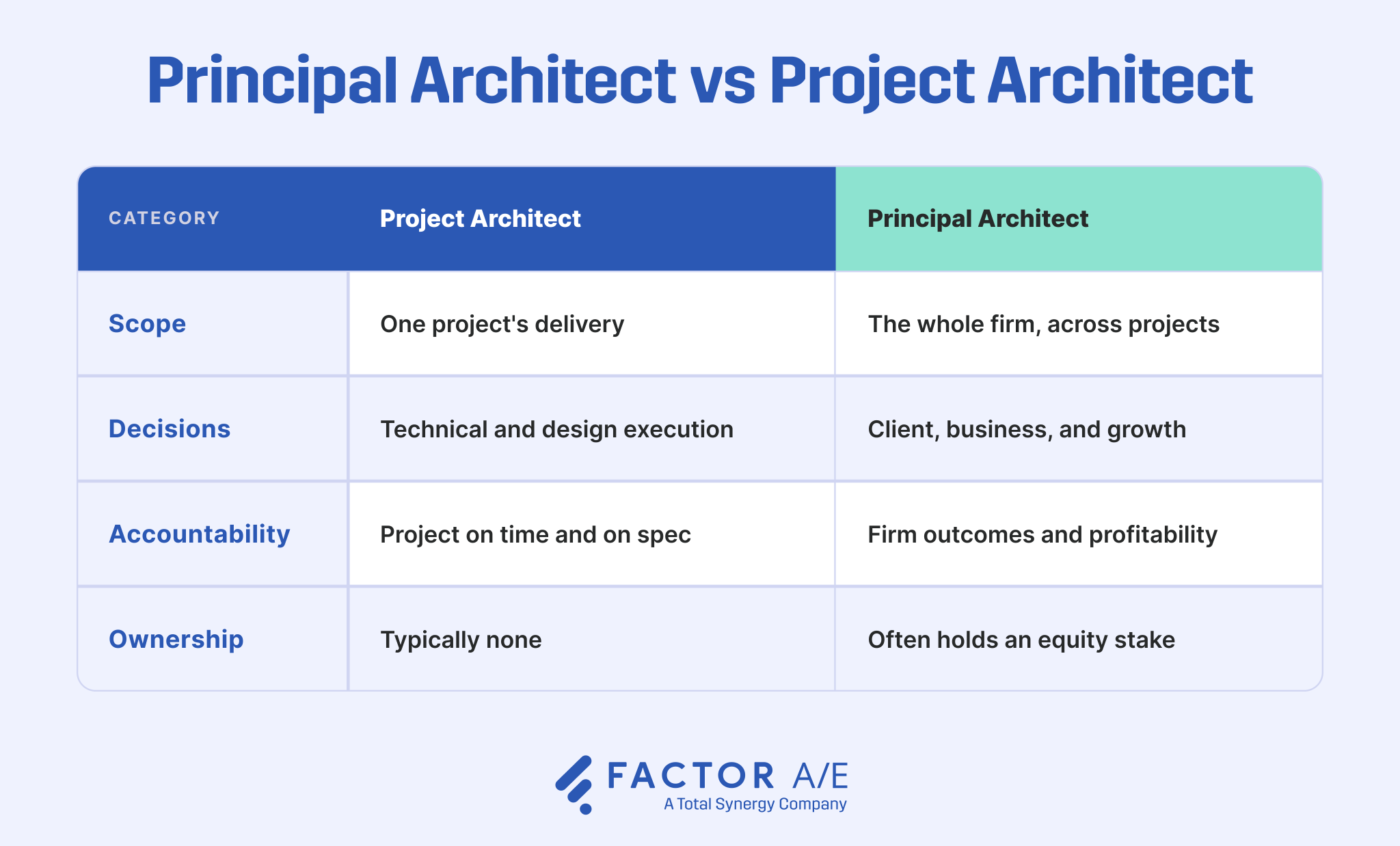
In simple terms, a project architect delivers the work, a senior architect leads the technical side, and a principal helps ensure the firm continues to grow, serve its clients well, and deliver successful projects over the long term.
What a Principal Architect Does Day to Day
Few principal architects have a day that stays focused on design for long. A morning might begin with a project review before shifting to a client meeting, a proposal discussion, or a staffing decision.
By the afternoon, they may be resolving a contract issue, reviewing the firm's financial performance, mentoring a project team, or interviewing a potential hire. Design reviews still happen, but they're woven between the decisions that keep the practice moving.
Keeping that pace depends on having reliable information close at hand. Whether principals are reviewing project budgets, staffing, proposals, or financial performance, they need to move between those decisions without piecing the picture together from disconnected systems.
Very little of that schedule is fixed. A client issue can push a proposal to the afternoon. A staffing problem can interrupt a design review. A project that's drifting off budget may suddenly become the most important conversation of the day. Rather than working through a predictable list of tasks, principals spend much of their time switching between decisions that affect different people, projects, and priorities across the firm.
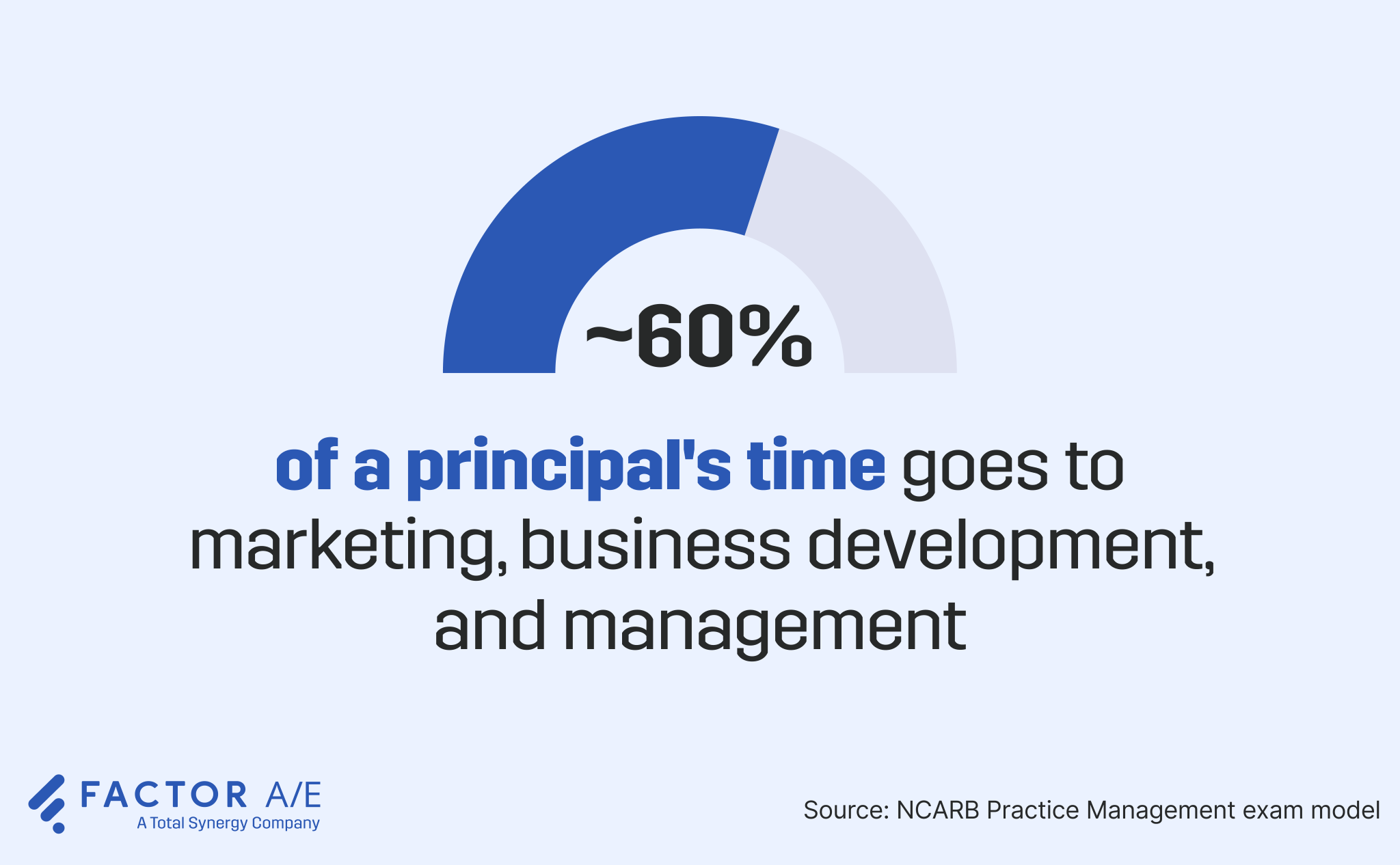
That balance reflects how the profession itself views the role. NCARB's Practice Management exam allocates roughly 60% of a principal's scenario to business development, marketing, and firm management rather than design work, reinforcing that leadership extends well beyond technical delivery.
In larger firms, more of the project delivery is delegated, allowing principals to spend more time on strategy, major client relationships, and guiding the firm's direction.
The mix changes, but the need to move constantly between leadership, commercial decisions, and project oversight does not.
How to Become a Principal Architect
Becoming a principal usually starts long before anyone offers you the title. By the time partners begin talking about principal or ownership, they're rarely deciding whether you're a capable architect. Instead, they're now deciding whether they trust you to help lead the practice.
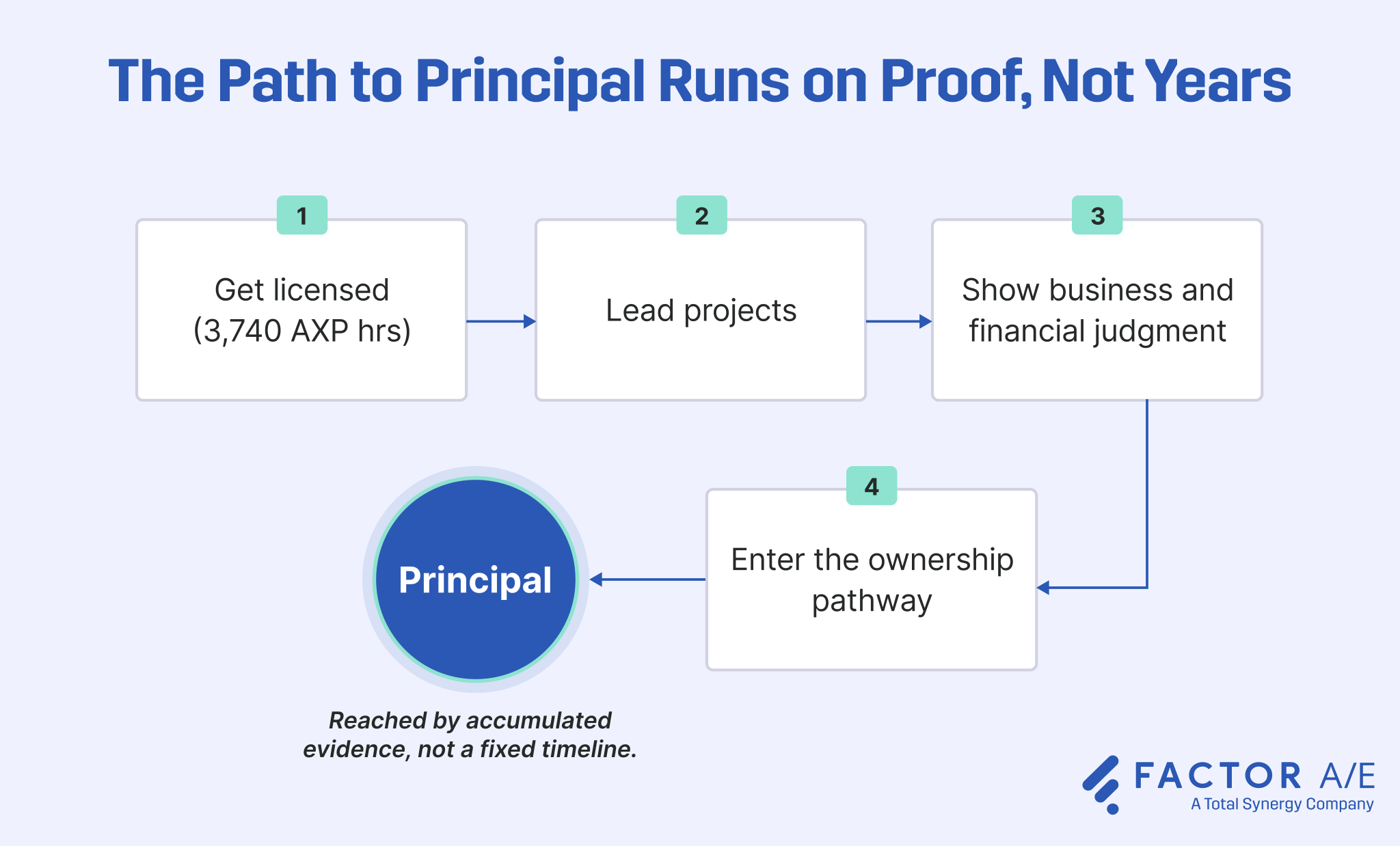
Step 1: Build the professional foundation
Every principal starts here. Complete your Architectural Experience Program (AXP), pass the Architect Registration Examination (ARE), and earn your license. In 2024, NCARB reported that candidates took an average of 12.9 years from the start of college to become licensed, reflecting the breadth of experience expected before architects take on greater responsibility.
If you're still working toward licensure, focus on gaining broad project experience rather than narrowing your work too early. The strongest foundation comes from seeing how projects move from proposal to construction.
Step 2: Become the architect people trust with difficult projects
The shift toward being a principal architect often begins when you're given projects that carry more risk, more complexity, or more demanding clients. At this stage, firms aren't only watching your technical ability but also your judgment.
Can you coordinate consultants, manage competing priorities, maintain the client’s confidence, and make sound decisions when the project deviates from the plan?
If you're ready for the next step, volunteer for projects that stretch your judgment, not just your technical skills. The experience that prepares principals usually comes from navigating uncertainty rather than producing more drawings.
Step 3: Step into the business conversations
Sooner or later, every future principal realizes there is another side to the practice that isn't visible to the project team.
Proposal meetings, fee negotiations, staffing discussions, contracts, and business development all shape the projects long before design begins.
It's also where many architects first encounter the business systems principles they rely on every day. Understanding how the firm tracks workload, budgets, proposals, and financial performance becomes part of understanding how the practice actually runs.
Principals learn to think about those decisions because they eventually become responsible for them.
If your role is still project-focused, ask to sit in on proposal meetings, client presentations, fee discussions, or strategic planning sessions. Watching experienced principals make decisions is one of the fastest ways to develop business judgment.
Step 4: Become an architect that the firm relies on beyond design
Technical excellence gets architects noticed, but leadership earns trust. To move toward principal, you need to demonstrate that you can build strong client relationships, mentor junior architects, strengthen teams, solve complex problems, and represent the practice well.
The question gradually shifts from "Can you deliver great work?" to "Can you help build a stronger firm?"
To earn the trust of leadership, look for opportunities to contribute beyond your own projects, as they prepare you for leadership within the firm.
Step 5: Move into firm leadership or ownership
Depending on the firm, becoming a principal may involve buying into the practice, receiving an equity stake, or joining a shareholder group. Other firms distinguish between equity and non-equity principals, while some use the title for senior leaders who do not own equity.
There is no universal model, and architects themselves often point out how much these arrangements vary from one firm to another.
There is no standard timeline for becoming a principal architect because careers progress at different rates, firms promote candidates differently, and ownership structures vary.
What remains consistent throughout is that principals aren't chosen simply because they've spent enough years in practice. They're trusted because they've shown they can lead the practice, not just the projects it delivers.
What Do Principal Architects Earn?
Compensation becomes harder to compare once architects reach the principal level.
Salary is often only one part of the picture, with bonuses, profit sharing, or equity distributions playing a significant role depending on how the firm is structured.
That means two principals with the same salary may earn very different total compensation once bonuses, profit sharing, or equity distributions are taken into account.
For a national benchmark, the closest verified data comes from the U.S. Bureau of Labor Statistics, which reported a median annual wage of $96,690 for architects in May 2024. The highest-paid 10% earned more than $159,800.
Because the Bureau does not track principal architects as a separate occupation, principals generally fall toward the upper end of that range, depending on their responsibilities and their firm's structure.
In practice, compensation depends on far more than the title itself. Equity ownership, firm profitability, region, years of experience, and the size and complexity of the practice all influence what a principal ultimately earns.
The AIA's compensation research reflects the same patterns, showing that ownership and firm leadership often have as much impact on earnings as architectural experience does.
Perhaps the biggest shift, though, is how principals think about compensation. Earlier in their careers, architects are primarily paid for the work they do.
How to Succeed as a Principal Architect
The transition to principal architect comes with a different way of paying attention. Experienced principals learn to spot issues while they're still small, balance the needs of today's projects with tomorrow's workload, and build systems that help the firm make better decisions. Those habits are what separate holding the title from succeeding in the role.
Keep small problems from becoming expensive ones
One of the hardest lessons principals learn is that projects rarely become unprofitable overnight.
More often, the warning signs show up as a phase taking longer than expected, extra client requests creeping into the scope, or a team burning through more hours than planned.
Left unchecked, those small issues erode margins, lead to difficult client conversations, or end up in disappointing project outcomes.
The challenge is that by the time a project closes and the final numbers arrive, the opportunity to change the outcome has usually passed.
Successful principals review project health while work is still underway, when they can adjust staffing, revisit scope, or reset expectations before a manageable issue becomes an expensive one.
Think beyond the project in front of you
Project architects are trained to focus on the success of the projects they deliver. Principals have to think one level higher, where every decision about fees, staffing, and client commitments affects not only the current project but also the firm's capacity to deliver the next one.
Your success is measured by whether the practice can continue to deliver great work across all its projects. That often means making decisions that feel uncomfortable in the moment, such as:
- Delaying the start of a project because the team is already stretched
- Turning away work that isn't a good fit
- Investing time in client relationships instead of another design review
Give yourself visibility while there's still time to act
Good judgment depends on good visibility. As a principal, you can't afford to discover budget overruns, delayed time entries, or slipping project margins weeks after they happen.
You need a clear picture while work is still in progress, when decisions can still influence the outcome.
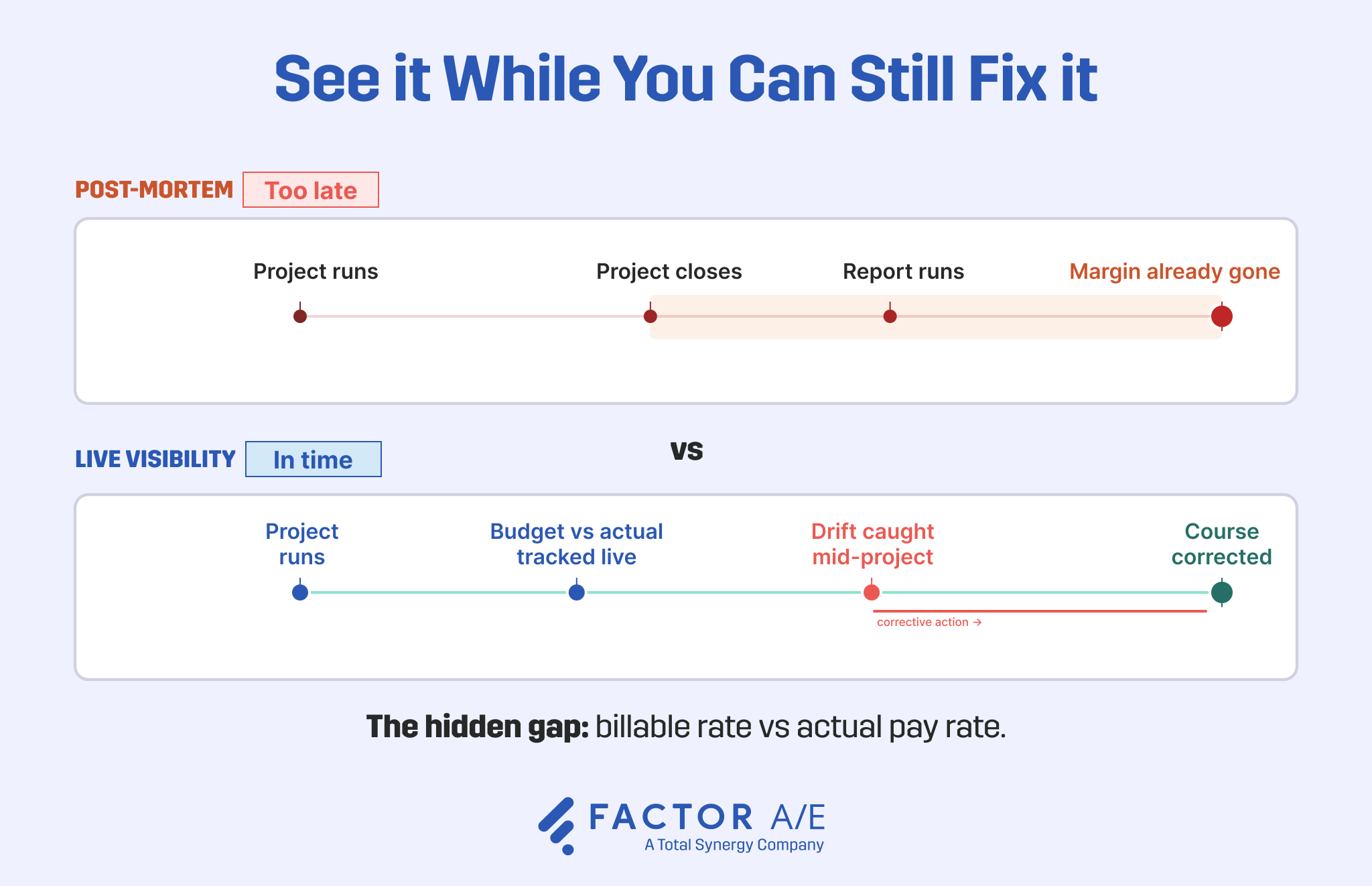
That means giving project managers the information they need, reviewing performance regularly, and making sure financial and project data stay connected rather than living in separate spreadsheets.
For many firms, that's where A&E practice management software becomes part of the workflow. Instead of chasing information across spreadsheets and disconnected tools, principals can review projects, budgets, staffing, and financial performance in one place while there's still time to act.
Becoming A Principal Who Can Steer The Firm
Becoming a principal architect marks the point at which the measure of success changes. Great design still matters, but it is no longer enough on its own. Principals are trusted to lead the practice behind the projects: strengthening client relationships, supporting their teams, making sound business decisions, and creating the conditions for great architecture to happen consistently.
The firms that thrive are led by principals who can see what the practice needs before it's too late to act. They spot projects drifting before margins disappear, recognize when teams are stretched too thin, and make decisions early enough to change the outcome rather than explain it afterward.
That's where visibility becomes essential to provide you with the information you need while projects are still active and decisions are still reversible.
Factor AE is built around that way of working. Bringing project budgets, timelines, invoicing, and financial performance into one place helps principals see how the practice is performing before small issues become expensive ones.
If you want to understand where visibility breaks down in your own firm, Factor AE's Process Mapper shows how work moves through your practice and where better information can lead to better decisions.

Recommended articles



See Factor in action
In one quick call, we’ll show you a simpler way to run projects and get paid faster.
.png)
“I recommend Factor to other firms. The team is great, it’s easy to use, and it has streamlined my project management. It can do the same for yours.”
Adam Mayberry
Architect / Managing Principal


