Best Deltek Ajera Alternatives for A&E Firms (2026)
Is Deltek Ajera too complex for your A&E firm? Compare 6 alternatives by firm size, QuickBooks dependency, and billing type to find the one your PMs will actually use.



Running a project-based A&E firm means managing two realities simultaneously.
One is financial: what has been billed, collected, and booked. The other is operational: whether the fee still covers the remaining work, which phases are burning through too quickly, and whether the team has the capacity to take on more.
Deltek Ajera is built to handle the first reality extremely well. For firms with complex accounting needs, strong finance ownership, or compliance-heavy work, that depth can be a real advantage.
But for many growing firms, the bigger challenge is not keeping the books clean. It is getting clear, timely answers about what is happening inside projects while there is still time to act.
That is where the trade-off starts to show. The more effort it takes to get answers for everyday projects, the more likely teams are to start managing work elsewhere through spreadsheets, side systems, and manually compiled updates. Deltek Ajera may still hold the official numbers, but it is no longer the place the team relies on to run the project.
Once that gap opens up, the question is no longer whether Deltek Ajera works. It is whether it still fits the way your firm actually operates.
This guide looks at the Deltek Ajera alternatives A&E firms consider next, focusing on where each fits, the trade-offs involved, and which types of firms are most likely to benefit from switching.
What Deltek Ajera Does Well (And Where It Falls Short)
Deltek Ajera is a strong fit for firms with serious financial complexity. If you are managing multiple entities, compliance-heavy work, or a finance-led operation with dedicated system ownership, its depth can be worth the trade-off.
Where firms start to question the fit is in day-to-day project execution. When project managers need quick answers on phase performance, utilization rates, staffing, or current project profitability, Deltek Ajera can feel heavier than the workflow demands.
That means it is strongest when accounting control is the priority, and harder to justify when the bigger issue is getting project teams to work from live operational data.
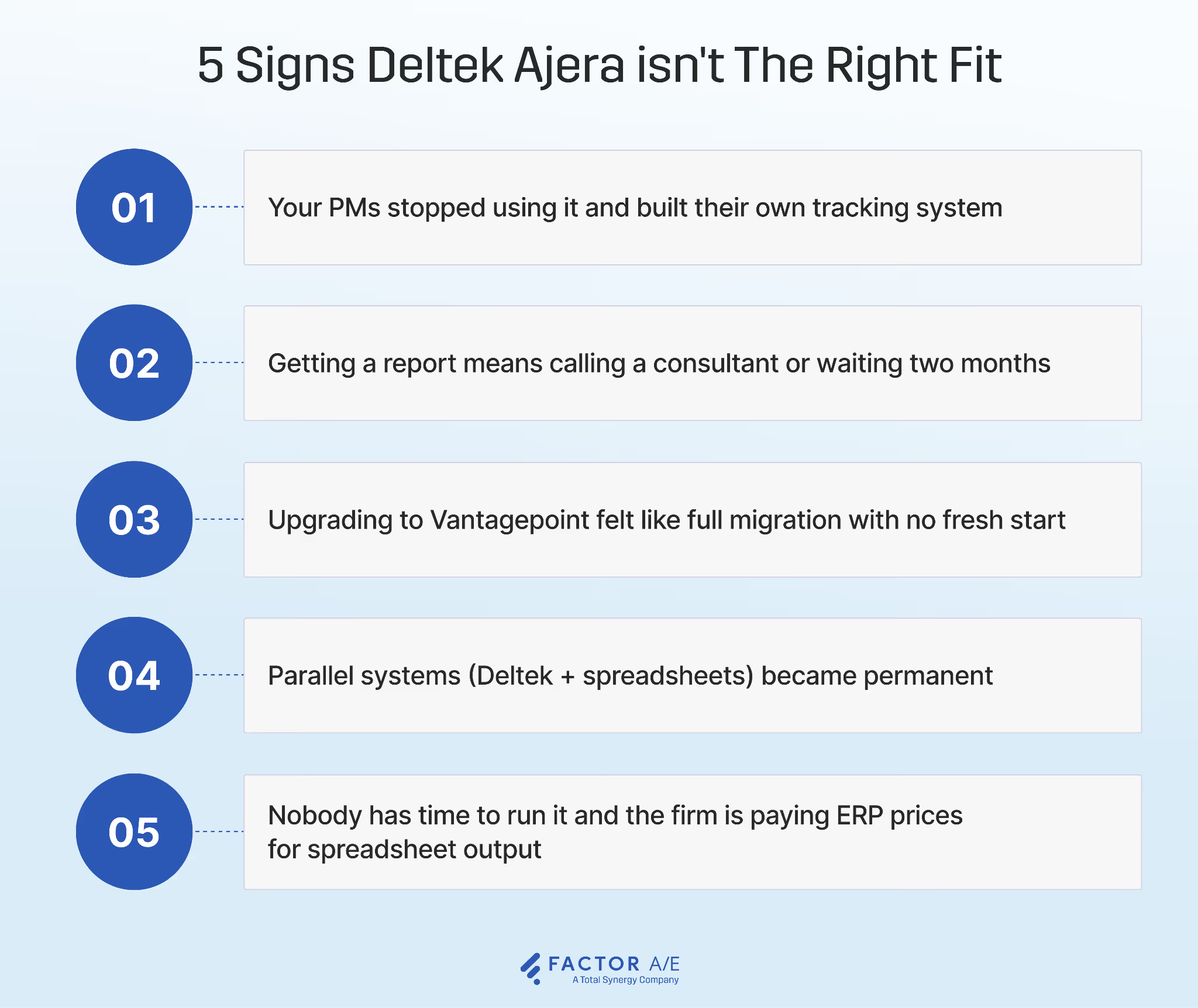
5 Signs Deltek Ajera isn’t the Right Fit
Not every firm that uses Deltek Ajera is on the wrong system. But when the patterns below appear, they usually point to a fit problem rather than a training problem.
Sign 1: Project managers have stopped using it
This is usually the clearest sign.
Deltek Ajera keeps the books in order. But when a PM needs a quick answer before a meeting, getting it often means pulling a report, exporting it, and working through it outside the system.
So PMs stop checking Deltek Ajera and keep their own spreadsheet instead.
Once that happens, the spreadsheet becomes the system the team trusts to run the project, even if Deltek Ajera is still the system of record.
That means the workflow inside the tool does not match the workflow of the people running the projects.
Sign 2: Useful reporting depends on one specialist
Deltek Ajera’s reporting can be as deep as you need if someone at your firm knows how to build it.
Standard reports may cover the basics. The problem starts when you need reporting that matches how your firm actually works by phase, billing type, team, or current delivery risk.
At that point, reporting stops being self-serve.
If project leaders have to rely on someone else to translate the system every time they need an answer, the reporting power is there, but the operating visibility is not. Visibility only counts if the person running the project can access the information they need quickly and reliably.
Sign 3: You moved to Vantagepoint, and the same friction stayed
Vantagepoint improved the interface, but it did not change the system's structure: accounting-first, reporting-driven, and more cumbersome to use day to day.
So if the original problem was that PMs were not using Ajera to manage live work, a cleaner UI does not automatically solve that.
That is why some firms make the move and still end up in the same pattern: finance remains in the system, while project decisions continue to happen elsewhere.
If poor PM adoption is why you started looking, the question that matters is: did the workflow get better, or just the screen?
Sign 4: Deltek Ajera is open in one tab. The spreadsheet is open in the other.
This is what the split looks like in real life.
On paper, Ajera tracks all of it. Budget burn by phase. Utilization. Staffing. Project health. Every capability is somewhere in the system. The spreadsheet stays open anyway.
Sometimes, it's because project managers have not entered the start dates, percent complete, and resource assignments that the dashboards depend on; the view inside Ajera is incomplete.
Other times, it's because the report leadership actually needs cannot be built without exporting data and rebuilding it.
Or, by the time finance closes the books and the numbers feel trustworthy, the project has already moved three weeks past them.
So a second system grows next to the first. Ajera holds the record. The spreadsheet holds the decision.
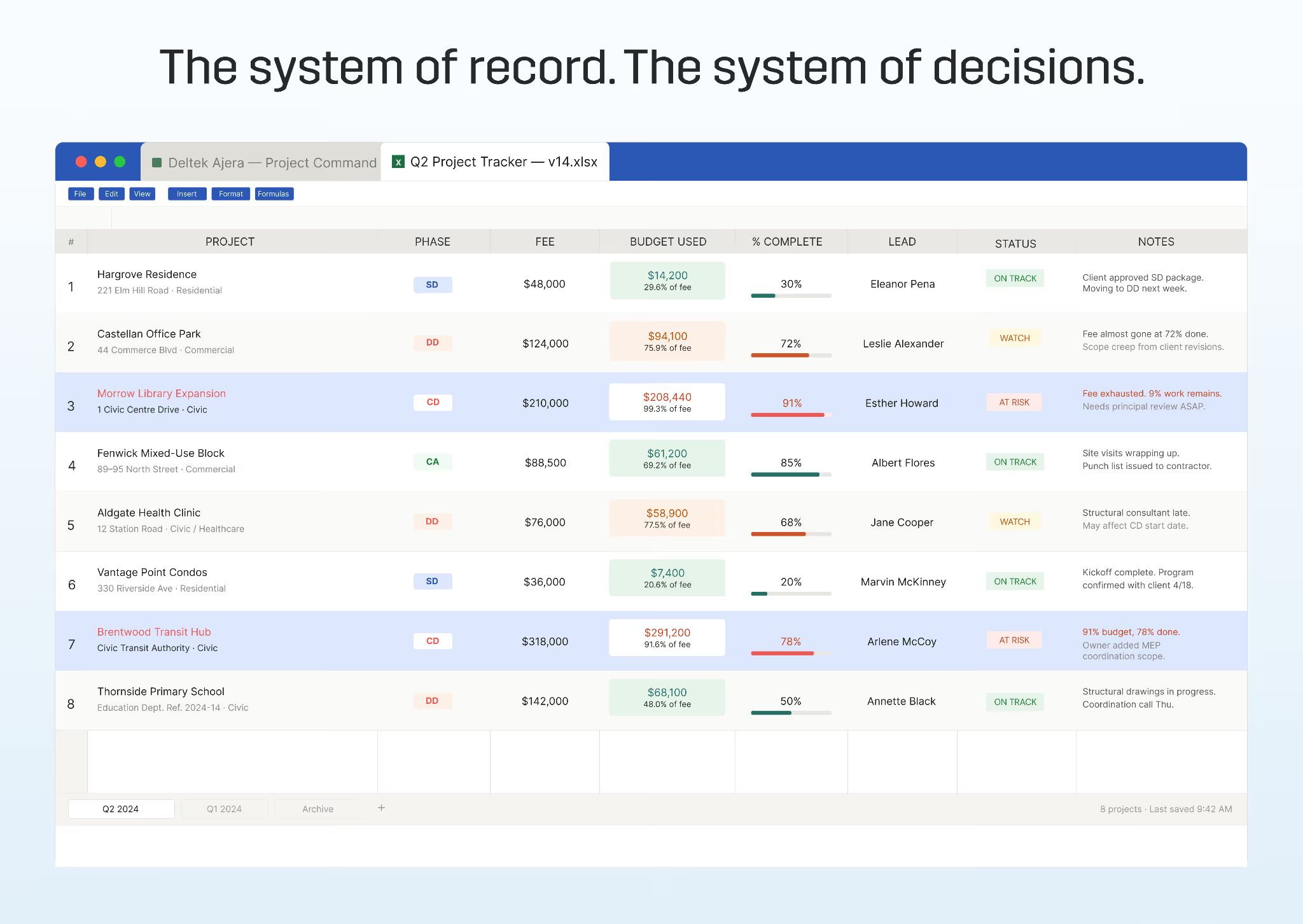
At that point, the firm is already running two systems. The cost is not just duplicate work. It is slower decisions, lower trust in the numbers, and leadership conversations built on data that has gone stale by the time it is reviewed.
Sign 5: The effort to run Deltek Ajera is harder to justify than the value it returns
Deltek Ajera usually pays off when a firm has the resources to support it properly.
That means implementation ownership, ongoing administration, reporting expertise, and enough internal discipline to keep the system useful over time.
If that support structure is not in place, the economics become harder to defend. You carry ERP-level cost and overhead, but still rely on spreadsheets for everyday clarity.
When You Should Stick With Deltek Ajera
You should probably stay with Deltek Ajera if your firm has a dedicated ERP administrator or financial controller running the platform full-time.
The same is true if you manage multiple entities, need consolidated reporting across offices or subsidiaries, have years of Deltek Ajera history embedded in your accounting workflow, or depend on compliance-heavy requirements that justify a more complex ERP.
It is also worth staying if project managers actively use the system and trust the data it gives them.
If these conditions apply to your firm, switching may create more disruption than it provides in value. The alternatives below are for firms whose needs no longer match what Deltek Ajera is built to do.
1. Factor A/E
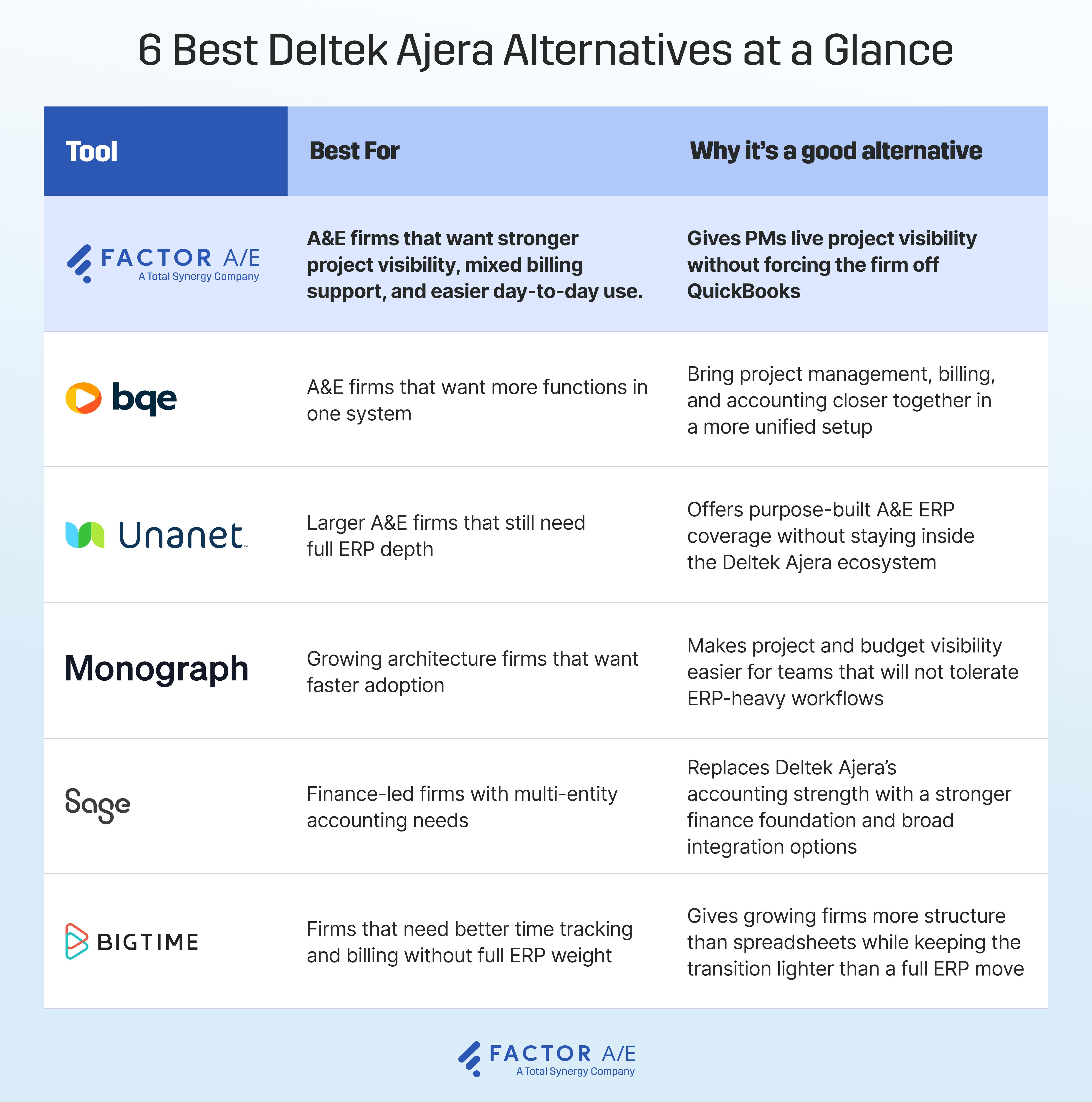
Best for: A&E firms running QuickBooks Online with mixed billing, subconsultant workflows, and project managers who want stronger project visibility, mixed billing support, and easier day-to-day use.
Factor AE is a project management software for A&E firms that want real-time project visibility without replacing QuickBooks Online.
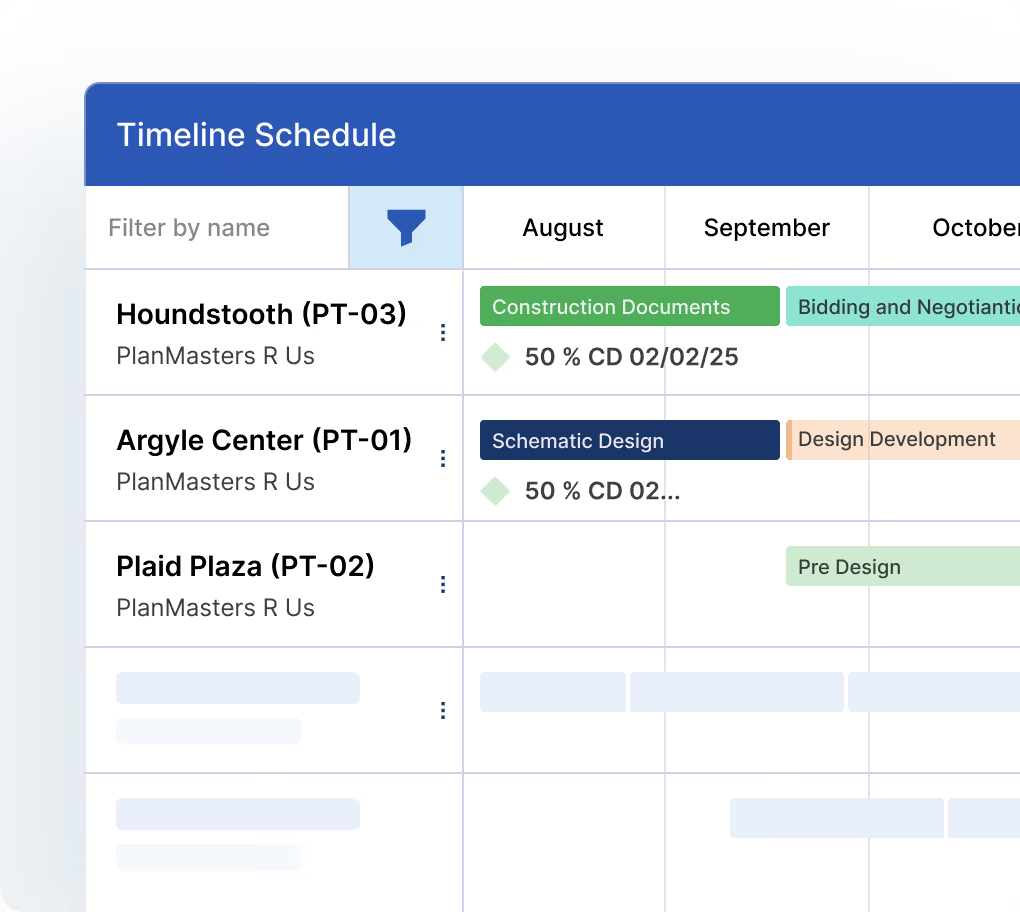
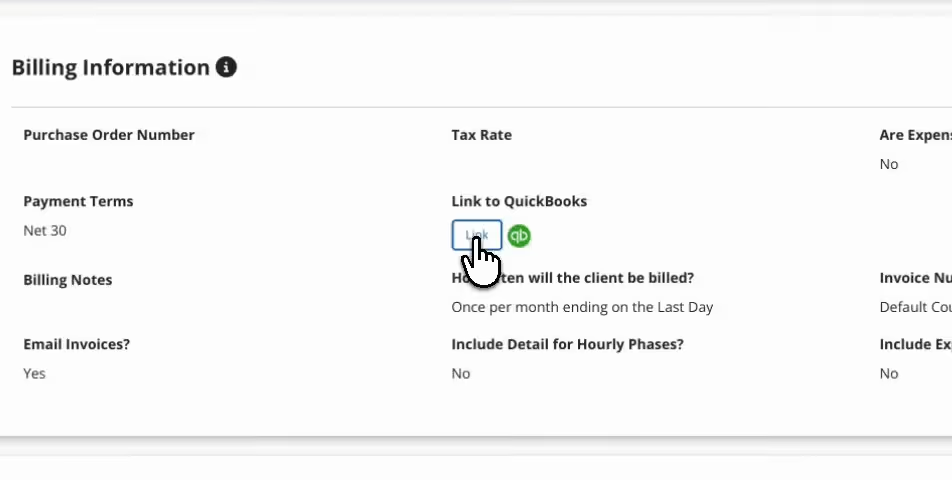
It sits alongside QuickBooks Online rather than replacing it. Accounting stays in QuickBooks, while project teams use Factor AE to manage budgets, utilization, staffing, invoicing, subconsultants, and project performance in one place.
That makes it a fit for firms that want better project visibility without moving into a heavier all-in-one accounting system.
At the center is The Pulse, Factor AE’s project dashboard. It shows budgets vs. actuals, project profitability, WIP, utilization, backlog, and staffing forecasts across active projects, with numbers that update as work changes.
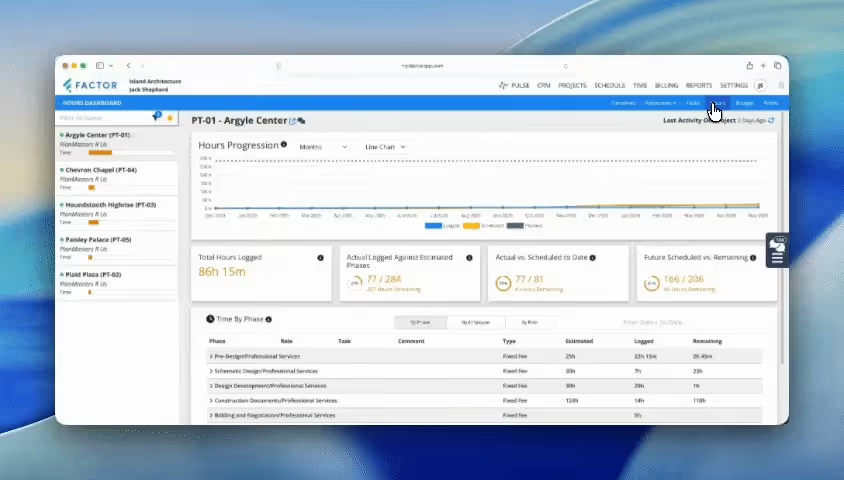
Factor AE also supports mixed billing by phase and tracks billable rates separately from actual pay rates, so firms can see project performance before month-end rather than after it.
Why Factor AE is a good Deltek Ajera alternative
Factor AE is a good Deltek Ajera alternative for A&E firms that want stronger day-to-day project visibility without moving into another accounting-heavy system.
Where Deltek Ajera is built around financial control, Factor AE is built around project operations. It gives teams live visibility into budgets, utilization, staffing, WIP, backlog, and project profitability in a system designed to be used by the people actually running the work.
That difference is especially important for firms that already rely on QuickBooks Online for accounting. Instead of asking the firm to replace its accounting foundation, Factor AE works alongside QuickBooks and adds the operational layer that Deltek Ajera often struggles to deliver cleanly for project teams.
For firms directly comparing the two, the trade-off is fairly clear. Deltek Ajera makes more sense when the priority is ERP-level accounting depth, compliance, and centralized financial control.
Factor AE makes more sense when the priorities are real-time project visibility, flexibility in mixed billing, and easier coordination across staffing, invoicing, and subconsultant workflows.
Firms have left Deltek Ajera because the team was no longer getting useful project visibility. Resource Consulting Engineers, a 12-person MEP firm, evaluated Deltek Ajera before choosing Factor AE.
After switching, time entry dropped from about an hour to 20 minutes, and the firm saved more than eight hours of admin work per week. Here’s their story:
Factor AE is not a lighter version of Deltek Ajera, but a better fit for firms that want project managers back in the system and project decisions made from live data rather than side spreadsheets.
Key features
- The Pulse: budgets vs. actuals, profitability, WIP, utilization, backlog, and staffing forecasts in one dashboard
- Dual-rate tracking: billable rates and actual pay rates tracked separately
- QuickBooks Online two-way sync: clients, projects, invoices, payments, vendor bills, expenses, and tax settings sync in both directions
- Phase-based mixed billing: fixed fee, hourly, and non-billable phases in the same project
- Subconsultant tracking: contract visibility and pay-when-paid reporting
- Resource scheduling: workload and capacity planning across the team
Pros
- Built for architecture and engineering firms
- Built for PM visibility, not just accounting control
- Keeps QuickBooks Online in place
- Handles mixed billing and subconsultant workflows well
- No add-on fees for core features, custom reports, or custom invoices
- Faster, lower-friction onboarding than Deltek Ajera for this type of firm
Cons
- Not standalone accounting
- Requires QuickBooks Online
- No enterprise CRM
- Not the right fit for firms that want everything inside one full ERP
Pricing
Factor AE costs $30 per user/month, with a 5-user minimum. All core features are included, so there are no add-on fees. Implementation is a one-time fee quoted to your firm, and a free trial is available. Factor also provides custom reports, invoices, and project fields at no extra cost.
Want a closer look at how Factor AE compares to Deltek Ajera? See our full Factor vs. Deltek Ajera comparison for a deeper breakdown of features, trade-offs, and which system best fits each type of A&E firm.
2. BQE Core
Best for: A&E firms prepared to invest in implementation in exchange for bringing project management, billing, reporting, and possibly accounting into one system.
BQE Core is an A&E firm management system that brings project management, time and expense, billing, reporting, and optional accounting into one platform.
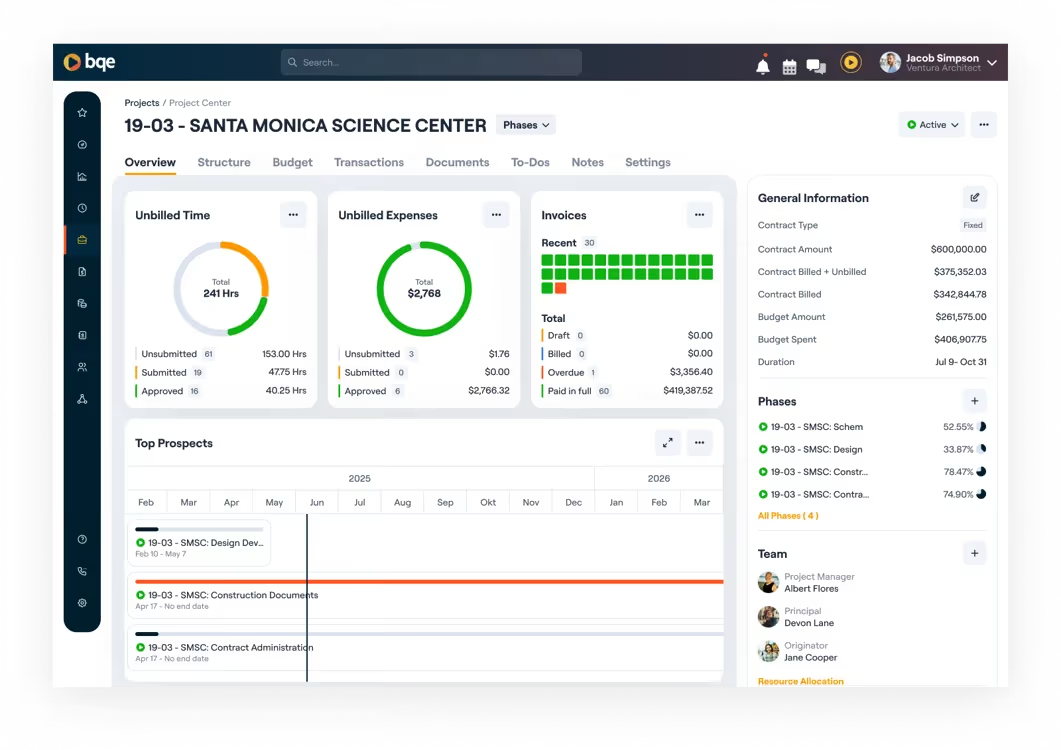
It is built for firms whose main frustration is managing work across disconnected tools.
BQE Core is structured around a Foundations module covering time and expense, billing and invoicing, project management, and reporting and analytics, with optional add-on modules for accounting, CRM, HR, and payroll.
Firms can start with Foundations and add modules as needed rather than committing to a full ERP from day one.
It also has a Project Center that gives PMs a single screen for active projects. Reporting includes scheduling and memorization, making it more self-serve than Deltek Ajera for many firms.
BQE Core also supports two paths. Firms that are not ready to move off QuickBooks can use it alongside QuickBooks for project management, billing, and time tracking. Firms that want full consolidation can adopt the accounting module and move more of the workflow into Core.
Why BQE Core is a good Deltek Ajera alternative
BQE Core is ideal for firms that want more of the business in one system without taking on Deltek Ajera-level ERP weight from day one. It gives firms a more unified setup for project management, billing, reporting, and optional accounting, with a path that can start alongside QuickBooks or move toward fuller consolidation over time.
The main trade-off is scope. BQE is broader than lighter PM tools, and user reviews consistently flag slower page loads and performance lag. Any evaluation should include testing Core under real workflow conditions, not just a vendor demo.
Key features
- Foundations module: time and expense, billing and invoicing, project management, and reporting in one place
- Optional add-on modules: Accounting, CRM, HR, and Payroll
- Project Center: single-screen PM view for active projects
- Automated reporting: scheduling and memorization
- QuickBooks integration: alongside model or full replacement path
Pros
- Purpose-built for A&E
- Modular structure reduces upfront commitment
- Can reduce multi-tool sprawl
- Reporting is more self-serve than Deltek Ajera for many firms
Cons
- Performance issues flagged in reviews
- Steeper learning curve than lighter tools
- Full consolidation still requires meaningful implementation effort
- Per-user pricing is not publicly disclosed
Pricing
Request a custom quote to know what you’ll pay for when using BQE Core.
3. Unanet
Best for: Larger A&E firms that need to replace Deltek Ajera with another full ERP, where the firm still needs broad accounting coverage, support across offices, or compliance-heavy workflows.
Unanet is a full ERP for A&E firms that still need broad accounting, project management, and compliance coverage.
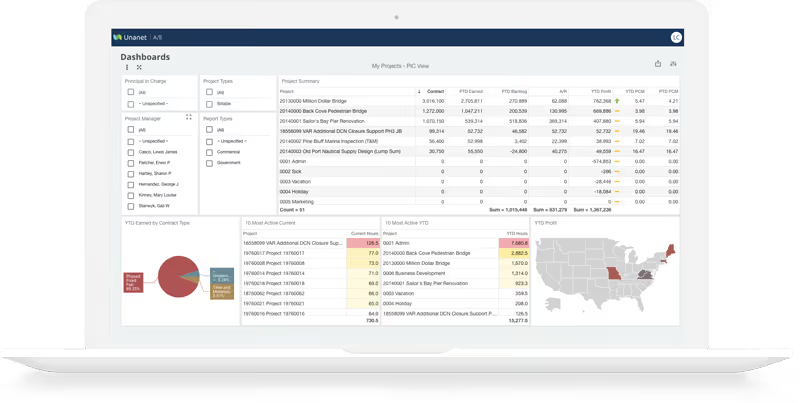
It brings project management, accounting, BI, time and expense, CRM, and resource planning into one system. It is built for firms that are not trying to step down to a lighter PM tool but still need a real ERP.
Why Unanet is a good Deltek Ajera alternative
Unanet works best for firms that still need full accounting, project management, and compliance coverage, but want that in a system outside the Deltek Ajera ecosystem.
If your firm still needs broad financial control, cross-office support, or compliance-heavy workflows, Unanet belongs on the shortlist.
If your main problem is PM adoption, you may end up incurring the full ERP cost and implementation effort to solve a workflow problem.
Key features
- Full ERP: project management, accounting, BI, time and expense, and CRM
- Resource planning across teams and offices
- Cloud and on-premise deployment
- Champ AI for ERP and for CRM
Pros
- Built for project-driven firms, including A&E
- Good fit for firms that still need a full ERP
- Can support more complexity than lighter tools
- Available in cloud and on-premise versions
Cons
- Average implementation time is around six months
- Still has an ERP learning curve
- Not the right fit if the main problem is PM adoption
Pricing
Unanet’s pricing is a custom quote based on your firm’s size and needs, relying on a per-user/per-month model.
4. Monograph
Best for: Growing architecture firms that want fast PM adoption, QuickBooks integration, and better day-to-day project visibility without ERP-level implementation overhead.
Monograph is project management software for architecture and engineering firms that want project visibility without ERP-level setup and overhead.
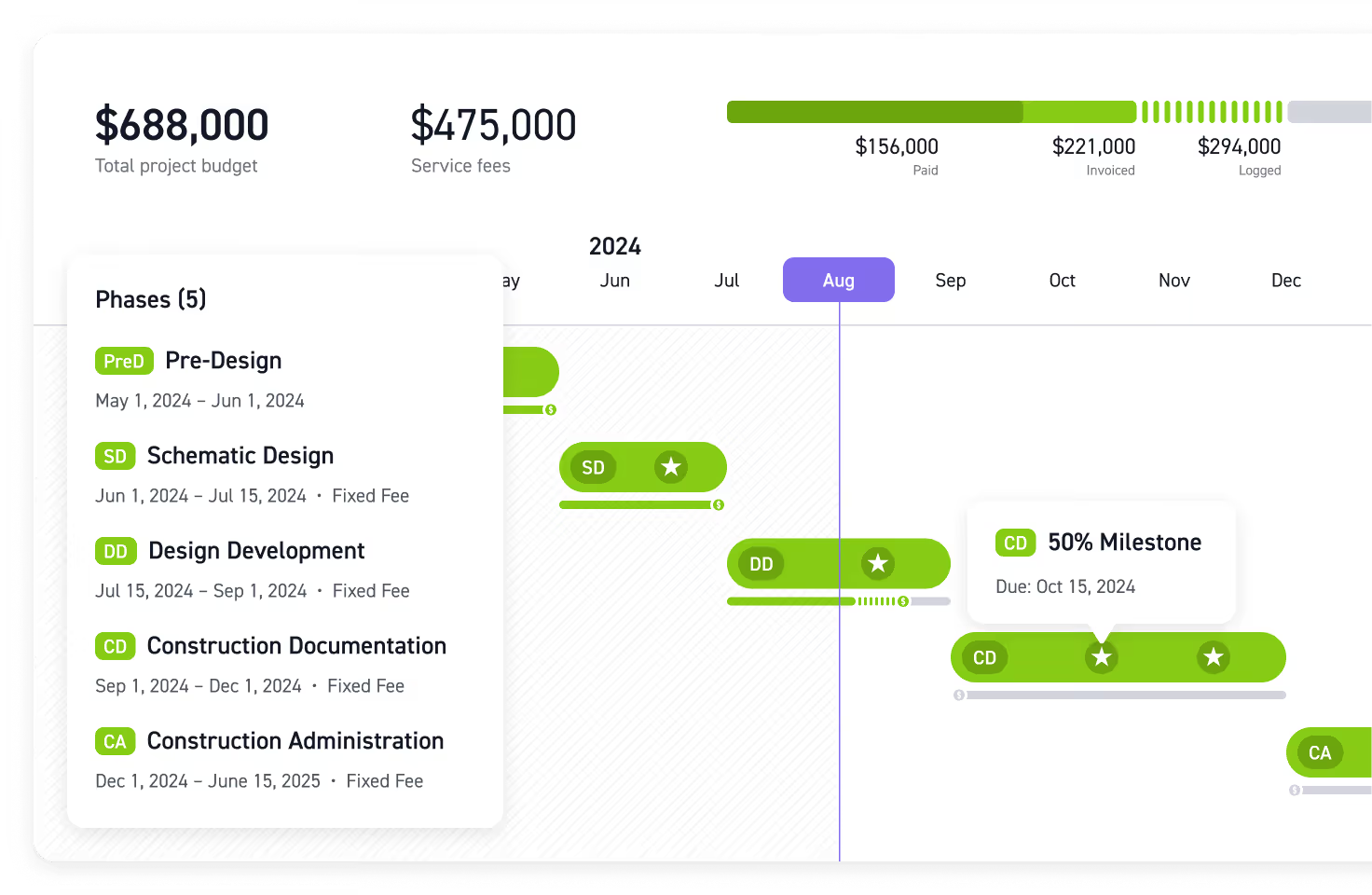
It is built for firms that want budgets, staffing, milestones, utilization, and billing in a system that project managers will actually use. QuickBooks stays in place for accounting.
Why Mongraph is a good Deltek Ajera alternative
Monograph is ideal for firms that want project visibility and PM adoption without the setup, admin work, and reporting friction that often come with Deltek Ajera.
Monograph also works alongside QuickBooks Online. It sends invoices, bills, and expenses to QBO and imports clients and consultants back into Monograph. That makes it a cleaner fit for firms that want better project operations without replacing their accounting systems. The integration with QBO is US-only and available on Grow and Track plans.
The trade-off is depth. Reporting is not as mature as in a full ERP, and users also note limitations in task management. If your firm needs heavier financial complexity or deeper reporting, Monograph may feel too light over time.
Key features
- Visual project dashboards with budgets, phases, milestones, and staffing
- One-click reports for utilization, realization, and P&L
- QuickBooks Online integration for invoices, bills, expenses, clients, and consultants
- Phase-based budgeting
- Resource planning across active projects
Pros
- Faster onboarding than full ERP tools
- Easier for PMs to adopt
- Works alongside QuickBooks Online
Cons
- Reporting is less mature than full ERP platforms
- Task management is weaker than core project features
- QuickBooks integration is US-only
- Can feel too light for firms with more financial complexity
Pricing
Monograph has an online calculator on its pricing page that calculates pricing based on the number of users and the subscription type (annual or monthly). Check out their pricing page to get an idea of what you’re likely to pay.
5. Sage Intacct
Best for: Multi-entity A&E firms where the primary failure mode is accounting complexity rather than PM adoption, and where the firm has the budget and internal resources for an enterprise-level implementation.
Sage Intacct is cloud-based accounting software for firms that need stronger financial control than most A&E platforms provide.
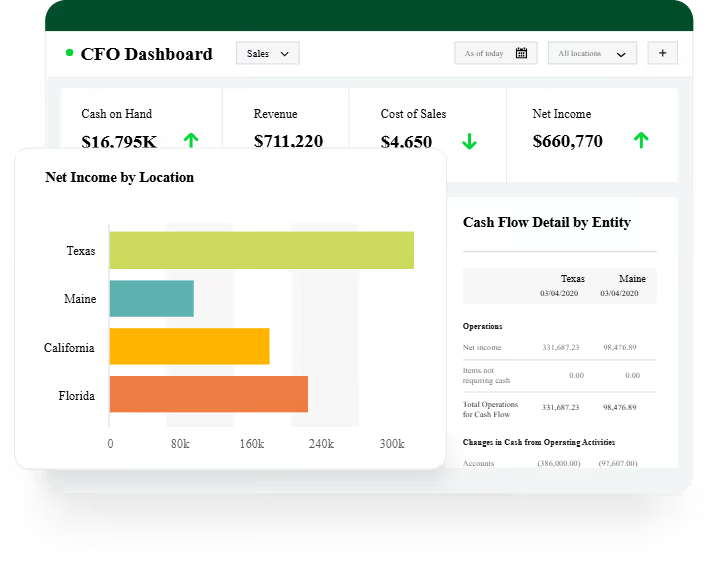
It is on this list for a specific kind of Deltek Ajera buyer: a firm leaving Deltek Ajera because accounting complexity is the problem. Multi-entity consolidation, revenue recognition, audit requirements, and finance-led reporting are reasons to consider Sage Intacct.
Why Sage Intacct is a good Deltek Ajera alternative
Sage Intacct is ideal for firms that still need strong accounting but no longer need Deltek Ajera to do everything.
It gives firms multi-entity consolidation, ASC 606 and IFRS 15 revenue recognition, project accounting, and a large integration marketplace. That makes it a better fit when the finance team needs a stronger accounting infrastructure and is comfortable pairing it with a separate PM tool.
The trade-off is that Sage Intacct is not built around how A&E project teams work. It does not give you an A&E-native PM layer. If your main problem is project visibility or PM adoption, this solves the wrong problem. If your main problem is accounting complexity, it is one of the strongest alternatives on the list.
Key features
- Multi-entity consolidation across offices and subsidiaries
- ASC 606 and IFRS 15 revenue recognition
- Project accounting module
- Integration marketplace with 200+ tools
- Real-time financial dashboards
Pros
- Strong fit for finance-led firms
- Handles multi-entity complexity well
- Large integration ecosystem
- Widely accepted in audit and compliance contexts
Cons
- Not A&E-specific
- Usually needs a separate PM tool
- Expensive entry point
Pricing
Sage does not publish their pricing, so you’ll need to contact the sales team for a quote.
6. BigTime
Best for: Professional services firms running QuickBooks that need structured time tracking and billing, want published pricing up front, and do not need deeper A&E-specific billing complexity.
BigTime is a professional services platform for firms that want more structure around time tracking, billing, and project reporting without moving to a full ERP.
BigTime fits firms whose QuickBooks setup already works and whose main pain points are not complex project accounting but inconsistent timesheets, messy billing, and limited project visibility.
Why BigTime is a good Deltek Ajera alternative
BigTime gives firms more structure than spreadsheets, published pricing, QuickBooks integration, and a product that people are generally more willing to use for time entry.
The trade-off is specificity. BigTime is broader professional-services software, not an A&E system. It is not the right fit for firms that need deeper phase-based billing, subconsultant management, or more complex project controls.
It is strongest when the goal is simply to get time and billing under control without taking on a full ERP project.
For firms evaluating how current the data needs to be across systems, QuickBooks Online syncs manually, while QuickBooks Desktop can sync automatically via a Sync Agent.
Key features
- Time and expense tracking
- QuickBooks Online and Desktop sync
- Project portfolio and budget reporting
- Resource planning
Pros
- Strong timesheet usability
- Faster setup than a full ERP
- Works with both QuickBooks Online and Desktop
Cons
- Not A&E-specific
- QuickBooks Online sync is manual
- Mobile app issues show up in reviews
- Less depth for firms with more complex project controls
Pricing
For the Essentials plan, pricing starts at $20 per month. Other plans, such as Advanced, Premier, and Enterprise, require you to sign up for a demo to determine your price.
Which Deltek Ajera Alternative Fits Your A&E Firm?
If your team still runs projects confidently inside Deltek Ajera, switching may not solve anything.
But if project managers are already tracking budgets, staffing, or project health elsewhere, Deltek Ajera is still handling the books, not the day-to-day work of running projects.
At that point, the decision is which system your team will actually use to run projects. For QuickBooks-based firms, that usually rules out heavier ERP replacements and points toward a system that gives PMs live visibility without changing how accounting works.
That is where Factor AE stands out. It was built for A&E firms that want project managers back in the system, real-time visibility into project health, and accounting left in QuickBooks. Instead of replacing your accounting stack, it replaces the spreadsheet system your team built on top of Deltek Ajera.
Some firms do need another full ERP because the problem is accounting complexity. But if the real problems are PM adoption, delayed visibility, and project decisions made outside the system, Factor AE is the clearest fit on this list.
Sign up for a free trial or book a demo to see how Factor AE replaces the spreadsheet system your team built around Deltek Ajera.

.png)