



As firms grow, scheduling is often left to individual PM judgment.
Each project team builds timelines based on experience, habit, or optimism, rather than shared standards grounded in real design effort and dependencies.
The result is not one bad schedule, but systemic inconsistency that hides risk until it is too late to correct.
This article presents a firmwide scheduling workflow designed to replace ad hoc timelines with a consistent, production-driven standard. You’ll learn how to structure schedules that reflect real effort, clarify dependencies across teams and consultants, and provide leadership with early visibility into delivery and staffing risks.
Why Project Scheduling Matters for A&E Firms
Effective project scheduling in A&E coordinates design production, internal reviews, consultant deliverables, client decisions, and permitting into a single operating system.
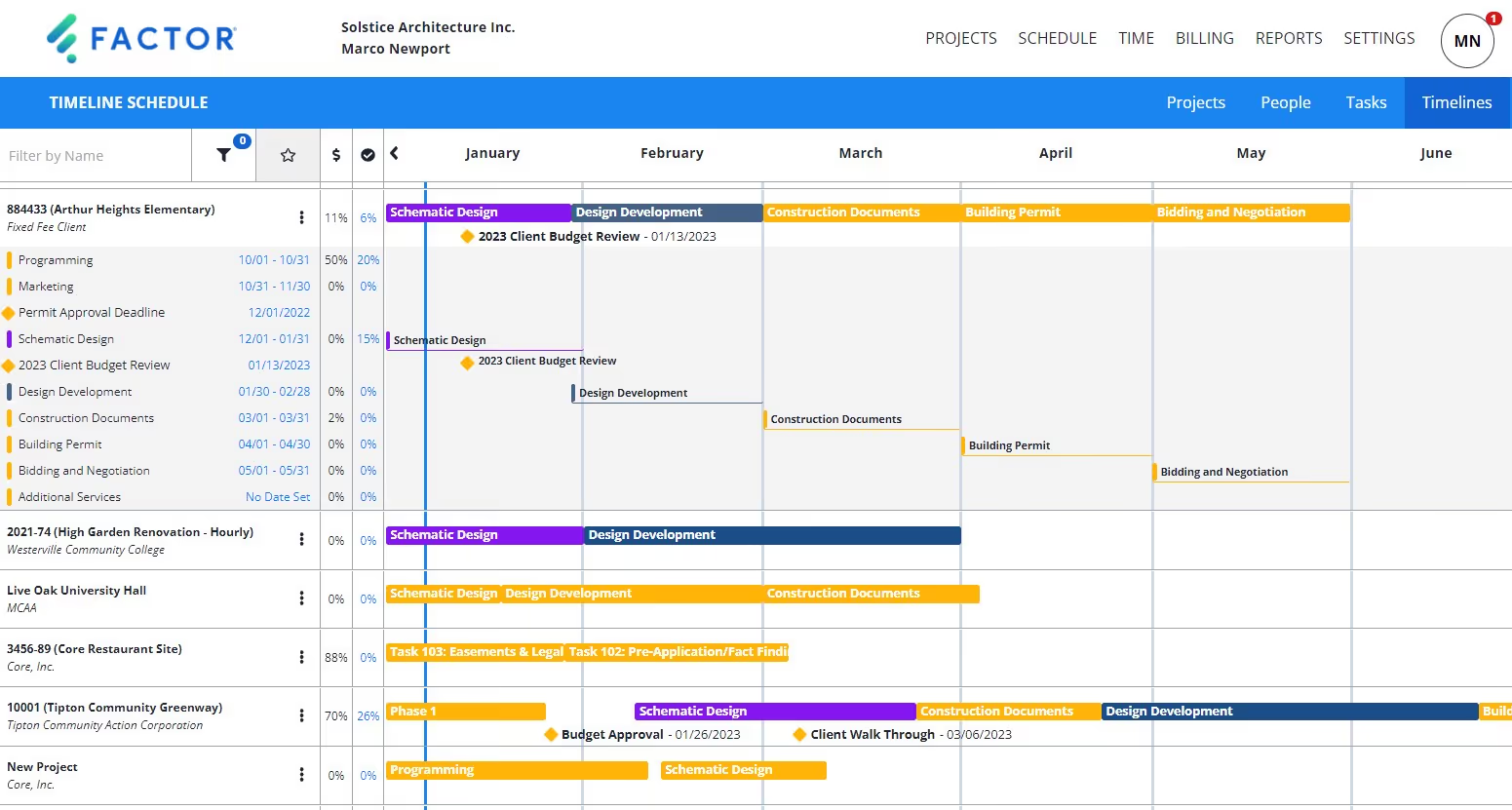
Rather than simply outlining idealized task durations, strategic project scheduling models how work actually progresses across disciplines. It reflects real production effort and sequencing, and integrates work that often goes unseen, such as coordination cycles, QA, and revision time.
Project schedules sit at the intersection of design effort, staffing, consultant coordination, and fee performance, making them a critical instrument for project managers and A&E firm leaders alike:
- Principals rely on schedules to assess delivery risk across the portfolio and anticipate staffing needs before pressure arises, ensuring project teams have the resources they need to keep work progressing
- Finance depends on predictable schedules to forecast revenue, model fee burn by phase, and plan invoicing with confidence, keeping cash flow moving and costs aligned to budgets
- Project managers depend on accurate schedules to manage production effort, sequence work realistically, and coordinate disciplines, sustaining output without relying on overtime or last-minute resequencing
When schedules reflect actual task durations and interdependencies, teams can distribute work evenly, avoid bottlenecks, manage risk and cash flow, and generally keep things moving.
The problem is, they often don’t.
Common Scheduling Failures in A&E Firms (And Their Real Cost)
In many firms, scheduling is distributed, not centralized. It's handled by individual project managers, leading to inconsistent milestone definitions, durations, and dependency assumptions.
This inconsistency limits leadership’s ability to compare projects, forecast workload, and identify portfolio-level risk.
Workload imbalances surface as peak-and-trough resourcing, handoffs between disciplines get missed due to poor communication, and team fatigue undermines quality, morale, and delivery predictability.
Here’s what commonly goes wrong when project scheduling isn’t standardized and how these failures hurt firm performance.
Unrealistic design durations
Time durations for design work are regularly set based on personal judgement (and a sprinkling of optimism), rather than on hard historical production data.
Firms lack standard rules for determining the duration of core design, coordination, and QA tasks, which inevitably leads to overruns and compressed schedules.
Missing or implicit handoffs between phases
A&E projects rely on tightly linked activities, yet schedules often fail to define the handoffs and completion criteria that will affect downstream work. When firms rely on spreadsheets to manually track progress, critical tasks, approvals or external inputs can be easily missed, and project status becomes harder to understand in real-time.
Architectural projects depend on timely deliverables from both external consultants and internal teams. When delays occur, it is critical to have a clear, coordinated way to adjust phases, milestones, and downstream work without losing visibility or control.
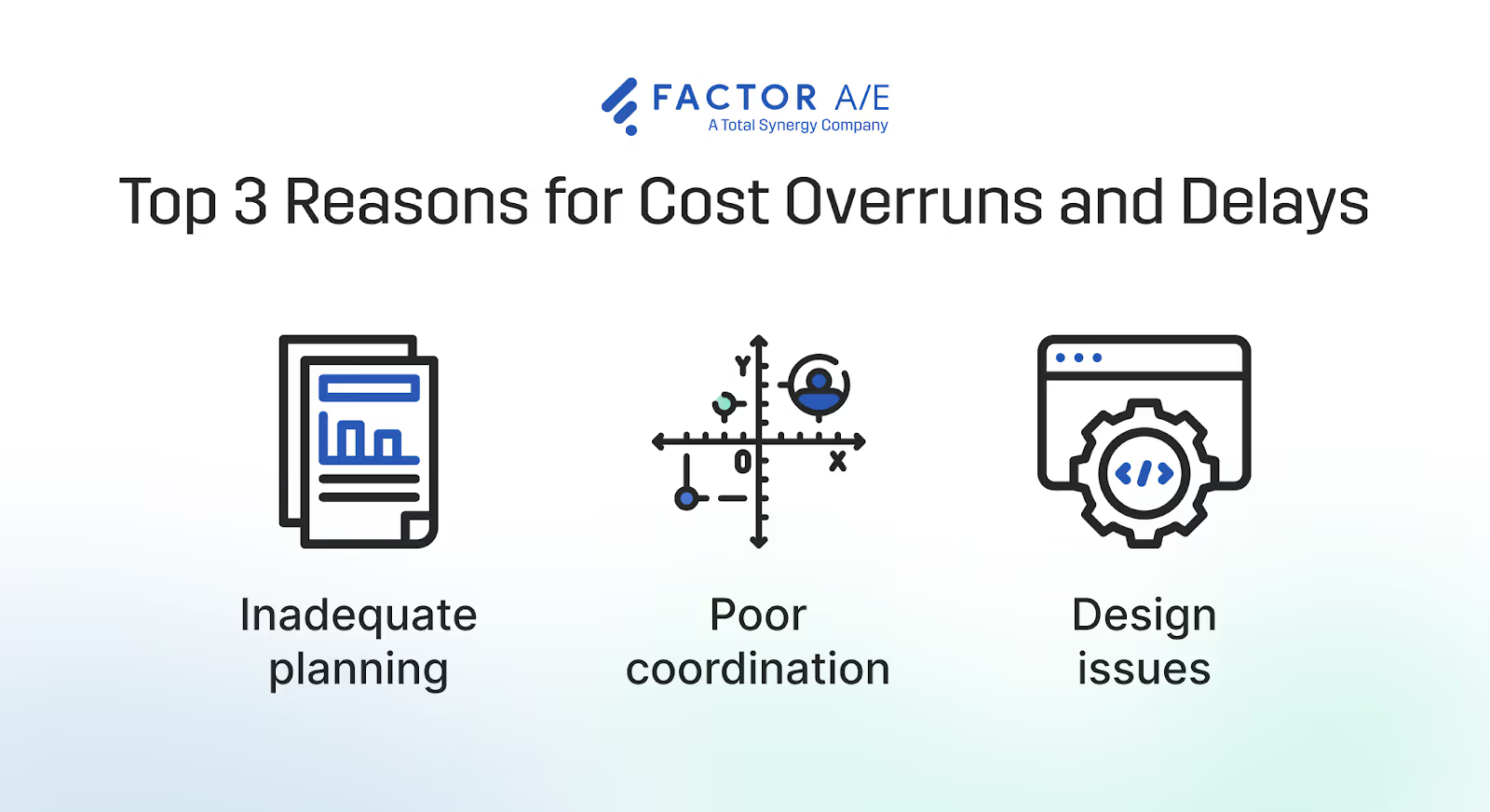
Client decision cycles treated as assumptions
In scheduling, client approvals are frequently assumed to be immediate or near-immediate (ask your PMs how often that happens in practice).
In reality, clients need time to review designs internally, make notes, and provide feedback.
Schedules often fail to define decision deadlines, review windows, and responsibility for late responses. Without firmwide guidance on including explicit approval milestones established at kickoff, decision risk shifts from the client to the design team.
Vague or inconsistent SD, DD, and CD milestones
Design milestones are often defined inconsistently across projects, with no firmwide agreement on scope, deliverables, or completion criteria.
Terms like “Issue SD” or “50 percent DD” can mean very different things across teams and studios. Without standardized milestone definitions, progress cannot be reliably tracked, schedules lose comparability across projects, and portfolio-level reporting becomes unreliable.
Schedules built without explicit fee and staffing constraints
When schedules aren’t integrated with staffing and fee assumptions, teams commit to timelines the firm can’t realistically support.
Since there aren’t any shared rules linking task sequencing to available capacity or budgeted hours, PMs make informed best guesses, and misalignment accumulates silently until late-stage intervention is required.
No built-in early warning signals
On many projects, schedules lack standardized checkpoints tied to production progress, not just dates.
Timelines drift, but they don’t trigger escalation, meaning leaders lose the opportunity to adjust sequencing, staffing, or scope while options still exist.
Disputes driven by weak schedule records
Undocumented schedule changes make delays difficult to defend, harming client relationships even where the firm is not at fault. Naturally, clients challenge additional services when the cause and impact are unclear, often putting a dent in project profitability.
To make delays defensible, PMs need clear guidance on how and when to document changes and updates to project schedules.
Inconsistent updates and undocumented changes
Without firmwide standards, PMs update schedules on different cadences and with varying levels of discipline.
Date shifts are not consistently logged, including the cause, responsibility, or downstream impact, while weak communication and undocumented changes reduce schedule reliability and erode trust.
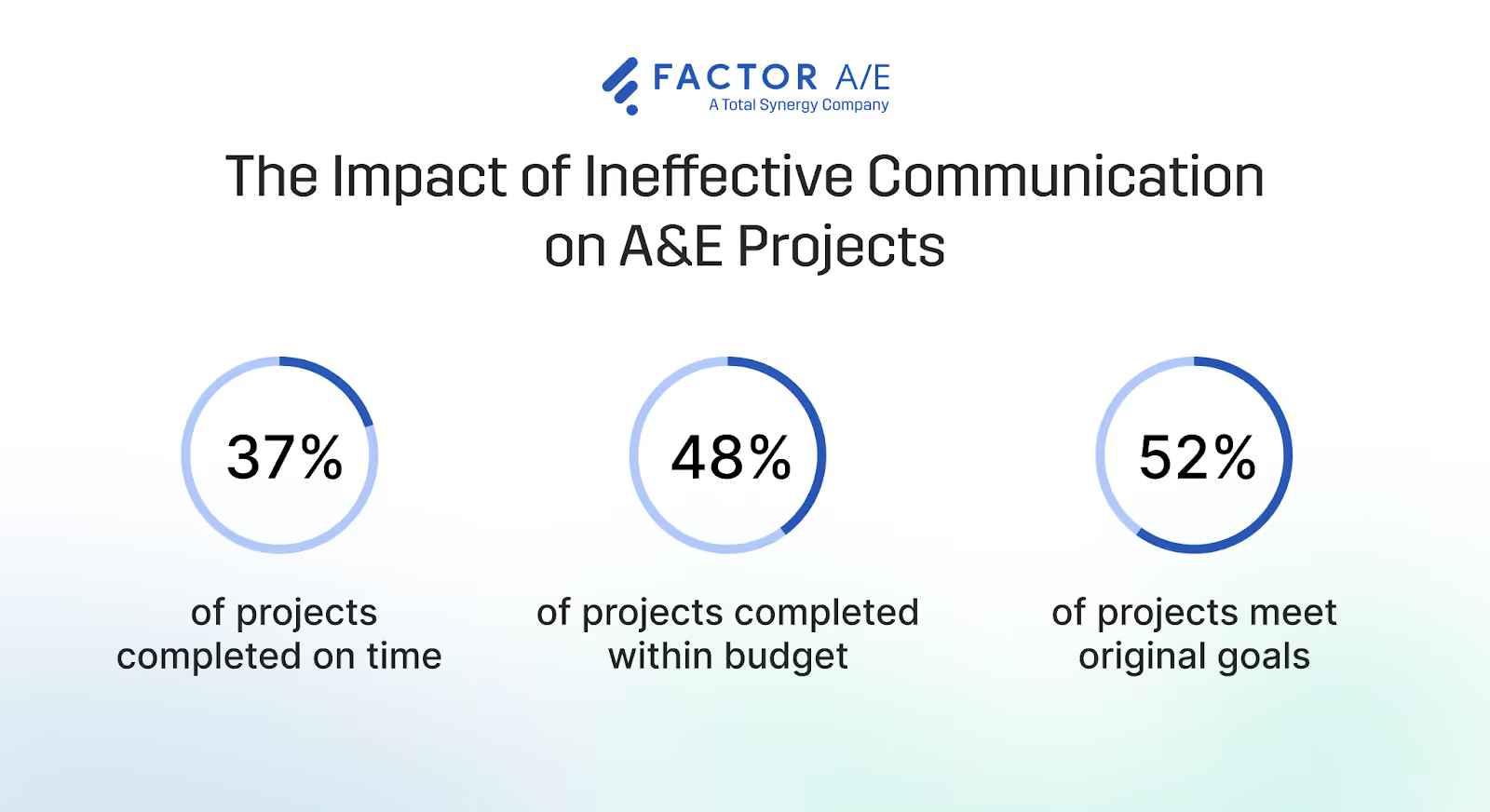
Industry research into the impact of poor communication on schedules highlights the extent of the issue: in projects with ineffective communications, only 37% finish on time.
Manual coordination overload
In many A&E firms, manual project schedule coordination drives up unnecessary admin costs.
PMs spend far too much time chasing inputs, confirming status, and realigning teams. This coordination work only increases as project complexity grows, increasing the likelihood of missed opportunities to catch and mitigate risk.
For example, at Fusion Design, fragmented workflows had created a heavy manual coordination burden around project and billing processes.
After moving to a unified operating system, the firm reduced its monthly billing cycle from nearly three weeks to a matter of hours, demonstrating how standardized systems can materially reduce the hidden coordination tax that accumulates in growing firms.
Firmwide scheduling standards are critical
Scheduling doesn’t have to be owned by a single person, but it does need to be standardized.
Standardized scheduling transforms project timelines into a shared infrastructure, enhancing visibility, predictability, and operational control.
The A&E Scheduling Framework: A Repeatable Workflow for Every Project
This practical, firmwide system for project scheduling helps reduce risk, improve predictability, and create consistency across teams.
Define constraints, assumptions, and deliverables at intake
Use a firmwide intake standard to define required deliverables, known risks, external dependencies, and project constraints before scheduling begins.
A consistent intake structure ensures every project schedule is built on the same production rules. Scope boundaries, permitting timelines, consultant responsibilities, and client decision cycles are defined upfront and carried through the schedule in a consistent way.
This creates predictable sequencing, improves early visibility into delivery and staffing needs, and gives leadership a reliable basis for portfolio-level planning.
Map tasks and dependencies across disciplines
Break down design tasks and clearly highlight which activities rely on inputs from structural, civil, MEP, landscape, or other consultants.
When you map and clarify these relationships, you prevent teams from advancing work without first receiving the information they require, preventing rework.
Sequence design work to minimize rework and bottlenecks
Use a firmwide sequencing standard that requires foundational design decisions to be completed before downstream coordination begins.
For example, finalizing the structural grid and core layouts before detailed MEP coordination prevents downstream services design from being reworked when column locations or shaft sizes change.
When sequencing reflects how design decisions actually flow across disciplines, teams avoid backtracking, reduce redundant coordination cycles, and maintain momentum through each phase.
This matters financially as well as operationally.
Research shows a strong correlation between schedule delays and cost overruns, with 88% of delayed projects in the studied sample also experiencing cost overruns.
Proper sequencing reduces the likelihood that early uncertainty turns into late-stage rework that drives both delays and unplanned effort.
Set realistic durations using historical production data
Use firmwide historical production data to set standard duration ranges for core design, coordination, and QA tasks.
Looking at past projects similar scope or complexity helps PMs avoid optimism bias. It also protects early-phase budgets by aligning planned effort with how work is actually delivered across the firm.
Integrate consultant timelines and external review windows
Integrate consultant deliverables and third party review periods into every project schedule using consistent submission and response time standards.
Standard review windows for zoning, utilities, authorities, and key consultants create predictable coordination cycles and ensure external dependencies are treated as part of the production workflow rather than informal assumptions.
This improves milestone reliability and reduces unplanned delays caused by missing or inconsistent dependency modelling.
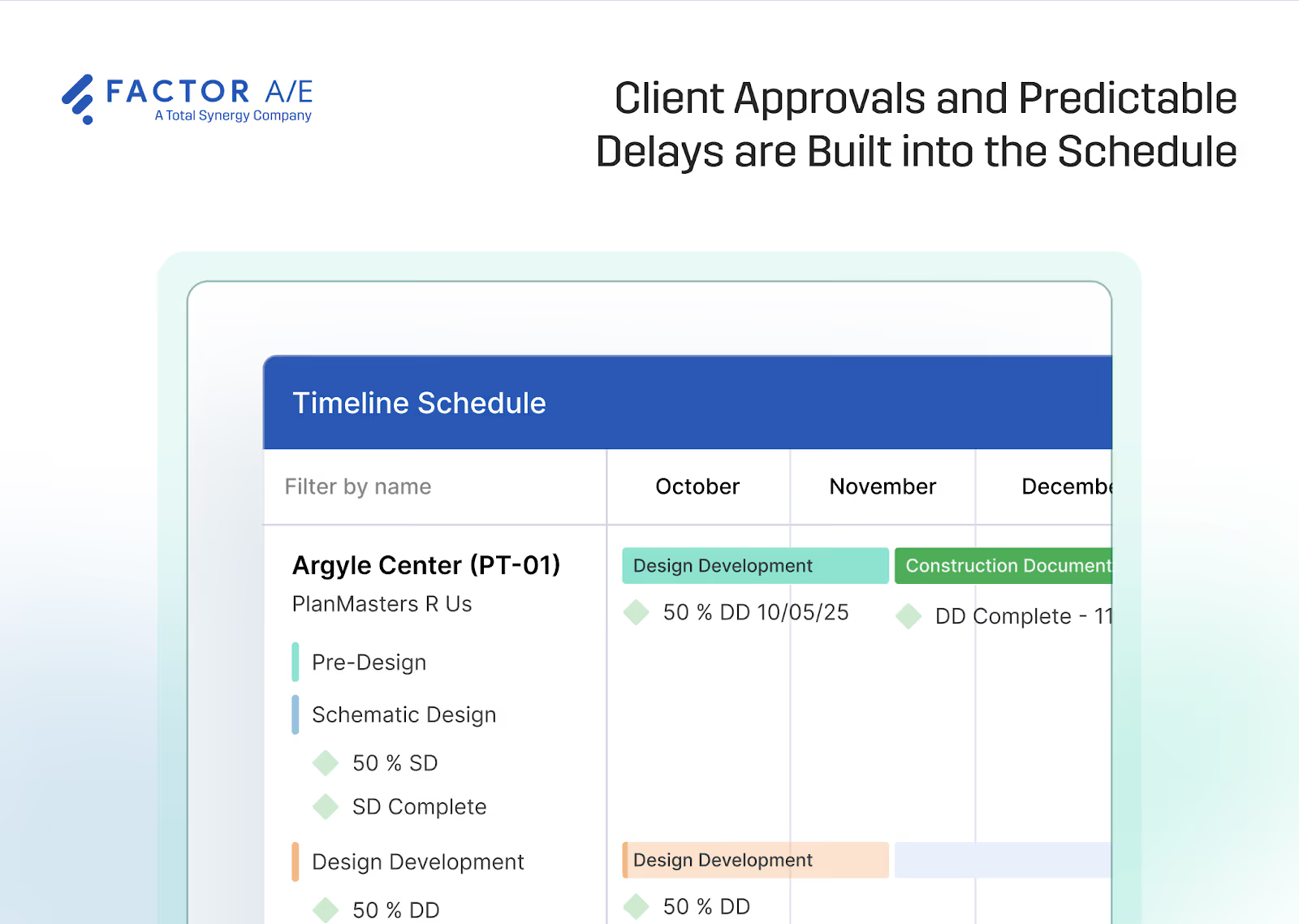
Build client approvals and predictable delays into the schedule
Don’t make the mistake of assuming clients will turn around feedback immediately. This is a key source of timeline delays.
Instead, standardize client approval windows and risk buffers across all project schedules, and build these decision points into the schedule from day one.
Speaking of buffers, it's generally a smart idea to add time allowances around all tasks that are known to be unpredictable, like:
- Permitting
- Agency coordination
- Major consultant milestones
Risk buffers make the schedule more resilient when external variables shift.
Align the schedule with staffing plans and fee models
Ensure the schedule reflects actual team availability and budgeted hours, not an ideal world scenario.
When staffing and fees are aligned at the schedule stage, teams avoid overloading project architects, designers, and job captains.
This requires developing an awareness of team workload across all active projects and integrating that knowledge into your resource scheduling process.
Kaas Wilson Architects achieved this by introducing firmwide visibility into project performance and fee consumption, replacing fragmented tracking and reconciliation processes.
This gave leadership a clearer view of workload distribution and margin exposure across active projects, supporting more stable staffing and planning decisions.
Standardize SD, DD, and CD milestones across the firm
A simple but effective standardization move is to enforce consistent milestone definitions, duration ranges, and dependency structures across all projects.
Standard templates are a good option for reducing variability between PMs and supporting predictable outcomes at the portfolio level.
Establish standard rules for updates, ownership, and version control
Define and document who updates the schedule, how often updates occur, and what information must be captured.
This will enforce consistency and ensure the schedule remains a reliable operational tool for principals and operations teams.
It will also give PMs an opportunity to highlight early on tasks that are slipping, dependencies at risk, or workloads exceeding capacity.
Early signals allow PMs and leaders to intervene before deadlines or budgets are compromised.
Document schedule changes to protect fees and reduce disputes
Even the best, most consistent schedules don’t go to plan 100% of the time. What’s important is to dig into why.
Apply a standard change documentation process whenever project schedules are adjusted.
Track why dates shift and what caused the change, including client delays, additional scope, consultant issues, or internal decisions. This strengthens scope boundary management, supports fee recovery, and reduces dispute risk by making schedule changes visible and defensible.
How Factor Supports Stronger Scheduling
Project scheduling in A&E firms isn’t just a planning exercise. It’s operational infrastructure that shapes delivery predictability, workload stability, and financial performance across the portfolio.
For schedules to play that role, they can’t live in isolation. They need to reflect how work is staffed, how fees are consumed, and how delivery pressure builds across the firm.
Factor is more than a simple scheduling tool; it’s the operational backbone that links schedules to fee models, staffing plans, and firmwide workload visibility.
Centralized updates in The Pulse help surface schedule-driven risk earlier, reduce manual coordination, and turn schedules into a practical input for day-to-day operational decisions rather than a static project document.
Try Factor today with a 7-day free trial and discover how A&E firms turn scheduling into a source of control, predictability, and margin protection.