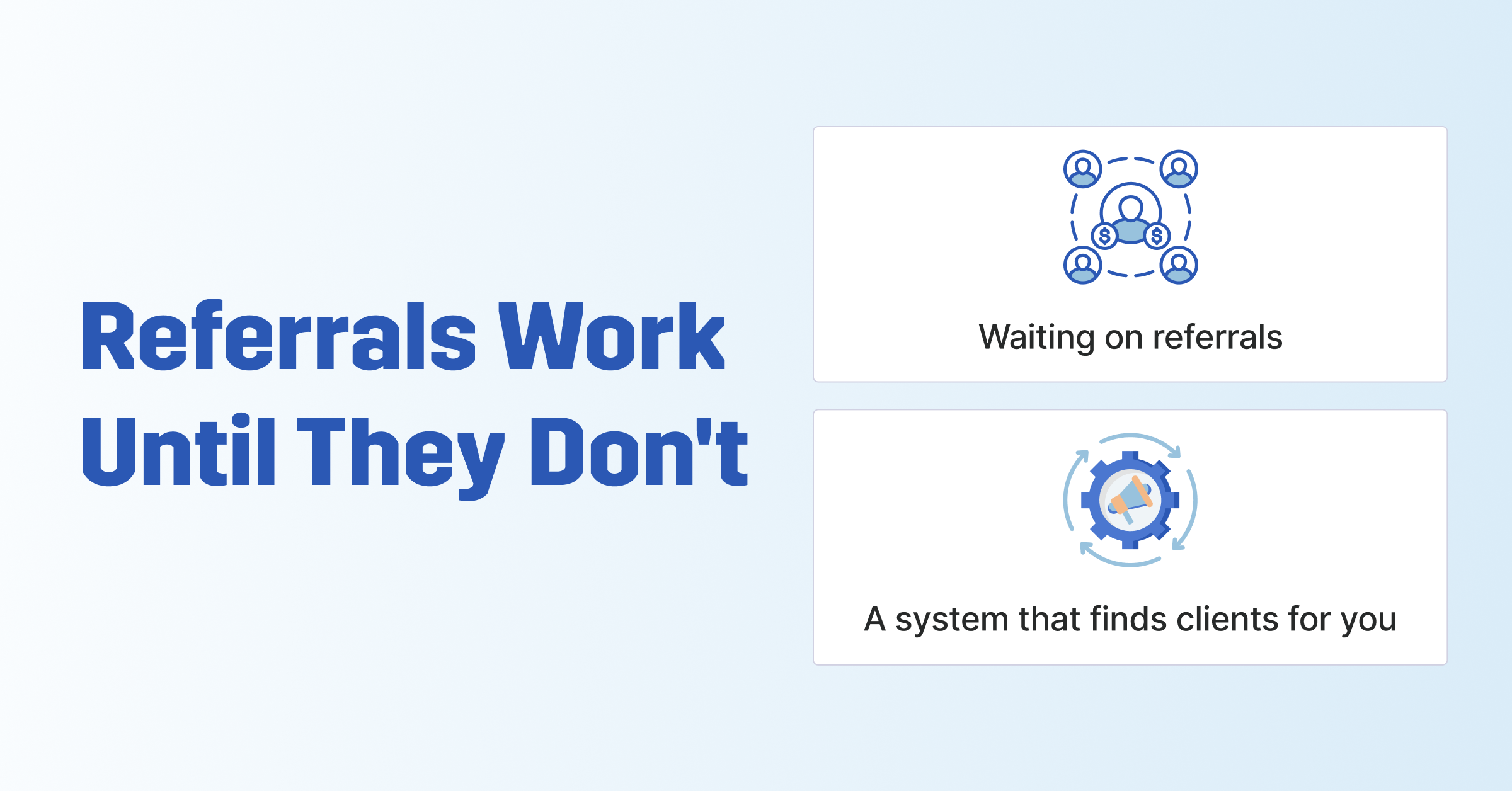


If your firm has grown mostly through referrals and repeat clients, you already know how well that works as long as demand is steady and key relationships hold.
However, when a client exits, markets slow, or competition increases, the pipeline thins without warning and without a system to correct it.
For many architecture firms, marketing advice is hard to apply because it focuses on execution without addressing the decisions that need to come first:
- What your firm should be known for
- Who it should attract
- Which business problems marketing is meant to solve
This guide explains how marketing functions for an architecture firm in practice, how different channels address distinct business problems, and how to decide where to start so that effort is focused rather than fragmented.

What is Marketing for Architects?
For most architecture firms, marketing is not a department or a campaign. It is the ongoing work of making it easier for the right clients to find your firm, trust what they see, and reach out for your services.
In practice, that looks less like advertising and more like the work firms already do in pieces without labeling it: maintaining relationships with builders and past clients, keeping the website up to date, writing about completed projects, and showing up where potential clients and referral partners gather.
A 2024 survey of 360 AEC marketing professionals found that 69% of teams have fewer than ten people, and 62% spend less than a quarter of their time on brand strategy. The bulk goes to pursuit support: presentations, project sheets, qualification packages.
When your firm runs marketing campaigns reactively, triggered by a slow pipeline, every effort starts from scratch. However, when it functions as a system in which each activity feeds into the next, every activity and effort compound.
For most architecture firms, the question is why that shift never happens and why the effort they invest yields so little.
Why Most Architect Marketing Efforts Don't Generate Results
When the pipeline slows down, it is easy to assume the problem is visibility or consistency. In practice, the issue usually traces back to three underlying gaps.
1. Referrals don't create a reliable pipeline
Referrals are how most A&E firms have grown. When the work is steady and key relationships hold, there is nothing to fix. But you cannot control when a referral comes, from whom, or whether the project is a good fit.
The AIA Architecture Billings Index fell below 50 from late 2025 through early 2026, with design contract values declining. In periods like this, fewer projects move forward, and fewer clients are in a position to refer, which means referral-dependent firms see the number of projects shrink from both ends.
This is also what makes referrals a deceptive strategy. They work because the referrer does the positioning for you: "Hire this firm, they handled our historic district renovation and navigated the approvals process."
That matches a specific need to a specific strength. When you market directly, nobody does that work on your behalf. The firm has to define it, and most skip that step entirely.
2. Channel activity replaces positioning
When the amount of work and inquiries reduces, the instinct is to pick a channel and stick with it. Post on Instagram three times a week. Start a blog. Redesign the website.
In an Archinect survey from mid-2024, lack of new projects was the most commonly cited challenge, alongside fee squeeze and increased competition. These are the conditions that make "just start marketing" feel urgent.
That urgency usually turns into activity without a clear direction. On Reddit, one firm owner described posting regular, thoughtful content on Instagram for a full year. The best client that effort produced had to be fired because they were not a good fit.
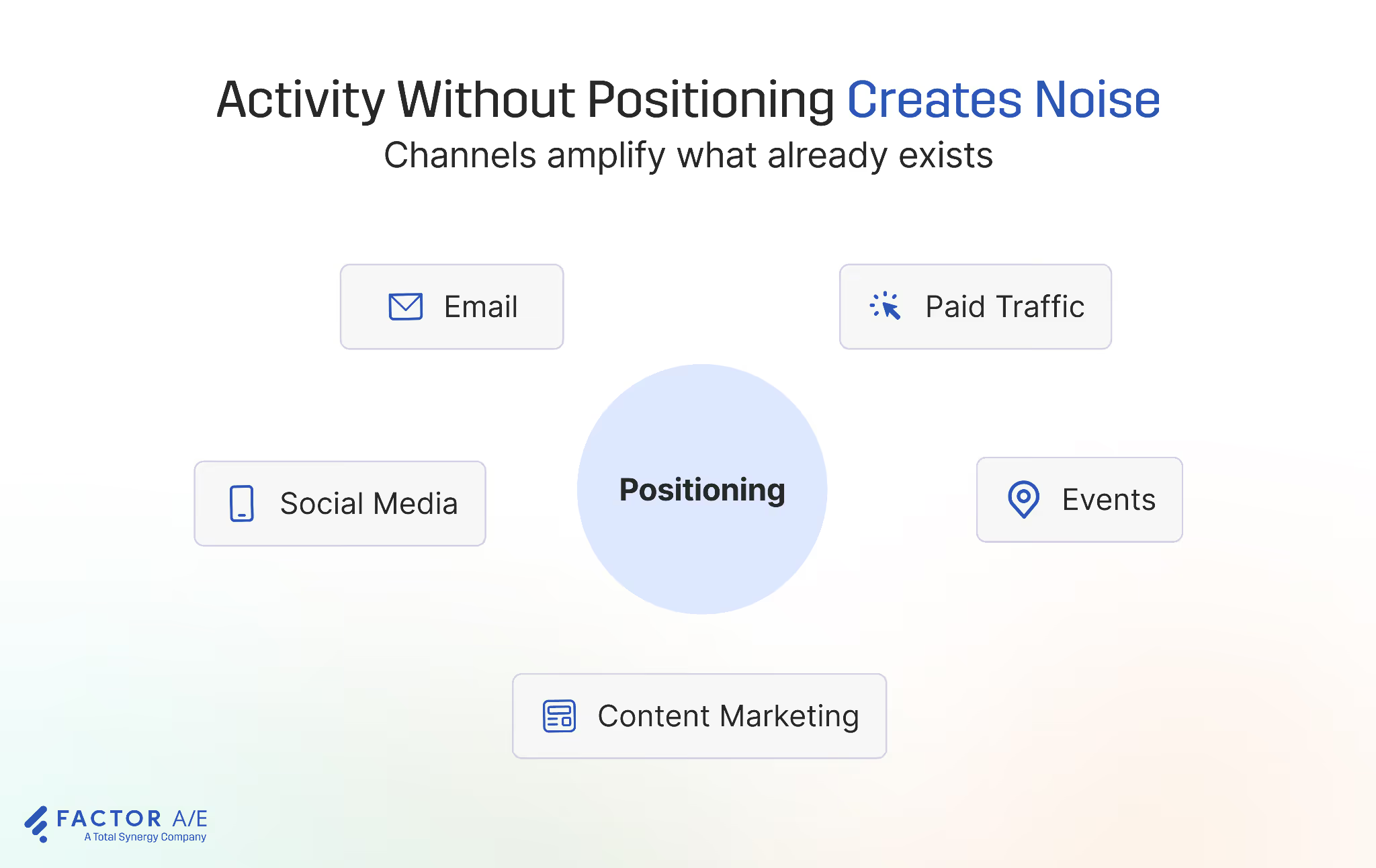
That’s what happens when activity replaces positioning: visibility increases, but there is no mechanism to filter who it attracts. Channels amplify whatever message already exists, and if that message isn’t specific, they simply distribute it more widely.
3. Weak positioning attracts the wrong work
When positioning isn’t clear, marketing fails because there is no basis for a client to choose you.
Prospects arrive without understanding what your firm does differently, so there is no way to evaluate fit. The conversation defaults to price, because price is the only thing they can compare.
From there, projects stretch in scope because there was never a clear boundary on what the firm is for or where it adds specific value. The pattern that shows up repeatedly, “busy but not profitable,” often traces back to this.
The same issue shows up in referrals, too. When a firm’s expertise isn’t clear, there’s nothing specific for someone to pass along. Hinge’s 2025 referral study found this is the biggest reason referrals fall off, with 45.5% tied to a lack of visible expertise.
When that clarity isn’t there, neither referrals nor marketing carries much weight. The work that does come in ends up being price-driven, because nothing specific justifies the fee.
Define Your Firm's Positioning Before You Pick a Marketing Channel
Positioning is the reason a prospect contacts one firm and skips another. It is not the tagline or brand, but the actual logic behind the decision.
When that logic is clear, you know what to say on the website, which projects to feature, and which channels are worth your time. When it is not, every marketing decision is a guess.
Start with who you're being compared to
Most firms begin positioning by listing what makes them great, talking about their years of experience, their award-winning designs, or their approach, which is often “collaborative.”
The problem with this approach is that every firm in the market says the same things, so none of it helps a prospect decide.
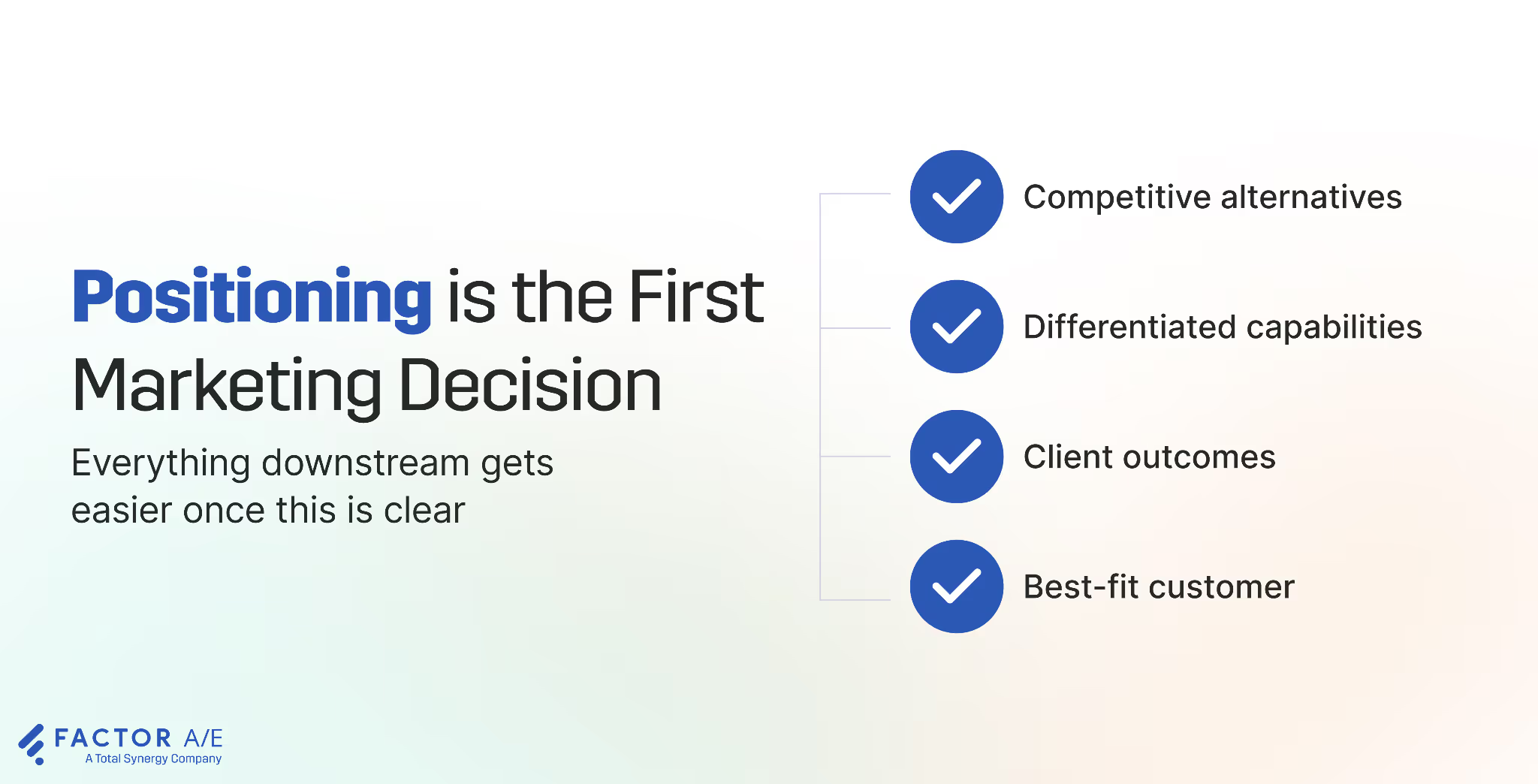
The question that actually opens up positioning is different: if your firm did not exist, what would the client do instead? In residential work, that answer is wider than most architects expect. In most states, clients do not need an architect.
They can go to a design-build firm, a draftsperson working with a contractor, or a developer with in-house capability.
In commercial and institutional work, the comparison narrows to other architecture firms, but the question still matters. A five-person studio competes differently against a 200-person multidisciplinary practice than against a similarly sized firm in a neighboring market.
The alternative you are competing against shapes what you say, what you prove, and where you show up.
Identify what you can do that alternatives can't
This is where firms reach for adjectives like "high quality," "full service," and "client-focused."
None of these helps a prospect choose, because none of them distinguishes one firm from another.
What matters is what changes in how the job runs. For example:
- Fewer delays because decisions are resolved before the site
- Fewer pricing gaps because the drawings are clear enough to quote properly
- Fewer back-and-forths with planning because you’ve done this type of approval before
These are things a client can evaluate before hiring, and things a draftsperson or design-build firm may not be able to match.
The question is not "what are we good at" but "what can we do that the alternative cannot."
Translate capabilities into client outcomes
Prospects arrive with unrealistic timelines and fee expectations. The first conversation becomes a negotiation rather than a discussion about fit.
Often, the gap starts on the firm's own website, with capabilities described in professional language that someone who has never hired an architect cannot understand.
"Certified passive house designers" means nothing to most clients because it describes what the firm is and what it does.
"You hit your energy targets without blowing the construction budget" means something because it describes what the client gets.
Every capability on your website needs to be connected to an outcome your ideal client is seeking to help your firm stand out.
Define your best customer
"Anyone who needs an architect" is not a positioning statement. It is an open door to every type of project, including the ones where the first conversation turns into a fee negotiation, scope keeps expanding, and the firm ends up busy without improving margins.
A clear definition of who the firm is for changes the kind of inquiries that show up in the pipeline. The projects you get asked to quote also look different.
Clients talk about budgets and timelines differently because the first call is about fit, not price.
The scope is clearer before work starts, and fee conversations are shorter and less defensive.
At this point, the hesitation is that narrowing feels like turning work away, but you save time to focus on the right projects. Instead of explaining your value to every type of client, a smaller group of qualified clients understands that you’re the right fit for them.
A referral becomes "they've done this exact type of project before" instead of "they're a good firm." Your website’s copy and messaging help prospects decide whether you’re the right fit for them, because you’re no longer listing capabilities but outcomes you deliver. Lastly, your case studies and content become proof of fit rather than proof of activity.
That definition gives the rest of marketing its direction: which channels to invest in, what to say on each one, and who you are trying to reach.
From Positioning to Channels
Once you’re clear on who your firm is for and what you’re known for, the next question is where those clients go when they start looking.
SEO: being found when clients are actively looking
Positioning determines what you want to be found for. Without it, SEO defaults to broad terms like "architect near me" or "residential architect," where every firm competes for traffic that rarely signals intent. Someone searching those terms could be anywhere in the process.
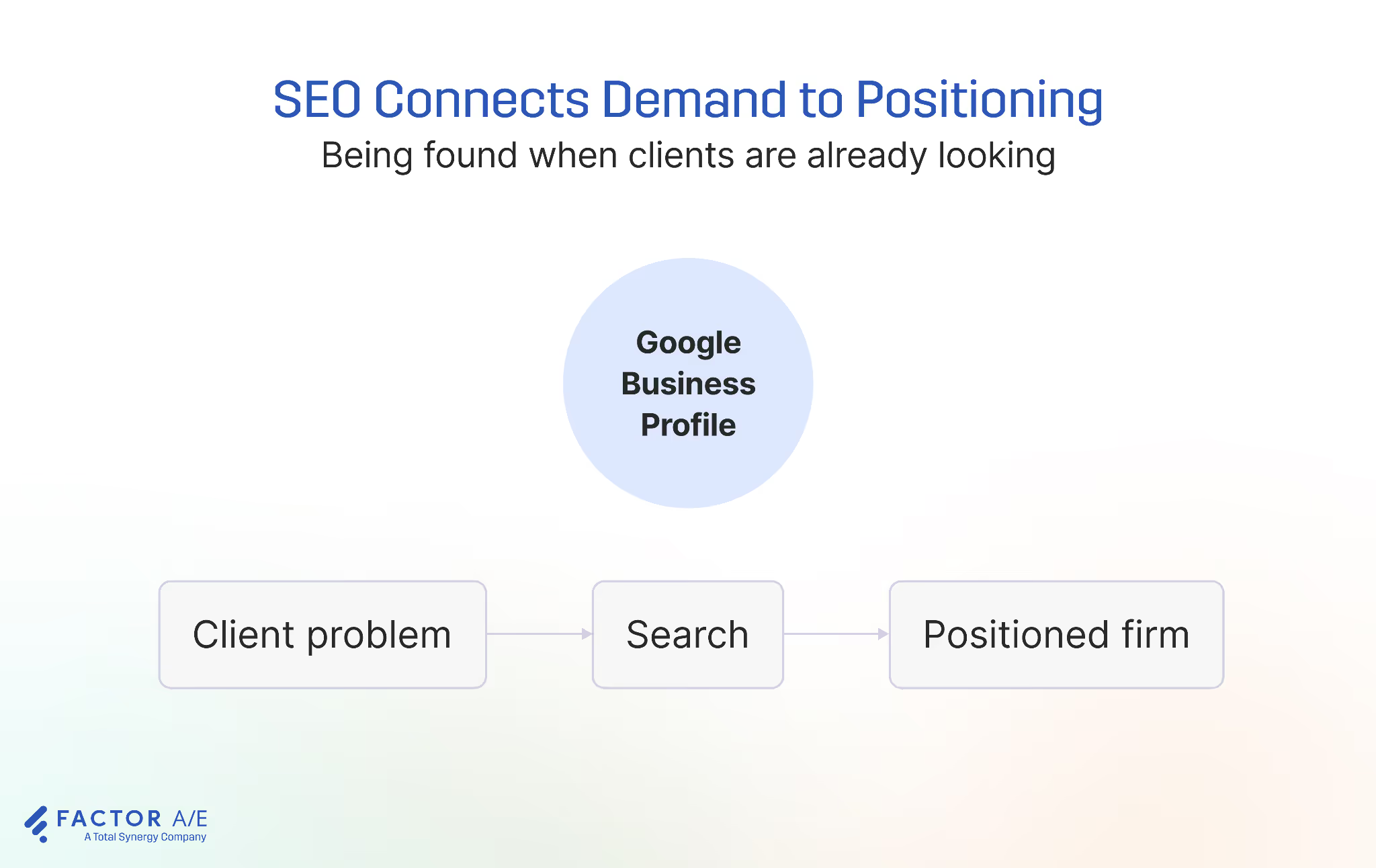
When positioning is defined, the goal shifts. A firm focused on home additions isn't trying to rank for the term "architect." It appears when someone searches for that project type or the constraints that come with it, like permit timelines, structural limitations, or budget thresholds. That's the same language that shows up in early client conversations.
That matters more now because visibility has changed. AI-generated summaries sit at the top of most search results and absorb attention before the list of firms appears. A firm that shows up around a specific project or constraint is easier to place in that summary. A firm that shows up for a broad category is not.
The local layer matters too. A Google Business Profile that reflects recent, relevant work like project photos, reviews that describe the type of engagement, and accurate contact details is often the first impression a prospect forms before reaching your website.
In addition to filling in the address and adding a phone number, make sure your profile makes your firm look credible. When prospects look at your profile, they’re not only checking whether it is complete but also looking for signs that your firm is active, credible, and doing the kind of work they need done.
Recent project photos carry more weight than polished descriptions. Reviews that describe a real engagement, how your firm communicated, and how you handled a problem matter more than star ratings.
Content marketing: earning trust before the first conversation
The default assumption is that good work sells itself. Post the project, show the photos. If a prospect is serious, they'll reach out.
What actually happens is that prospects look at the portfolio, find work they like, and still hesitate. The hesitation is almost never about the quality but about process, cost, and what they do not yet understand about hiring an architect.
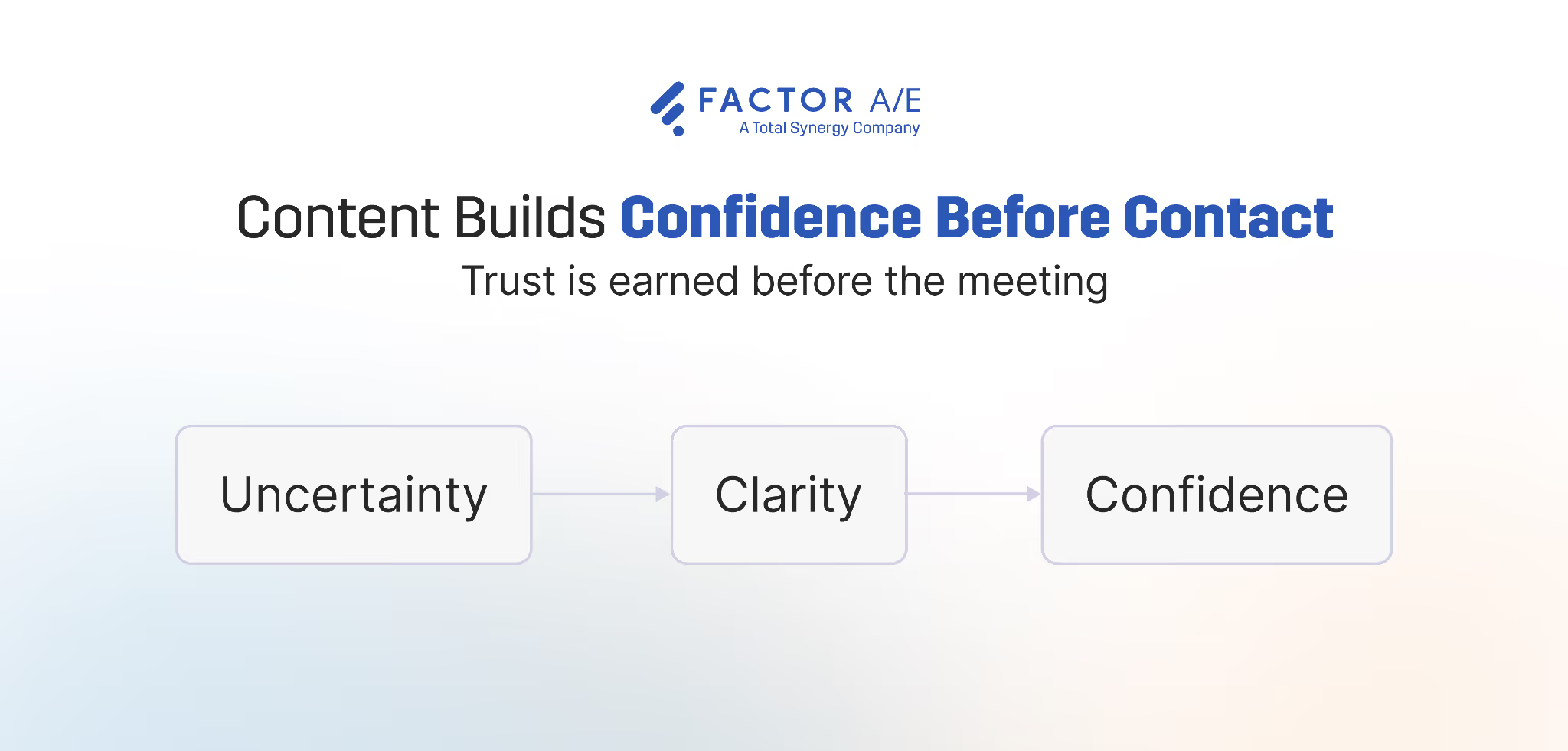
That gap doesn't close with more portfolio pieces but with answers to the questions prospects are already asking before they contact anyone, like:
- How much does this cost?
- How long does it take?
- What happens when something goes wrong?
For example, a case study that names the client's actual problem, describes the approach, and explains what changed gives a prospect something to compare their situation to.
Kaas Wilson's project profile for the Risor Apple Valley development is a good example of what that looks like in practice. It opens with the client's situation: a 55+ senior community in a growing suburb, a developer trying to meet demand from an active aging demographic, and a city with a Comprehensive Plan that the building needed to fit.
It then walks through what the firm did with that brief: a biophilia-led design concept grounded in research on nature connection and senior wellbeing; programming built around resident gatherings and family visits; and a brand identity that carried across multiple properties in the Risor portfolio.
A developer reading that isn't evaluating the firm's portfolio. They're checking whether the firm understands how to take a brief like theirs: a specific demographic, a specific market, a specific relationship with a municipality, and turn it into something that performs.

Educational content works the same way. Our guide to project management processes for A&E firms starts by explaining where the problem actually lives: overlapping design phases, consultant timelines you can't control, approval cycles that reshape weeks of planning in a single meeting.
A principal reading that recognizes their firm in the first paragraph. That recognition is what keeps them reading and what makes them trust what comes next.
None of this works without positioning behind it. A firm serving commercial developers writes different content than one serving homeowners planning additions.
Generic answers attract generic prospects. The content that earns trust is specific enough that the wrong prospect self-selects out.
Social media: staying visible without chasing attention
You're already on social posting projects, maybe running a few ads, maintaining a presence across a platform or two. The pipeline still isn't moving the way you'd expect, and social keeps getting the blame for not being as effective as it should be.
Before pulling back, audit whether your efforts align with the outcomes you're aiming to achieve. Social does three distinct jobs for an architecture firm, and conflating them is where most efforts go sideways.
- Visibility: Stay present with the right audience during the gap between first awareness and a ready-to-hire conversation. That gap is often six months to a year.
- Partnerships: Builders, interior designers, and developers who consistently follow your work have something specific to say when a referral opportunity arises.
- Lead generation: Paid ads on high-intent search terms. Someone looking for an architect for a specific project type converts better than broad social targeting.
The audit starts with who is engaging with your content. If your best engagement is coming from other architects and design students, you've built an audience, just not one that hires you. Developers are on LinkedIn. Homeowners planning renovations are on Instagram or TikTok. Posting consistently to the wrong audience compounds the problem rather than solving it.
The content doesn't need to be created from scratch for each platform. The case studies, blog posts, and project walkthroughs you're already producing are the raw material, and social is where they get distributed.
Our LinkedIn post on the cost of poorly managing schematic design is a good example. The underlying content is a blog post, the post breaks it into three consequences a developer or firm owner recognizes immediately, and links back to the full piece.
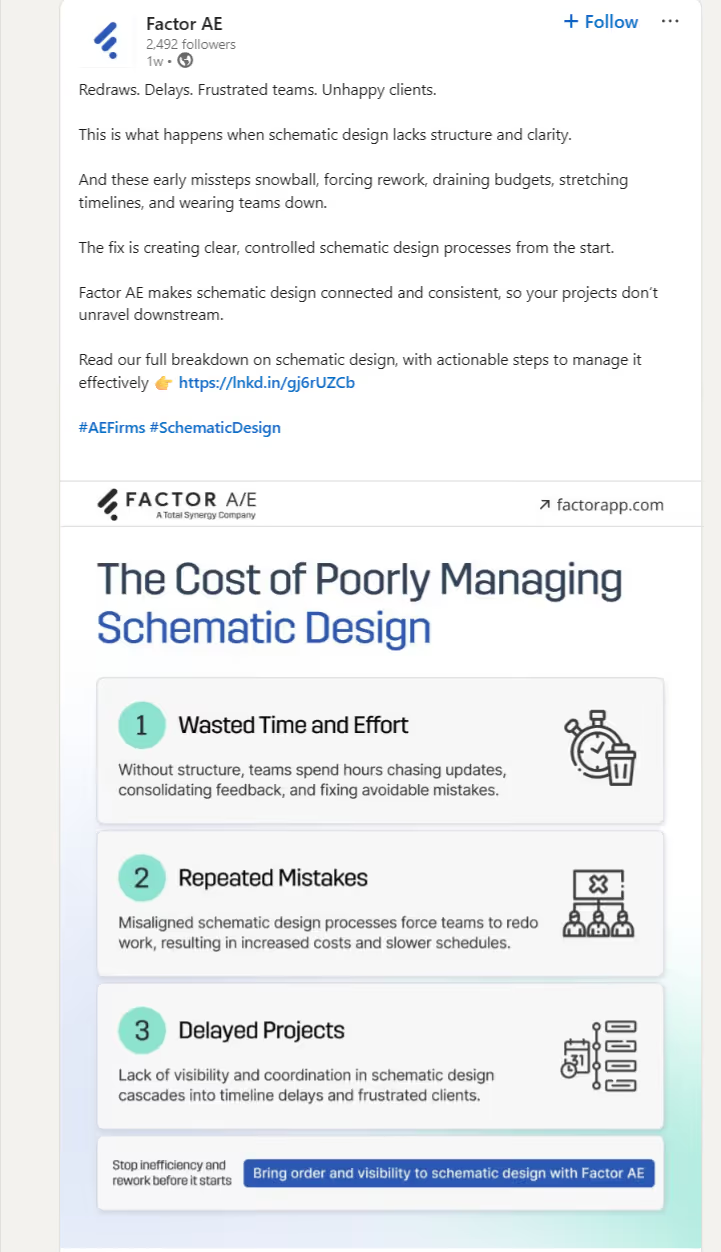
One piece of content, redistributed to where the right audience already spends time. Paid works best once organic is already telling you what resonates. When you run paid campaigns, high-intent search terms convert better than broad social targeting does.
Someone searching for an architect for a specific project type is closer to a decision than someone scrolling a feed. Make sure the link in your ad leads to a relevant destination.
A prospect who clicks a specific ad and lands on a generic homepage drops off because nothing connects. A landing page built around the problem they searched for, followed by an email sequence that continues the conversation, keeps them moving.
Lead generation and email marketing: keeping interested prospects engaged
The list you build is the audience you market to. A generic subscribe prompt builds a list of people who were mildly interested for a moment and then disappear.
A specific lead magnet, like a planning checklist for homeowners considering an addition or a cost expectations guide for a particular project type, gives the prospect something they already need and filters for people dealing with that exact situation.
Prospects who download targeted content are already self-qualifying.
Our Project Elevation Kit is a good example. It’s a simple process mapper for A&E firms to lay out how their projects currently run, where things break, and where inconsistencies occur.
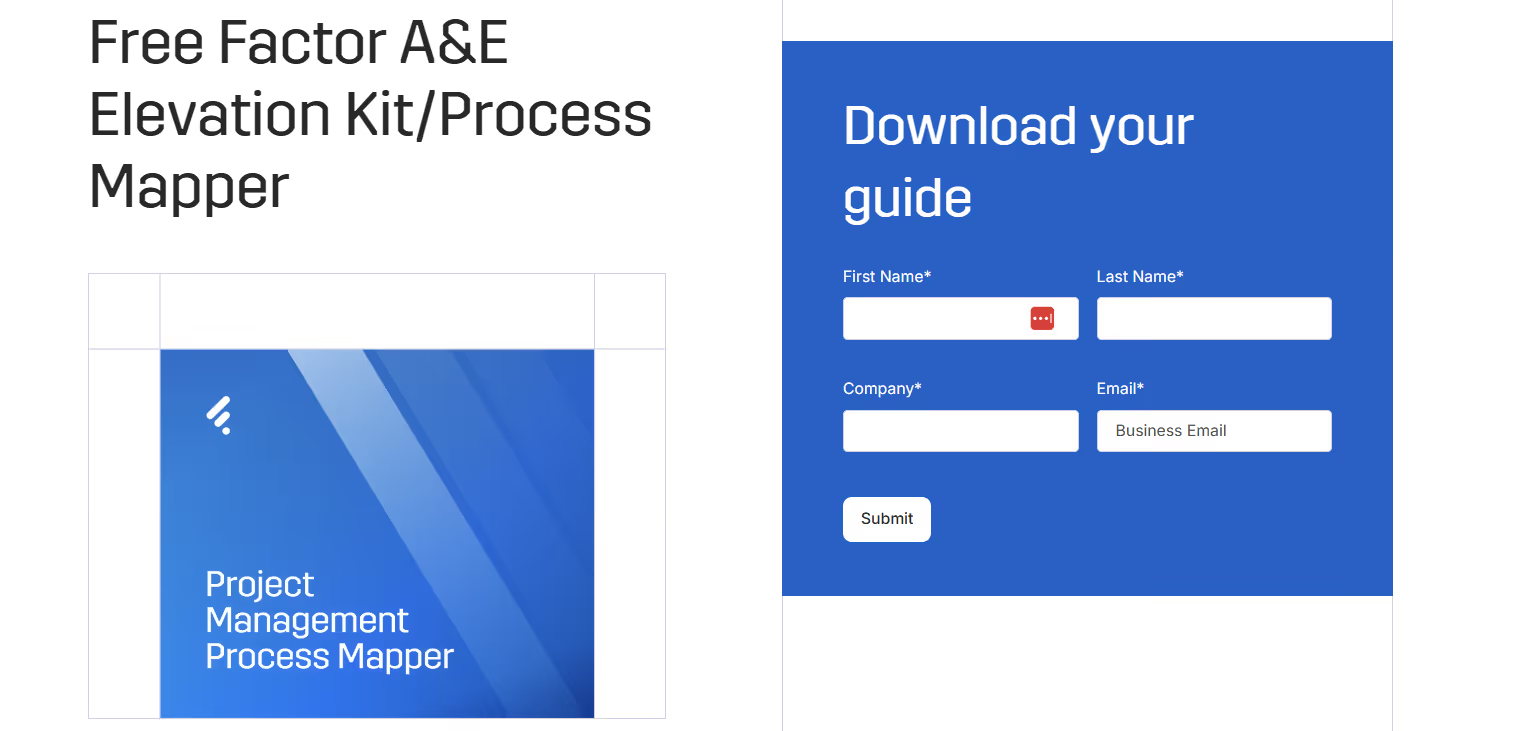
A firm owner downloading isn’t browsing. They’re already trying to fix how their projects are running.
That tells you more about where they are than any form field ever will, before a single conversation has happened.
Architecture projects have long decision cycles. A homeowner may spend six months evaluating firms before reaching out. A developer may follow several practices for over a year before a specific project triggers a conversation.
A firm depending on social algorithms to stay top of mind during that period is relying on systems it doesn't control. Email removes that dependency because it's an owned list, which means no algorithm decides whether your next send reaches the people who signed up for it.
Email removes that dependency because it's an owned list. No algorithm decides whether your next send reaches the people who signed up for it. But the list is only as useful as what you do with it.
Most firms default to newsletters: project updates, awards, team news. The people who open those are mostly existing contacts. The people you're trying to stay in front of during a six-to-twelve-month decision window need something worth returning to.
The structure is what matters. One send, multiple entry points, every asset moving a different segment of the list one step closer to a conversation. A principal who downloads the guide isn't ready to talk yet. One who registers for a live session is. The email doesn't treat them equally.
That's what email does that social can't. It keeps the right people engaged between the moment they first find you and the moment a specific project triggers the call. That gap is where most firms go quiet and lose the relationship without knowing it.
From Referrals to a System: How Architecture Firms Build a Predictable Pipeline
Most architecture firms don’t struggle with marketing because the work starts too late at the channel level, before the firm has decided what it wants to be known for and who it is trying to attract.
Referrals fill that gap for a while by matching a specific need to a specific strength. Once you move beyond them, that responsibility shifts to the firm. Without clear positioning, every channel becomes active without direction.
Each channel addresses a different part of the same problem, but only when they work from the same foundation.
The shift most firms are trying to make is not from referrals to marketing. It’s from relying on chance to building a system where the right clients can find you, understand what you do, and decide whether you are the right fit before the first conversation.
That system starts with a clear answer to who the firm is for, why it should be chosen, and what problems it solves better than the alternatives.


.png)