
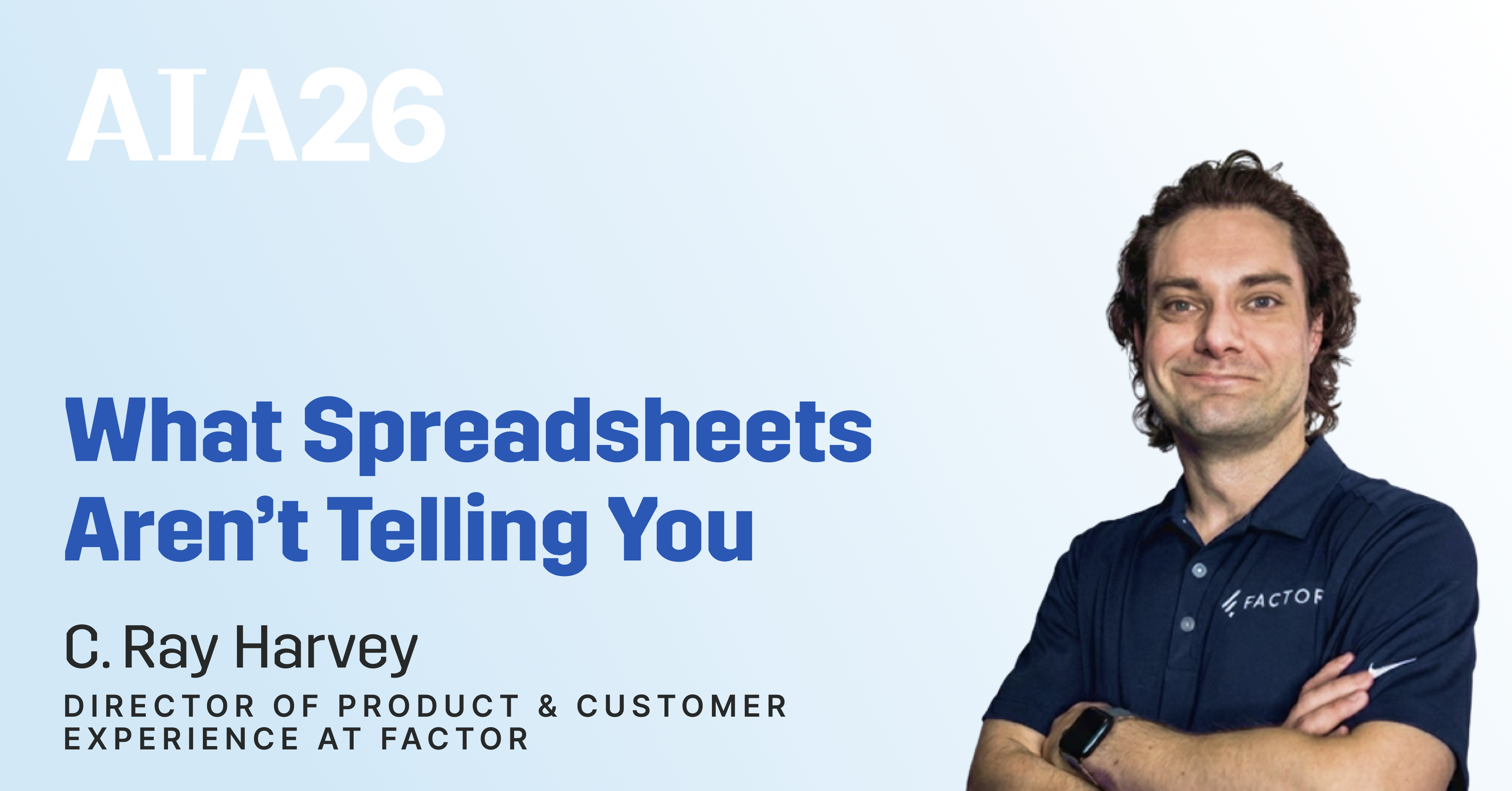


Presented live at AIA26 in San Diego, this session features C. Ray Harvey, Director of Product and Customer Experience at Factor. Drawing on years of experience helping A&E firms improve their operations, C. Ray explores why spreadsheets often limit visibility, the hidden costs of disconnected processes, and how project management software helps firms make faster, more informed decisions.
The Problem Isn't the Spreadsheet, It's What You're Missing
Spreadsheets have long been a familiar tool for A&E firms. They're flexible, inexpensive, and can be customized to fit almost any workflow.
But as C. Ray explains, the real challenge isn't storing information. It's being able to connect that information, retrieve it quickly, and use it to make decisions.
Project budgets, schedules, time, consultant costs, and project progress all tell part of the story. When those pieces live in separate spreadsheets or disconnected systems, it becomes difficult to understand how they're influencing one another.
A spreadsheet may provide a snapshot of your business, but it can't provide the real-time visibility firms need to manage projects as they evolve.
The "Good Enough" Mindset
C. Ray shares several of the most common reasons firms continue relying on spreadsheets:
- "Our spreadsheets are really organized."
- "We've always done it this way."
- "It works fine for our size."
- "We don't have time to switch."
- "Software is more expensive."
While each of these reasons is understandable, C. Ray argues they're often masking larger operational challenges.
A spreadsheet may feel familiar, but familiarity doesn't always translate into efficiency. As firms grow, manual processes become harder to maintain, collaboration becomes more difficult, and valuable time is spent updating information instead of acting on it.
The Hidden Costs of Spreadsheets
Throughout the session, C. Ray explains several hidden costs that many firms overlook when relying on spreadsheets and disconnected processes.
Maintenance Time
Someone has to update every spreadsheet, reconcile information between files, and ensure data stays current. As businesses grow, that effort often involves multiple people and hours of administrative work every week.
Human Error
Even well-built spreadsheets are vulnerable to mistakes. A single incorrect formula, outdated file, or missed update can affect reports, budgets, and decision-making across an entire project.
Stale Visibility
Spreadsheets only reflect the information that has already been entered. If updates are delayed, leaders are making decisions based on outdated information instead of what's happening in real time.
Limited Scalability
Many firms rely on one person who understands how all of the spreadsheets work. That creates bottlenecks, makes onboarding more difficult, and limits the firm's ability to grow consistently.
Why Consistency Matters
One of the most valuable insights from C. Ray's presentation is that consistency across projects matters just as much as visibility.
He shares an example of a firm where different teams were managing projects in completely different ways. One department relied on detailed spreadsheets, another used separate project management software, while another tracked work almost entirely from memory.
Although each team had developed a process that worked for them individually, leadership struggled to understand the overall health of the business.
Without consistent project data, it's difficult to compare projects, identify risks early, or understand the status of the firm's entire portfolio.
Better Visibility Leads to Better Decisions
The goal isn't simply to replace spreadsheets.
It's to create a connected system where project information updates automatically, teams work from the same source of truth, and firm leaders have confidence in the decisions they're making.
When budgets, schedules, resources, and project progress all live together, firms spend less time gathering information and more time improving project outcomes.
How Factor Helps A&E Firms Move Beyond Spreadsheets
The biggest limitation of spreadsheets isn't that they store data, it's that they can't connect it. As projects become more complex and firms grow, disconnected information makes it harder to understand project performance, spot risks, and make informed decisions.
Factor gives A&E firms a connected platform for managing projects, people, resources, and financials in one place. Instead of relying on manual updates and multiple spreadsheets, teams can access real-time information on project budgets, costs, profitability, utilization, and resource allocation, all from a single source of truth.
With greater visibility into every project, firm leaders can spend less time gathering data and more time making confident decisions that improve project outcomes and support long-term growth.

Recommended articles
.avif)
See Factor in action
In one quick call, we’ll show you a simpler way to run projects and get paid faster.
.png)
“I recommend Factor to other firms. The team is great, it’s easy to use, and it has streamlined my project management. It can do the same for yours.”
Adam Mayberry
Architect / Managing Principal


