



A client calls asking when schematic design will wrap up and what needs to happen before the next milestone.
You say you’ll check and call them back.
What follows is familiar: a spreadsheet open in one tab, last month's invoice in another, and a few emails searched for the previous status update. Twenty minutes later, you have something close to an answer. Maybe current, maybe not.
That's a visibility gap, not a knowledge gap. You can walk a client through the architectural design process without notes. But knowing the phases and actually tracking what's happening inside them are two different problems. When tracking breaks down, the CA phase quietly runs 40% over budget before anyone notices.
This guide covers each of the seven phases, what to track as work moves through them, and where projects tend to fall apart during handoffs between them.
The 7 Phases of Architectural Design
Most architects learn the five-phase AIA model, which includes schematic design, design development, construction documents, bidding, and construction administration. In practice, most firms work with seven. Pre-design encompasses the feasibility work that occurs before design begins. Permitting includes plan review and resubmittal.
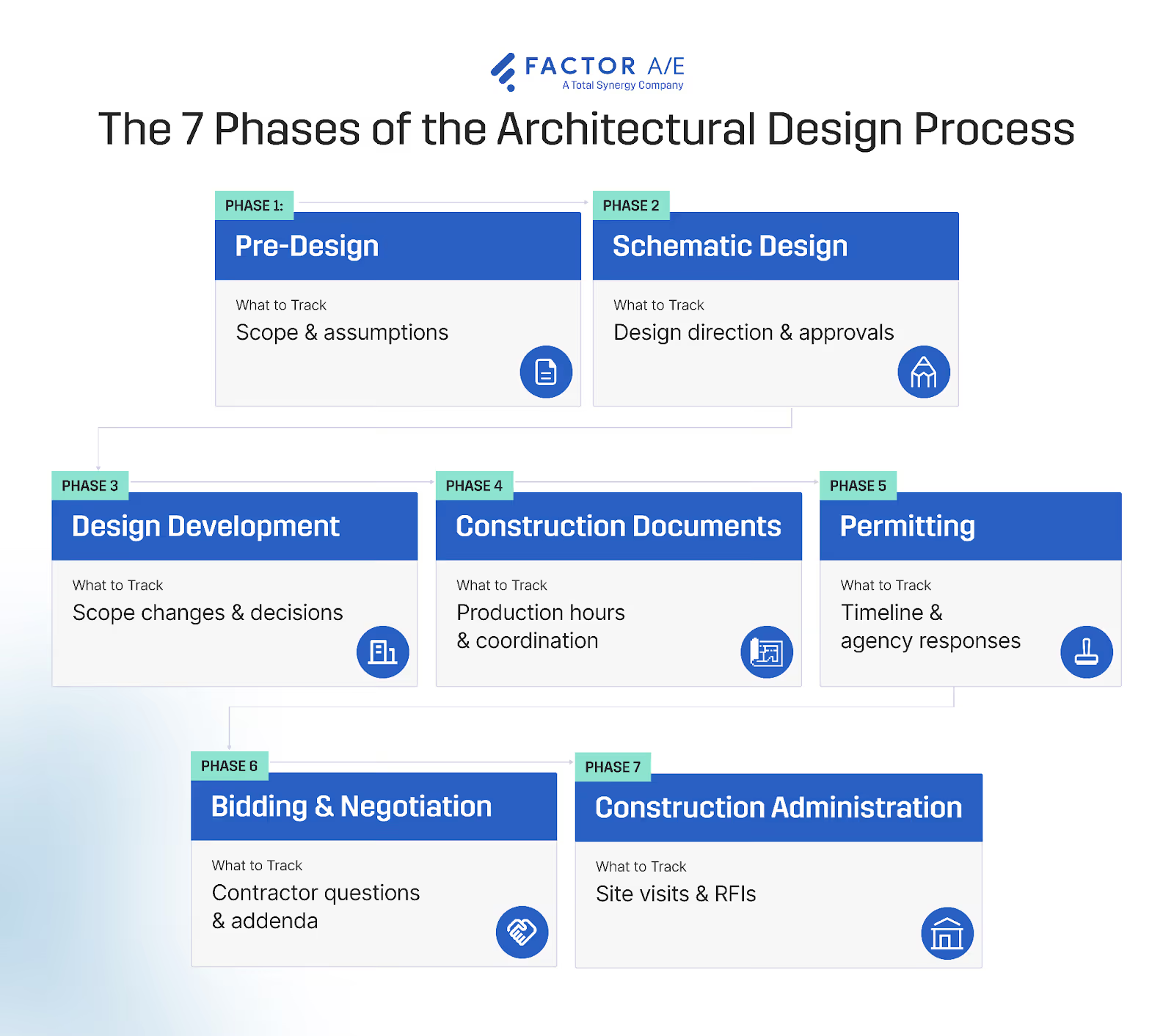
The phase structure matters less than whether you can answer a simple question at any moment: where does this project actually stand?
Let's walk through each one.
1. Pre-design
Pre-design is the process of determining whether the project makes sense before anyone starts drawing: site analysis, zoning research, programming, and early budget conversations.
Billing varies by firm. Some charge hourly, others set a small fixed fee, and some fold it into schematic design. The work itself might take two weeks if the site is straightforward, six or more if zoning requires multiple rounds.
The problem is that Pre-design never feels like a "real" phase. It feels like getting started. So, another site visit occurs, another zoning call, and one more round of program tweaks. Nobody tracks it closely because the work hasn't officially begun.
If you've ever started a schematic design project, wondering why you're underwater before you've even drawn anything, this is usually where it happens. You quoted 40 hours for feasibility, burned 35, and promised an SD timeline based on a budget that was already short.
What helps is a quick reconciliation before SD kicks off. Ten minutes to check where Pre-design actually landed. If it ran over, you adjust the SD timeline now, not after you've already committed to a deadline you can't hit.
That untracked time doesn't disappear. It shows up in schematic design as unnecessary pressure.
2. Schematic Design
Schematic design is when the project begins to take shape, encompassing site strategy, building massing, and major spatial relationships. This is where you establish the design direction that everything else is built upon. Fee allocation typically accounts for about 18% of the total fee and lasts for 4 to 8 weeks.
The tricky part is that schematic design often ends with verbal approval. The client says they love it, everyone's excited, and the team moves into DD. But "love it" isn't a sign-off.
Without documented approval, you have no reference point when the client revisits decisions three phases later. Was the open floor plan actually approved? Was it the L-shaped kitchen or the galley? If nobody wrote it down, you're relying on memory instead of a record.
What helps is a one-page summary before closing schematic design, including site strategy, massing, major spatial decisions, drawings, and a client signature line. Even an email confirmation works as long as there's something in writing.
Thirty minutes of documentation now prevents hours of rework arguments in DD when someone remembers the conversation differently.
3. Design Development
Design development is where you select finishes, size mechanical systems, and coordinate structural and MEP consultants. The Schematic concept becomes something buildable. Fee allocation typically accounts for about 20% of the total fee and spans four to eight weeks.
Two problems tend to surface here.
First, clients see more detail in DD than they did in schematic design. Suddenly, they're questioning things they already approved. That's not DD refinement but SD rework on a DD budget. If you documented SD approval, you have something to point to. If you didn't, you're either absorbing the hours or having an uncomfortable conversation with nothing to back you up.
Second, coordination is often compromised by side conversations, delayed decisions, and unexpected inputs. It doesn’t feel like lost time until you check the numbers: 60% of the budget is gone, and you're only 40% through the work. By the time you notice, there's no room to recover.
Checking the percent complete against deliverables every week, rather than just hours burned, helps keep the phase from drifting unnoticed. If the gap is widening, you catch it at 60% when you can still adjust scope or renegotiate, not at 95% when you're just absorbing the overrun.
Before CD starts, circulate a design-locked memo covering all finalized materials, systems, and dimensions. If the client won't sign it, the design isn't actually locked, and starting CD means absorbing every revision at full documentation cost.
4. Construction Documents
Construction documents is the largest phase by fee allocation, typically around 31% of the total fee. You're producing full drawings and specifications, detailed enough to build from and bid on, over eight to sixteen weeks, depending on project size.
Every unresolved question from design development lands here. The layout was "decided," except nobody documented what the final verdict was, so someone has to redraw three sheets.
Scope creep from earlier phases compounds: decisions that weren't locked, coordination that wasn't finished. It all ends up in the construction documents, and there's nowhere else to push it.
Construction documents are often blamed for overruns that originate upstream. The phase has run over, but the root cause was usually design development decisions that weren't made, or schematic design scope that wasn't adequately controlled.
Tracking hours by discipline weekly helps catch drift early. If structural coordination is burning faster than interiors, you know where to focus before the phase runs over budget.
Before construction documents kicks off, run a design development closeout check and list every open design decision. If the list has more than three items, design development isn't finished, and you either close it out now or budget those hours explicitly into the construction documents.
Whatever isn't resolved in the construction documents is addressed in permitting. And permitting doesn't have room to absorb it.
5. Permitting
Permitting includes plan review, comments, revisions, and resubmittal to the agencies that must sign off, including the building department, fire marshal, and planning. The timeline is mostly outside your control, ranging from 4 weeks in some jurisdictions to 12 or more in others.
The problem isn't the waiting itself. Plan check comments come back requiring fixes that nobody budgeted for: an egress issue affecting six sheets, and a second-round review that takes three weeks instead of one. By the time you're through, you've burned hours that were supposed to be somewhere else.
You can't control permitting timelines, but you can track each round of comments and log every response, ensuring that nothing slips through the cracks during resubmittal. When the timeline shifts, communicate the change immediately, not after the client calls to ask why construction hasn't started.
Permitting is also where budget tracking slips. The team is focused on getting to construction, and hours are no longer logged as carefully. That carries over into bidding and construction administration, and you're weeks behind in knowing where the project actually stands.
6. Bidding and Negotiation
Bidding and negotiation encompass preparing bid packages, responding to contractor questions, reviewing bids, and negotiating contracts. Fee allocation is small, typically around 2%, and spans two to six weeks. This phase is almost always compressed and underbudgeted.
Once the project goes out to bid, attention shifts to getting to construction, not reconciling where the fee stands. Budget tracking stops. When the bid comes in over budget, and the owner requests value engineering, you spend two weeks revising the scope, using hours that weren't included in your bidding budget. Those hours come out of construction administration, which means you start that phase already short.
Before construction administration begins, spend 2 hours reconciling the hours burned, the remaining fee, and the project's actual status.
If you're already underwater, you can renegotiate the scope or adjust staffing. Six months into construction administration, you're just absorbing the loss.
7. Construction Administration
Construction administration covers site visits, RFIs, submittals, change orders, and punch lists. You're supporting construction through completion and protecting the design intent. Fee allocation runs around 27% of the total fee, and the duration matches the construction duration, which can range from months to years.
Construction administration is often the longest and most challenging phase to track. Forty shop drawings arrive in week three, RFIs stack up, and site visits multiply. The budget that looked fine in month one is gone by month four, and you're only halfway through construction.
If earlier phases ran over and nobody adjusted the construction administration budget, you're starting short. If bidding consumes construction administration hours during value engineering, you may not realize the impact until you're billing more than the fee covers.
Construction administration is where upstream problems surface. Scope creep occurred during schematic design, decisions were deferred from design development, and hours were burned in bidding without proper tracking. By this phase, there's nowhere left to push it and no phases left to absorb it.
A weekly check on hours logged versus budget, RFIs open versus closed, and submittals pending versus completed takes 15 minutes and allows you to catch drift in weeks rather than months.
The firms that run construction administration profitably aren't doing less work. They're tracking the numbers closely enough to renegotiate scope or flag overruns before they compound.
Approaches to Managing the Phases
Different approaches work for different firms. How you track matters as much as what you track.

Spreadsheets, checklists, and email work when you have two or three active projects and one person who knows where everything is. Once you're juggling six projects and the person who built the tracker is on vacation, it falls apart.
Tools like Monday or Asana help with task management, but they weren't designed for phase-based billing or consultant pass-throughs. You can force them to work, but every invoice cycle means exporting, reconciling, and hoping nothing has slipped through.
A&E-specific platforms connect time tracking, phases, budgets, and invoicing in one place. Fusion Design cut its monthly invoicing from 20 days to 4 hours after switching. Whether that's worth the setup depends on how many projects you're running and how much time you're losing to reconciliation.
The question is whether you can answer "where does this project stand?" without opening three tabs and cross-referencing a spreadsheet.
Tracking Progress Through the Design Process
Even with the right tools, the metric you track shapes what you see. Most firms default to hours logged against hours budgeted. It's the number that's easiest to retrieve, and the one clients expect to see on invoices. But hours measure effort, not progress, and the difference between those two is where projects drift off course without anyone noticing.
The problem with hours.
A phase can burn 60% of its hours and be 60%, 40%, or 80% complete. The timesheet looks the same in all three scenarios. Hours measure what you've spent, not what you've finished, and most project dashboards don't distinguish between them.
The gap compounds when billing rates mask actual costs. Core Architecture discovered that their previous system tracked billable hours but ignored pay rates. A senior architect and a junior designer both showed hours worked, but the difference in labor costs weren't taken into account. Projects looked profitable in the system, but lost money at close.
Timesheets matter for invoicing because they're how you bill the client. However, they don't inform you whether a phase is on track, and confusing what you bill with what you've completed is how profitable-looking projects end up losing money.
Earned value as an alternative.
Earned value is a method of measuring progress by comparing what you've actually completed to what you planned to complete, not just what you've spent. It flips the question: instead of asking how many hours you've spent, you ask how much of the work is actually done.
It starts by defining deliverables for each phase and what "complete" means for each. Then, you track the percent completed by deliverable, not just the hours logged, and compare it against the budgeted hours and the actual hours burned. The gap between those numbers shows whether you're ahead, behind, or on track.
Say you’ve burned 60% of your hours in design development, but only 40% of deliverables are complete. At that rate, the phase will close over budget. You know this at week four, not week eight, when the hours are already gone.
The earlier you identify the gap, the more options you have: adjust the scope, reallocate staff, or renegotiate with the client. Wait too long, and you're stuck managing the overrun instead of avoiding it.
Where Projects Actually Slip
Transitions and handoffs between phases are where projects often fail.

Two patterns show up consistently.
The first is an approval gap between schematic design and design development. The client says they love the concept, but the team moves forward without documenting what was actually approved.
Three phases later, it becomes a dispute about whether the open floor plan was agreed to or just discussed. Without a written record, you're arguing memory against memory, and the rework that follows eats the margin that was supposed to cover construction administration.
The second is a tracking gap between bidding and construction administration. The push to get the project out to bid consumes everyone's attention, and hours are no longer logged carefully. As a result, nobody reconciles the budget's actual standing before construction starts.
By month three of construction administration, you're billing more than the fee covers, but you didn't see it coming because the last real budget check was two months ago.
The 2025 Professional Services Maturity Benchmark found that project overruns rose to 11.3% industry-wide, up from 9.6% the year before. The report identifies a common cause: limited insight into project workload and cost data results in weaker decision-making. The information often exists somewhere, but if it isn't accessible when the decision needs to be made, it doesn't help.
Getting Started with Phase-Level Visibility
Most firms don't lose projects in the phases. They lose track of them in the transitions: approvals that weren't documented, budgets that weren't reconciled, and hours that drifted without anyone watching. The information existed. It just wasn't accessible when it mattered.
Closing that gap starts with tracking progress against deliverables, not just the hours burned, and building checkpoints that prevent phases from moving forward until sign-off, budget, and outstanding items are accounted for.
Factor AE is built around that structure. If answering "where does this project stand?" still takes twenty minutes, request a live walkthrough with a product specialist to see how the tool helps real A/E firms everyday.

Recommended articles
See Factor in action
In one quick call, we’ll show you a simpler way to run projects and get paid faster.
.png)
“I recommend Factor to other firms. The team is great, it’s easy to use, and it has streamlined my project management. It can do the same for yours.”
Adam Mayberry
Architect / Managing Principal


