



As we’ve learned from our work with architecture/engineering (A&E) firms, there are relatively few absolutes when it comes to operating them. But here’s one: If you aren’t managing projects well, you aren’t going to be successful. And while there are many aspects to effective project management, spending less money than you have budgeted for them is a core competency for any firm.
A second absolute is that there’s only one way for a project manager (PM) to get an accurate picture of their budget and schedule status, and that’s by doing an earned value analysis (EVA). Any project management software package can tell you what your budget is and how many hours/dollars have been expended to date, but nothing particularly useful comes from that data. Why? Because it doesn’t include any measure of how much work was actually completed.
Accounting software isn’t designed to be smart. It treats an hour “consumed” as an hour of work completed. But, as A&E professionals know, that isn’t always (if ever!) the case. A typical hour includes a certain amount of thinking, planning, and other activities that are essential to making progress but aren’t actual progress. There are also mistakes and revisions that chew up valuable minutes without creating additional output.
Bottom line: There’s no definitive correlation between time spent on a project and work completed. Consequently, using actual cost or actual hours can cause PMs to draw bad conclusions about their budgets. That’s why EVA is so critical.
Building the Framework that Supports Earned Value Analysis
As important as EVA is, it’s also crucial that PMs set projects up correctly and take ownership of all aspects of how they’re executed. That ownership creates accountability, and we know from experience at our company that accountability is essential to success.
Inside Factor AE, there are three steps PMs must take as they set a project up:
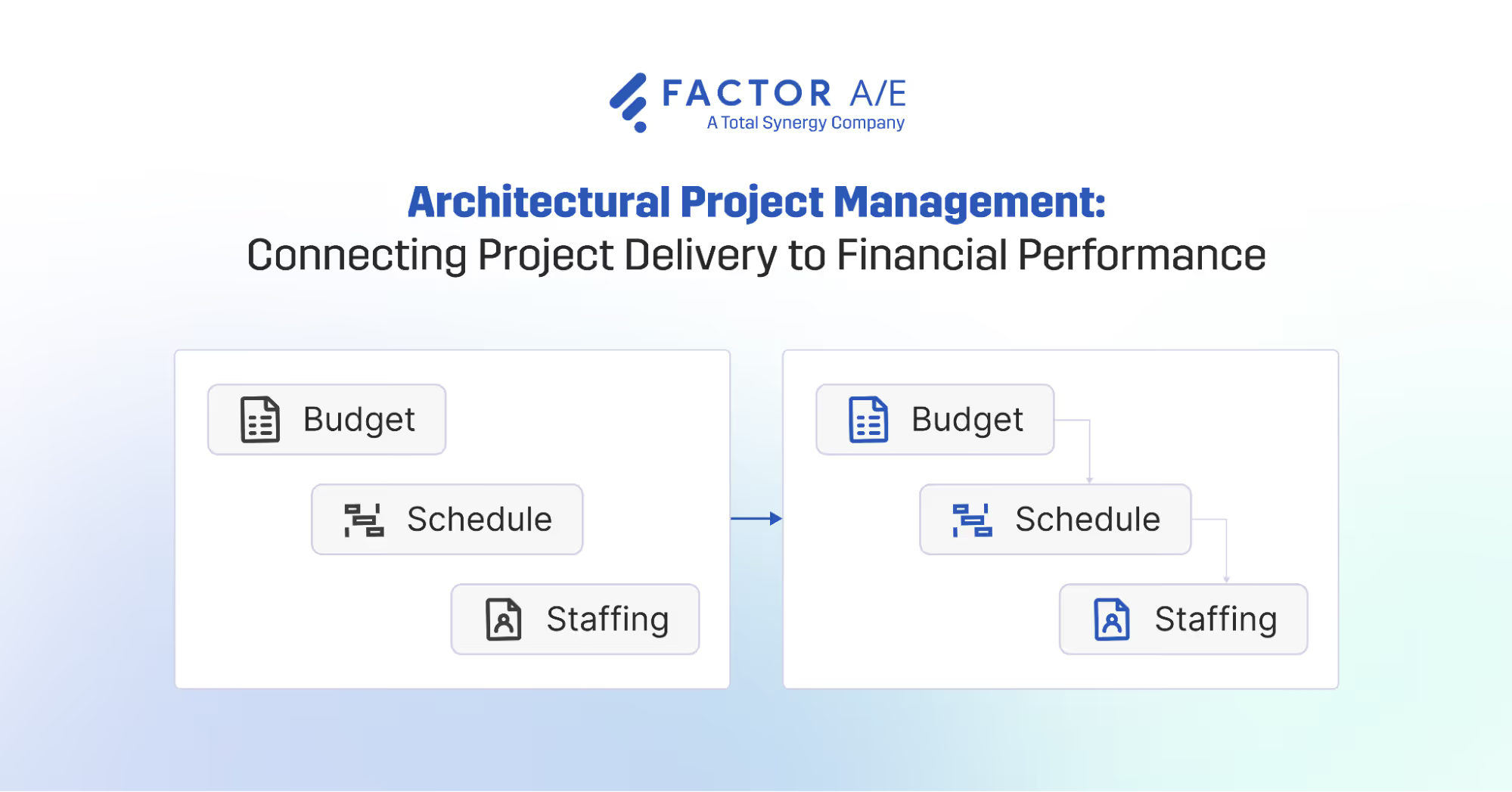
- Create a work breakdown structure based on the client’s end goal. This is a series of phases and subphases or tasks that represent everything that must be done to complete the project. The PM assigns an estimated number of hours to each.
- Overlay the tasks with a proposed schedule. For example, Task 1 will start at kickoff and run for two weeks; Task 2 will begin at the completion of Task 1 and run for three weeks; Task 3 will start one week into Task 2 and run for two weeks; etc.
- Apply a fee to the project. This fee is based on the hours in the breakdown structure and the proposed schedule, and takes into account things like overhead, desired profit, etc.
All three steps are important, but successful project management is grounded in an accurate breakdown structure. The phases are large chunks of work between client approval points. Common examples in the A&E industry include:
- Programming
- Schematic design
- Design development
- Construction documents
- Field observation
These chunks are too large to be used as budget items. There are too many hours and too much money in these divisions for the PM to accurately track what has taken place. That’s why phases are broken down into tasks. Tasks are individual work items divided into $5K to $15K segments. They’re essential to EVA because at the end of each month, PMs apply a “percentage complete” to each task based on a review of actual work product.
So, for example, if a task calls for creating 15 documents and seven are complete, that’s 45 percent. The earned value for the task comes from multiplying 45 percent times the fee for the task. That number is then compared to the cost coming in from accounting to determine that, for example, at month end the project is $500 over budget. This data point can also be compared to an expenditure curve that Factor AE creates by plotting the total cost of the project against the time allowed to complete it. In that way, PMs can see where they stand as the project progresses.
"The reality is almost all projects go "off the rails" at some point. Factor AE, with its EVA capability, serves as a tool that PMs and accounting can use in a collaborative way to identify and address project issues as soon as they arise."
The "Aha Moment" with Earned Value Analysis
In most A&E firms, the accounting department is responsible for budget tracking. But unfortunately, accounting only has two data points: budget and spend. Simply looking at the difference between them can mislead PMs about whether a project is on track or adjustments are needed. With Factor AE and EVA, project managers regain control of the status of a project because percentage complete is factored into progress assessments.
Now, of course, accurate timekeeping on the part of project teams is critical. That’s why Factor AE requires that team members enter time weekly and that PMs review those entries while the work is still fresh in everyone’s mind. The system can then flag projects that have fallen outside certain budget or timeline parameters so the responsible PMs can take action to get them back on pace.
The reality is almost all projects go “off the rails” at some point. Factor AE, with its EVA capability, serves as a tool that PMs and accounting can use in a collaborative way to identify and address project issues as soon as they arise so action can be taken. For example, a PM can let the client know early on that more money or time are needed, rather than springing that disappointing fact on them at the end of the project or having the firm eat the cost.
This culture change in how PMs and accounting interact helps firms keep projects out of trouble and bring them across the finish line on time and under budget.
Start Building A Better Framework For Your Business
Minor tweaks in process along with the right partner to guide you can make a huge impact on your success. Get started today!

Recommended articles

See Factor in action
In one quick call, we’ll show you a simpler way to run projects and get paid faster.
.png)
“I recommend Factor to other firms. The team is great, it’s easy to use, and it has streamlined my project management. It can do the same for yours.”
Adam Mayberry
Architect / Managing Principal


