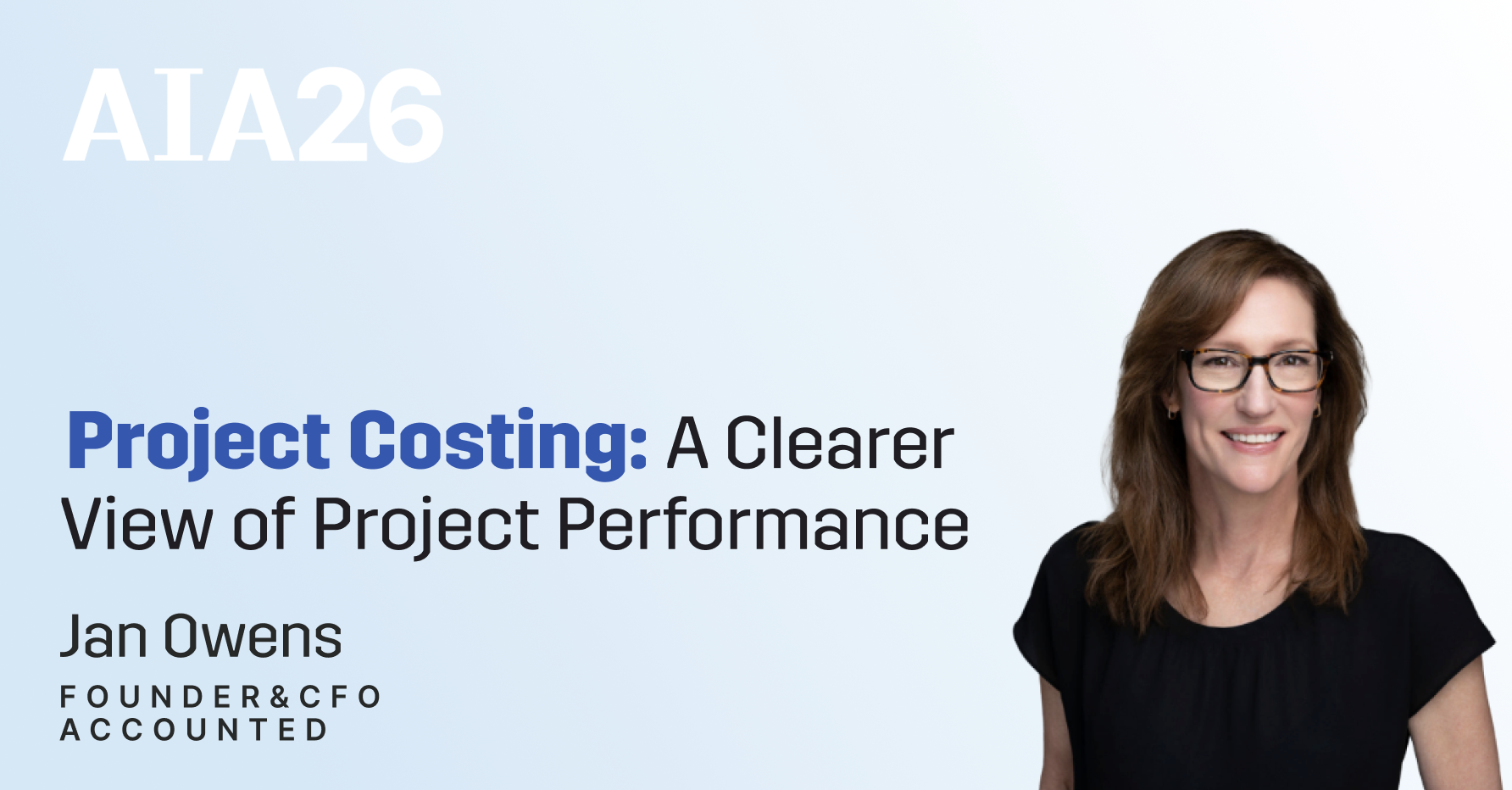


Presented live at AIA26 in San Diego, this session features Jan Owens, Co-Founder and CFO of Accounted. Drawing on more than 30 years of experience working with A&E firms, Jan explains why project costing is about much more than tracking hours. It's about giving firms the visibility they need to spot problems early, make better decisions, and improve profitability before issues become expensive.
Why Project Costing Matters More Than You Think
Many A&E firms believe their projects are performing well because clients are happy, invoices are being paid, and work continues to move forward. But without accurate project costing, it's difficult to know whether those projects are actually making money.
As Jan explains, project costing provides real-time insight into how projects are performing against budget. Instead of finding out a project lost money after it's complete, firms can identify issues while there's still time to adjust.
One example she shares is a 10-person architecture firm that believed a project was on track until project costing revealed they had already used 130% of their budgeted hours while the project was only 75% complete. By then, there wasn't enough remaining fee to recover the costs, and the project finished at a loss.
The problem wasn't simply the budget overrun. It was discovering it too late to do anything about it.
Common Myths About Project Costing
Throughout the session, Jan tackles several misconceptions that often prevent firms from adopting project costing.
"We already have spreadsheets."
Spreadsheets can work as a reporting tool, but they rely on manual updates and disconnected data, making it difficult to get an accurate, real-time picture of project performance.
"We're too small."
According to Jan, firms of every size benefit from better visibility. Small firms don't suddenly become successful overnight. Having reliable data helps them grow more confidently and profitably.
"It's too expensive."
Jan argues that the cost of project costing software is often insignificant compared to the financial impact of a single project that goes over budget. In many cases, the return on investment far outweighs the subscription cost.
"It's too complicated."
Purpose-built software simplifies processes by replacing spreadsheets, reducing duplicate data entry, and bringing project information into one place.
"We'll review profitability when the project is over."
By the time a project is complete, there's little opportunity to recover lost profit. Real-time visibility allows firms to course-correct while the project is still underway.
"We've outgrown QuickBooks."
Jan explains that many firms don't need to replace their accounting software. Instead, they can integrate project management software with QuickBooks, allowing QuickBooks to remain the financial source of truth while the project management software provides the visibility needed to make better decisions before profits disappear.
"Project costing is just time tracking."
Time tracking is only one piece of the puzzle. Effective project costing also includes consultant costs, reimbursable expenses, change orders, write-offs, billing delays, and other factors that ultimately affect project profitability.
The Visibility Gap Holding Firms Back
Throughout the presentation, Jan introduces the concept of the visibility gap, the space between what's actually happening on a project and what firm leaders can see.
When firms don't have timely data, they often:
- Discover budget overruns too late to correct them.
- Miss opportunities to adjust staffing or project scope.
- Continue investing time into projects that are already unprofitable.
- Make decisions based on assumptions instead of data.
Closing that gap allows firms to course correct while they still have options.
Better Visibility Leads to Better Decisions
Project costing isn't just about identifying problems. It helps firms improve performance across their entire business.
With better visibility, firms can:
- Monitor project profitability in real time.
- Compare planned hours to actual hours.
- Identify projects or phases that are falling behind.
- Improve resource planning.
- Make more accurate pricing decisions for future work.
- Forecast revenue with greater confidence.
Instead of reacting after the fact, project managers and firm leaders can make informed decisions throughout the life of a project.
Project Costing Also Improves Cash Flow
Profitability and cash flow aren't always the same thing.
Jan shares the example of a growing engineering firm that secured several large projects and expected a strong quarter. However, once they mapped out project timelines, billing schedules, and expected collections, they discovered a three-month cash flow gap.
Because they identified the issue early, they were able to increase their line of credit before the gap affected payroll or operations.
Without project costing and forecasting, they wouldn't have seen the problem until it became a crisis.
Final Thoughts
Project costing gives A&E firms the visibility to see which projects are performing well, which need attention, and where action can improve financial outcomes. Rather than waiting until a project is complete, firms can make informed decisions while there's still time to influence the result.
Factor helps make that possible by giving firms real-time visibility into project budgets, costs, profitability, and performance, all in one place. Instead of relying on spreadsheets or manual reporting, teams can monitor project health as work progresses, helping them identify issues earlier and make more confident business decisions.
Whether you're looking to improve profitability, strengthen forecasting, or simply gain a clearer picture of your projects, Jan's advice is a reminder that better visibility leads to better outcomes.
Reach out to Jan Owens at Accounted by emailing her at jan@accountedco.com or by phone at (503) 567-4102.